Original article: De Colonia Dignidad a la querella contra El Ciudadano: Saenger y Coloma, los abogados de Giacaman bajo la lupa penal
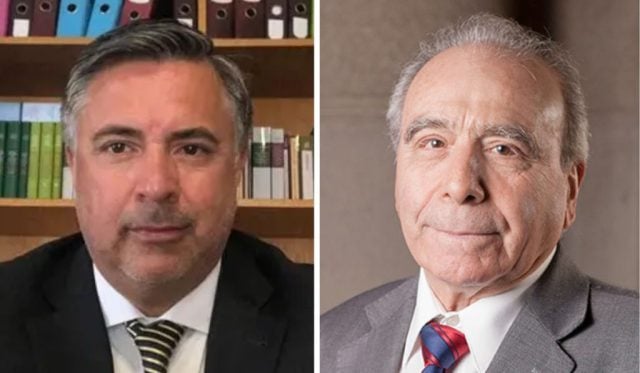
The judicial setback faced by Biobío Governor Sergio Giacaman not only resulted in a dismissal of the lawsuit he initiated against El Ciudadano, but also incurred a substantial cost penalty and, most critically, led to the referral of information to the Public Prosecutor’s Office for an investigation into his own legal representatives, lawyers Fernando Saenger Gianoni and Roberto Coloma Del Valle.
What began as a criminal action for defamation against the former director of this media outlet Josefa Barraza, and its current director, Javier Pineda, due to a social media post that allegedly harmed the regional authority’s honor, has transformed into a judicial boomerang, revealing alleged fraudulent maneuvers and placing the past and connections of these two litigators under criminal scrutiny.
Judicial Boomerang and Investigation for Alleged Misconduct
The Seventh Guarantee Court of Santiago accepted the defense’s request from Barraza and Pineda, definitively dismissing the case and ordered Giacaman to pay all costs of the trial in favor of the defendants while sending the evidence to the Public Prosecutor’s Office to investigate the possible commission of crimes, including misconduct, by the governor’s legal representatives, the well-known lawyers from Concepción, Fernando Saenger Gianoni and Roberto A. Coloma Del Valle.
Both attorneys filed an identical lawsuit in another court after the first was declared inadmissible, concealing that detail. In response to this behavior, the court sent notifications to the Prosecutor’s Office for an investigation.
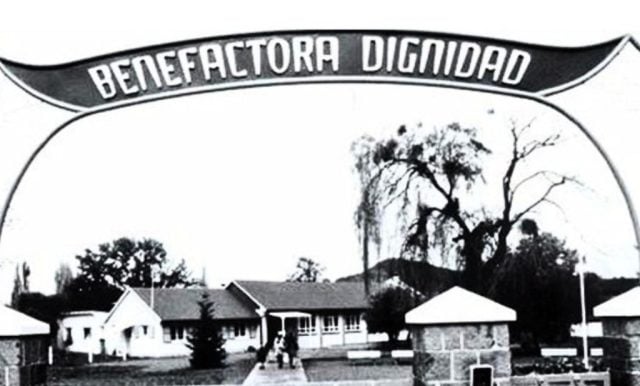
Fernando Saenger’s Links to Colonia Dignidad, the Dictatorship, and the Church
The name Fernando Saenger is not unfamiliar in Chilean legal history; the lawyer, known for taking on high-profile cases, has a track record of legal representation directly tied to the former Colonia Dignidad.
For decades, he acted as one of the main defenders of the interests of the German enclave founded in 1961 by Nazi leader Paul Schäfer, which later became a center for detention, torture, and extermination during Pinochet’s military dictatorship.
Saenger advised its members and participated in legal strategies aimed at protecting the assets and impunity of its leaders, including the doctor Hartmut Hopp, Schäfer’s right-hand man.
In fact, he represented Lionel Beraud, the same judge who in 1997 accepted a protective order and annulled a detention order against the supposed doctor and also filed a labor lawsuit for alleged unpaid wages to the same colonists, which allowed the properties to remain in the hands of their original owners, as reported by El Mostrador.
His network includes ties to the military regime, and he supported the Junta during the transition to democracy. He did not hesitate to offer his services to defend Supreme Court justices appointed by Augusto Pinochet, such as Hernán Cereceda, who served as a minister of the highest court from 1985 to 1993 and was dismissed in a constitutional accusation for neglecting his duties in a human rights case.
Another aspect of his influence relates to more traditional sectors of the Church, as he even provided free legal advice in the investigation against priest Enrique Valdebenito from Negrete, who faced charges for alleged sexual abuse by two altar boys aged 10 and 12, and was acquitted by the Supreme Court.
This connection with Pinochet’s regime and the enclave of torture and sexual abuse is not a minor detail: the same legal skills Saenger used to shield the colonists are now being investigated by the justice system for allegedly deceiving the courts on behalf of a regional authority.
Roberto Coloma’s Controversial Stint in Power and the Southern Macrozone
Meanwhile, Roberto Coloma adds a distinctly political profile to the duo. Far from being an anonymous litigator, Coloma served as Secretary of Justice and later as coordinator of the Southern Macrozone in the Biobío region during Sebastián Piñera’s second term. In that role, he was a key figure in managing the violence crisis in the territory, handling the legal and political aspects of the Mapuche conflict from a position of power.
Coloma joined the position in November 2020 and tendered his resignation in December 2021 after making controversial statements in which he blamed the «far-left» for the violent incidents in the region.
Following his transition from high executive power to the private defense of a governor from the same political sector, his involvement in the case against El Ciudadano will be investigated by the Prosecutor’s Office to determine whether he crossed professional ethical boundaries and engaged in misconduct.
As Giacaman faces judicial setbacks and financial repercussions, the true aftermath of this episode points directly at his lawyers, as the justice system will need to establish if there was a plan to evade jurisdiction of the courts. What started as an attempt to silence and penalize a media outlet has turned into a criminal investigation threatening to expose the worst practices within the judicial sector.
Obtén tu Pasaporte y apoya a El Ciudadano
Elimina la publicidad, accede a contenido exclusivo y sé parte de la comunidad.
Cancela en cualquier momento · Sin permanencia