Original article: Alemania eleva su gasto militar y desata fuertes críticas internas
The Bundestag approves €139.4 billion in defense spending, the highest figure since the Cold War, amid accusations of «limitless militarization,» «debt orgy,» and social cutbacks. A majority of Germans oppose the pace of rearmament.
The Citizen
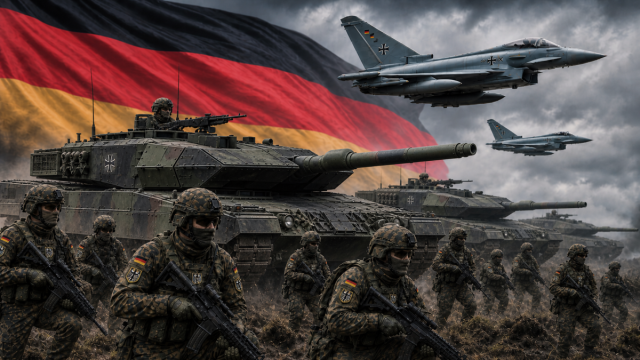
Berlin. Germany has approved the largest defense budget since the end of the Cold War. The Bundestag green-lighted the federal budget for 2027 on Friday, with 317 votes in favor and 260 against, following months of negotiations between Chancellor Friedrich Merz (CDU/CSU) and his Social Democratic partners. The total budget amounts to €556 billion, of which €139.4 billion is allocated to the Bundeswehr. The vote reflects both Berlin’s strategic shift in priorities and the tensions within a coalition facing economic and electoral pressures.
The military spending comprises €109.7 billion from the regular Defense budget (a 32.7% increase from the €82.7 billion in 2026) and €29.6 billion from a special fund for the Bundeswehr, financed through debt. The absolute increase compared to the previous year is €31.2 billion, a 29% rise in just one fiscal year. The net new borrowing skyrockets to €210 billion, the second-highest level since World War II, surpassed only by the pandemic peak in 2021.
Funding Allocation: From Doctrine to Investment
A significant portion of the increase is directed towards reversing decades of underinvestment and preparing the Bundeswehr for territorial and alliance defense. Spending on new military acquisitions surges to €59.55 billion (29.9 billion from the regular budget and 29.65 billion from the special fund), compared to €45 billion in 2026. Specific projects include the purchase of 16 additional A400M transport aircraft, an alternative platform for the F126 frigate, the European drone project Eurodrone (€291.3 million), and P-8A Poseidon maritime patrol aircraft.
The budget also allocates €12 billion in financial and military assistance for Ukraine. Regarding NATO commitments, Germany aims to accelerate its fulfillment of the new target to allocate 5% of GDP to defense by 2035, intending to achieve this six years ahead of the original schedule. By 2027, the NATO-eligible spending is expected to be around 3.1% of GDP.
Chancellor Merz defended the budget on security grounds, stating: «Germany is now more capable of defending itself than at any point in the last few decades», though he acknowledged that much work remains. Defense Minister Boris Pistorius was more explicit in labeling the Russian threat as «concrete, serious, and acute».
Internal Criticism: Four Fronts Against Rearmament
The approval of the budget has not silenced critical voices. These emerge from various sectors, ranging from parliamentary opposition to labor unions and an increasingly skeptical public opinion.
Die Linke: «Limitless Militarization»
The Left Party is the most vocal against what it describes as «militarization and limitless rearmament.» Its parliamentary leader, Heidi Reichinnek, has accused the government of simultaneously pushing for a «brutal social dismantling and an orgy of cuts.» The party argues that military spending is an «absolute priority» at the expense of health, education, families, and pensions. Representative Dietmar Bartsch characterized the spending magnitude as «scandalous» and warned that «the government’s excess does not create security but rather jeopardizes domestic peace.» Die Linke rejected the budget in the final vote.
AfD: The «Debt Orgy»
The far-right Alternative for Germany channels its criticism towards massive indebtedness. Its co-leader, Tino Chrupalla, termed the budget as a «debt orgy» that will cripple the country, predicting that Merz will «go down in history as the Chancellor of Germany’s insolvency.» The AfD estimates that the government will incur €401,000 in new debt every minute in 2027 and asserts that, instead of increasing military spending, investments should be made in education and infrastructure. Its defense spokesperson, Nolte, has also criticized the reliance on «credit financing» as a long-term detriment to the country.
The Greens: Lack of Transparency
Although not part of the government, the Greens also did not support the budget. Their budget spokesperson, Schäfer, lamented the lack of transparency and oversight regarding the Ministry of Defense’s procurement projects, noting that this fails to do justice to the billions spent. The party leader, Haßelmann, characterized the budget as «not serious.»
Labor Unions: Rearmament is Funded by Social Cuts
Social unrest is strongly expressed within the labor movement. The German Federation of Trade Unions (DGB) has denounced that increased military spending is financed through cuts in the welfare state. Former ver.di secretary Ralf Krämer summarized it succinctly: «Rearmament is this government’s absolute priority […] and the dismantling of social achievements is two sides of the same coin.» The unions warn that every euro allocated to weapons is money missing from schools, daycare, care services, pension financing, or the healthcare system. There are also protests from union bases against the conversion of civilian factories into arms plants, under the slogan «Win peace, not war!».
Public Opinion Shifts Away from Rearmament
Surveys reflect a significant turn in German public opinion, contradicting the government’s rearmament policy. According to the annual report by the Körber Foundation, for the first time, a majority of citizens (54%) oppose continuing military support for Ukraine, reversing the trends of recent years (in 2023, 66% supported it). The most revealing data for the internal debate is that 64% of Germans do not want their country to arm at the current pace.
Opportunity Cost: What Is Forgone with €139 Billion?
The core of the internal debate is the opportunity cost of the €139.4 billion allocated to defense. Critics question not only the debt but also what will not be done with that money. The newspaper junge Welt illustrated the dilemma, pointing out that this amount could restore all dilapidated schools in the country, create 700,000 daycare places, fund the five-year railway plan, or build 150,000 social housing units.
Political Context: A Coalition Under Pressure
Chancellor Merz had to negotiate for months with his coalition partner, the SPD, to get the budget approved. The Social Democrats accepted the increase in defense spending, but in return for social cuts and tax measures like reducing the electricity tax. The Deputy Chancellor and Minister of Finance, Social Democrat Lars Klingbeil, described the budget as «challenging» and warned that more adjustments will be necessary by 2028. The parliamentary leader of the SPD, Miersch, although supportive of the budget, acknowledged the difficult situation.
The tensions are not confined to the budget. The pension reform, one of the coalition’s flagship promises, remains blocked due to disagreements between the SPD and the Bavarian conservatives over early retirement. Merz himself warned that if the direction does not change, in a few years «all federal revenues will need to be allocated to social expenditure, interest payments, and defense».
Next Steps and Risks
The budget approved by the Bundestag must be ratified by the upper chamber (Bundesrat), which is scheduled for final review on December 19. From there, the government will have to manage the execution of accounts that, according to Klingbeil, leave no room for optimism: «We no longer have money for everything».
The political risk is evident. Germany’s economy grew just 0.1% between July and September, and official forecasts point to growth of 1.3% for the year as a whole, insufficient to generate the tax revenues needed to relieve the pressure on public accounts.
Ultimately, the budget for 2027 represents the financial embodiment of a change in doctrine: Germany accepts that security is no longer a dividend of peace but rather a costly and permanent investment that will affect its fiscal policy and social cohesion over the next decade. However, the rearmament faces an increasingly broad internal front questioning not only how, but also how much and at what cost.
Box: German Defense Budget in Figures
| Concept | Amount |
|---|---|
| Total Federal Budget 2027 | €556 billion |
| Total Defense Spending | €139.4 billion |
| Regular Defense Budget | €109.7 billion (+32.7%) |
| Special Fund for the Bundeswehr | €29.6 billion |
| Increase vs. 2026 | +€31.2 billion (+29%) |
| Spending on New Acquisitions | €59.55 billion |
| Assistance to Ukraine | €12 billion |
| Net New Borrowing | €210 billion |
| NATO Target | 5% of GDP by 2035 (moved up 6 years) |
| NATO-Eligible Spending 2027 | ~3.1% of GDP |
| Vote in the Bundestag | 317 in favor, 260 against |
| Next Step | Bundesrat, December 19 |
Frequently Asked Questions (FAQ)
How much will Germany spend on defense in 2027?
Total defense spending will reach €139.4 billion: €109.7 billion from the regular budget and €29.6 billion from the special fund for the Bundeswehr.
Why is the increase in military spending in Germany criticized?
Criticism comes from various fronts: Die Linke denounces «limitless militarization» and social cuts; AfD criticizes the «debt orgy»; the Greens point out lack of transparency; unions warn that rearmament is funded by cuts to welfare; and a majority of public opinion rejects the pace of rearmament.
What does German public opinion say about rearmament?
According to the Körber Foundation, 64% of Germans do not want their country to arm at the current pace, and for the first time, a majority (54%) opposes continuing military support for Ukraine.
How is the increase in military spending financed?
Through a record increase in net borrowing, which stands at €210 billion, the second-highest level since World War II.
When does the budget take effect?
The Bundestag has already approved it. The Bundesrat’s ratification is expected on December 19.
The Citizen
