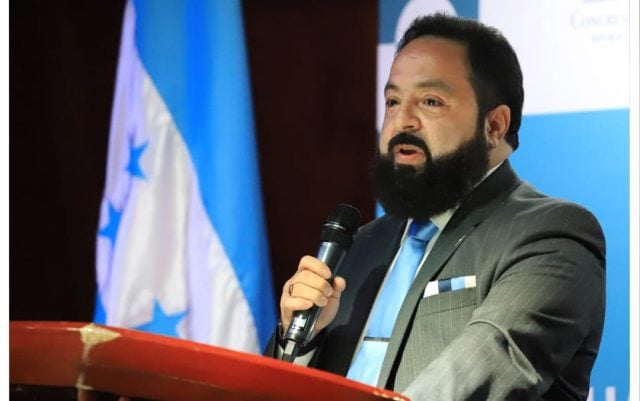
Original article: Honduras: Acusan «justicia selectiva» contra Comisión Permanente y Luis Redondo
Honduras Faces Allegations of «Selective Justice» Against Permanent Commission and Luis Redondo
The investigation targeting the members of the National Congress’s Permanent Commission in Honduras raises a critical issue that extends beyond former Congressman Luis Redondo and his fellow accused: Is the Honduran justice system applying the same criteria, guarantees, and standards universally, or are these criminal charges politically motivated?
Luis Redondo argues that the scrutiny surrounding the Permanent Commission must be understood in the context of the post-election crisis of 2025 and their demand for the National Electoral Council to count all votes.
Redondo has publicly denounced that process as fraudulent, claiming that Nasry Asfura did not genuinely win the election. These statements should have been evaluated against the ballots, total results, challenges, electoral resolutions, and other evidence.
A recent verifiable fact is that the Constitutional Chamber of the Supreme Court of Justice admitted twelve amparo actions in favor of former members of the Permanent Commission, yet it did so without suspending the contested actions.
Consequently, the amparo actions continue their process, but the operations that the Public Ministry is conducting remain active.
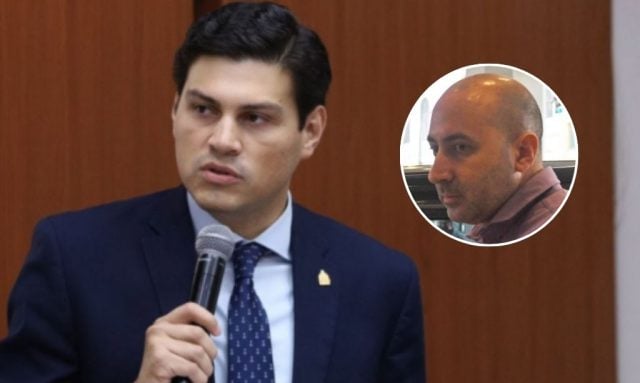
It is precisely in this context that the statements made by lawyer Menjíbar, featured in the accompanying video of this report, gain significant importance. Menjíbar explains that the individuals under investigation approached the Public Ministry and requested a rescheduling of their statements because they wanted to review the case file and ascertain the specific facts being investigated.
According to his account, the request was initially denied by the prosecutor handling the case. Subsequently, they appealed to that prosecutor’s superior, who also denied the opportunity, and then to the Directorate of Prosecutors, still without obtaining access. Faced with this situation, he noted that they filed amparo actions with the Supreme Court of Justice.
It is publicly known that the actions of the Public Ministry have been politically motivated since the National Congress under Tomas Zambrano and his liberal allies, Jorge Calix, Omar Cabrera, and others, secured consensus for the board of directors and political trials following payments from the executive branch under Nasry Asfura, which are publicly known.
To date, they have even modified the budget to shield themselves from disclosing travel expense information related to public fund mismanagement during nationalist administrations.
Menjíbar then introduces a particularly relevant precedent: the case of former National Congress President Mauricio Oliva Herrera. The key aspect of his explanation can be documented.
In the Administrative Amparo SCO-0405-2018, filed on behalf of Mauricio Oliva against actions taken by the Attorney General’s office within an investigation by the Special Prosecutor’s Unit against Impunity and Corruption (UFECIC), the Supreme Court of Justice granted a provisional protective measure.
The ruling explicitly stated that the measure must provisionally suspend investigations until Mauricio Oliva was informed of the specific allegations against him. Once that obligation was met, the Public Ministry could continue its investigations.
It is this precedent that Menjíbar recalls in the video. He explains that when the UFECIC — while the MACCIH was still in Honduras — opened an investigation against Mauricio Oliva and summoned him to testify, his defense demanded prior knowledge of the facts under investigation.
The constitutional justice’s response was to temporarily halt the investigation until that knowledge was guaranteed.
Now, Menjíbar argues, a different scenario exists for those who were part of the Permanent Commission: their amparo actions were accepted, but without suspension of the contested actions, allowing the Public Ministry to continue its investigations while the Chamber decides on the merits of the amparo actions.
Menjíbar describes this difference with a powerful expression: «A FORM OF SELECTIVE JUSTICE.»
This term reflects the lawyer’s assessment. However, there are other precedents that allow for an objective examination of the comparison. One such case is that of Ana Paola Hall García.
In Administrative Amparo SCO-0042-2026, the Constitutional Chamber admitted the action presented on her behalf on January 13, 2026, with a suspension of the contested actions, provisionally ordering the halt of any fiscal requirement while the constitutional action was resolved.
Subsequently, the later ruling was even broader. The Chamber ruled that, as long as the relevant political trial procedure was not exhausted, the Public Ministry must refrain from taking any action concerning Hall’s conduct in office and ordered the investigations initiated against her to be archived.
This ruling has also been publicly confirmed by the Judiciary: in August 2026, it was announced that the Chamber had granted the amparo and ordered the Public Ministry to refrain from pursuing action until the respective constitutional procedure was exhausted.
Another precedent involves Cossette Alejandra López-Osorio Aguilar. The gathered legal documentation regarding Administrative Amparo SCO-1388-2025 shows that the Chamber initially admitted the action and later modified its scope to provisionally grant suspension of the contested actions, establishing temporary restrictions on investigative actions and possible fiscal requirements while the constitutional process was resolved.
Furthermore, there is the case of Jorge Cálix. On July 4, 2025, a well-known media outlet reported that the Constitutional Chamber had ruled in favor of Cálix in Administrative Amparo SCO-0019-2025, filed by lawyer Juan Sánchez Cantillano, granting the request with provisional suspension of the contested action and under the responsibility of the petitioner.
According to that report, the Court ordered the Public Ministry to submit records related to a complaint concerning the Property Institute.
That same day, Cálix publicly stated that he filed an amparo request because he needed to know if there was any complaint against him and what he was being accused of, arguing that the law entitled him to defend himself.
This precedent is particularly relevant to Menjíbar’s assertions, as it no longer concerns just a decision taken many years ago regarding Mauricio Oliva. Based on available media reports, Jorge Cálix’s amparo was resolved in 2025 by the current Court, also with protective measures.
Additionally, another distinct episode related to Cálix arose in October 2025 when the Electoral Justice Tribunal granted him a precautionary measure suspending the contested action regarding his candidacy as a deputy from Olancho and ordered the CNE to temporarily halt the printing of specific ballots.
This electoral procedure should not be confused with Administrative Amparo SCO-0019-2025, but it constitutes another example of precautionary protection granted while the merits of a controversy were being resolved.
Hence, the comparison identifies several precedents: Mauricio Oliva, Ana Paola Hall, Cossette López, and Jorge Cálix, all with their unique legal circumstances, yet in each case, measures were enforced to prevent specific actions from continuing while the controversy was resolved.
This does not imply that all cases are legally identical or that every individual who files an amparo is automatically entitled to a suspension. However, it raises a specific query: What legally relevant factor differentiates these precedents from those of the members of the Permanent Commission, who were accepted for amparo without suspending the contested actions?
The answer should not be rooted in the political identity of the investigated parties, but rather in the legal motivation behind the decisions.
The institutional context adds another element. On March 25, 2026, the National Congress dismissed then Attorney General Johel Antonio Zelaya Álvarez through a political trial and appointed Pablo Emilio Reyes Theodore to serve for the remainder of the constitutional term, as established in Legislative Decree 46-2026.
Zelaya legally challenged his dismissal and filed Administrative Amparo 0866-26. The Constitutional Chamber admitted the action, but again did so without suspending the contested actions, meaning the dismissal remains effective while the constitutional process is decided.
The ultimate legality and constitutionality of that dismissal remain subject to judicial controversy. Those disputing it argue that the procedure used violated constitutional guarantees; proponents defend that they acted according to their respective powers.
However, the election of Pablo Emilio Reyes Theodore incorporates one notably striking detail.
When the Proposal Board conducted evaluations of the candidates for attorney general and deputy attorney general in 2023 and submitted the list to the National Congress, the appointed Commission evaluated all candidates, with Jenny Gabriela Almendarez Flores achieving the highest score among the final list members: 95.55 points.
Following her were:
Mario Alexis Morazán Aguilera: 87.98
Marcio Cabañas Cadillo: 84.36
Johel Antonio Zelaya Álvarez: 80.94
Pablo Emilio Reyes Theodore: 75.26
Pablo Emilio Reyes Theodore ranked fifth out of five nominees. The difference between Jenny Almendarez and Pablo Reyes was 20.29 points. All five had passed the corresponding process and were included in the list submitted to Congress.
For this reason, Reyes Theodore was legally eligible, and Congress was not obligated to automatically select the person who achieved the highest score.
Nevertheless, the objective detail remains: after dismissing Johel Zelaya, Congress chose as attorney general the candidate who placed last among the nominees with 75.26 points, while the highest-rated candidate, Jenny Almendarez, had scored 95.55.
It is under this new direction of the Public Ministry that investigations related to the Permanent Commission are currently proceeding.
From the perspective of Luis Redondo and those who challenge these investigations, they maintain that no crime occurred, asserting that the decisions of the Permanent Commission were protected by the constitutional and legal powers of the Legislative Branch, and that what transpired was a consequence of their demand that votes be counted and the electoral process of 2025 clarified.
The Public Ministry, however, holds a different politically motivated stance and continues to conduct procedures within criminal investigations.
The existence of an investigation, by itself, does not constitute a declaration of guilt. Establishing criminal liability requires evidence and the elements of each crime to be proven through the corresponding procedure while upholding the rights to defense and the presumption of innocence.
The debate surrounding what Redondo and others term «SELECTIVE JUSTICE» expands when observing how other high-impact political and criminal cases are handled. One notable case involves Nasry Asfura.
On October 10, 2024, the Public Ministry, through UFERCO, filed a fiscal requirement against Asfura and others for over 28.5 million lempiras that were misappropriated from the Municipal Mayor’s Office of the Central District.
The Public Ministry attributed to Asfura alleged crimes of money laundering, misappropriation of public funds, fraud, use of false documents, and violation of official duties (view information here). Therefore, it would not be accurate to claim that there was never any fiscal action against Asfura.
The relevant journalistic and legal question is different: What subsequently occurred with those cases, how long have they taken, what actions have been carried out, what judicial decisions have been made, and how does that institutional response compare to the speed and intensity directed toward the members of the Permanent Commission?
Another case that inevitably factors into this discussion is that of former President Juan Orlando Hernández. On September 1, 2026, a Honduran judge issued a definitive dismissal in his favor in the so-called Pandora II case, where he faced allegations of fraud and money laundering.
According to information released by the Judiciary, the judge found that the necessary money trail to support the allegations had not been established. The decision was subject to appeal by the parties.
Hernández returned to Honduras after receiving a pardon in the United States, where he had previously been sentenced to 45 years in prison for drug trafficking and weapons-related offenses.
These developments fuel the public perception and allegations of possible disparities in the operation of the justice system.
However, to legally demonstrate that selectivity exists, it is not enough to compare names or final outcomes: it is essential to examine the evidence, the procedural stages, the actions taken by the prosecution, the judicial foundations, and the specific circumstances of each case.
This underscores the significance of amparo precedents. The comparison is not merely of who belongs to a particular political party. It involves comparing decisions of the constitutional jurisdiction itself concerning defense rights, criminal investigations, and requests for suspensions.
In the case of Mauricio Oliva, the investigation was provisionally suspended until he was informed of the allegations against him. In Ana Paola Hall’s case, the Chamber initially granted a precautionary suspension and later ordered the Public Ministry to refrain from prosecuting and to archive the investigations while the corresponding constitutional procedure was not exhausted.
In Cossette López’s situation, available documentation indicates that the Chamber ultimately provisionally granted the suspension of the contested actions against specific investigative actions. And for Jorge Cálix, the Administrative Amparo SCO-0019-2025 revealed that the Chamber granted a provisional suspension of the contested action, as Cálix himself stated he filed the action to understand what complaint existed against him and to exercise his right to defend.
In light of these precedents, the amparo actions for members of the Permanent Commission were admitted without suspending the contested actions. Hence, Menjíbar’s statements become relevant.
The lawyer does not stop at making a political accusation. He raises a comparison that can be verified through judicial records and questions why some accused individuals were granted constitutional justice measures capable of temporarily halting actions by the Public Ministry, while members of the Permanent Commission are allowed to continue being investigated during the processing of their amparo actions.
This controversy is compounded by the public statements made against Luis Redondo and other members of the Permanent Commission. Their defense argues that some statements have exceeded political criticism and attributed public criminal conduct to individuals without any conviction.
Each statement must be individually examined. If certain expressions contain false accusations capable of illegitimately harming an individual’s honor, dignity, or reputation, it will be necessary to determine, according to applicable law and particular circumstances, whether they might lead to civil, criminal, or other responsibilities.
This includes defamation, slander, or libel. Members of the Permanent Commission have the right to take legal action and demand necessary accountability. Therefore, the discussion extends far beyond a specific investigation.
There are individuals under investigation who have received protective measures. There are officials regarding whom the Chamber itself has ordered the halt of certain actions by the Public Ministry.
There are investigations into serious crimes that have lingered for years within the judiciary. Cases that have concluded with dismissals. And now, twelve amparo actions from members of the Permanent Commission have been accepted, yet investigations against them have not been paused.
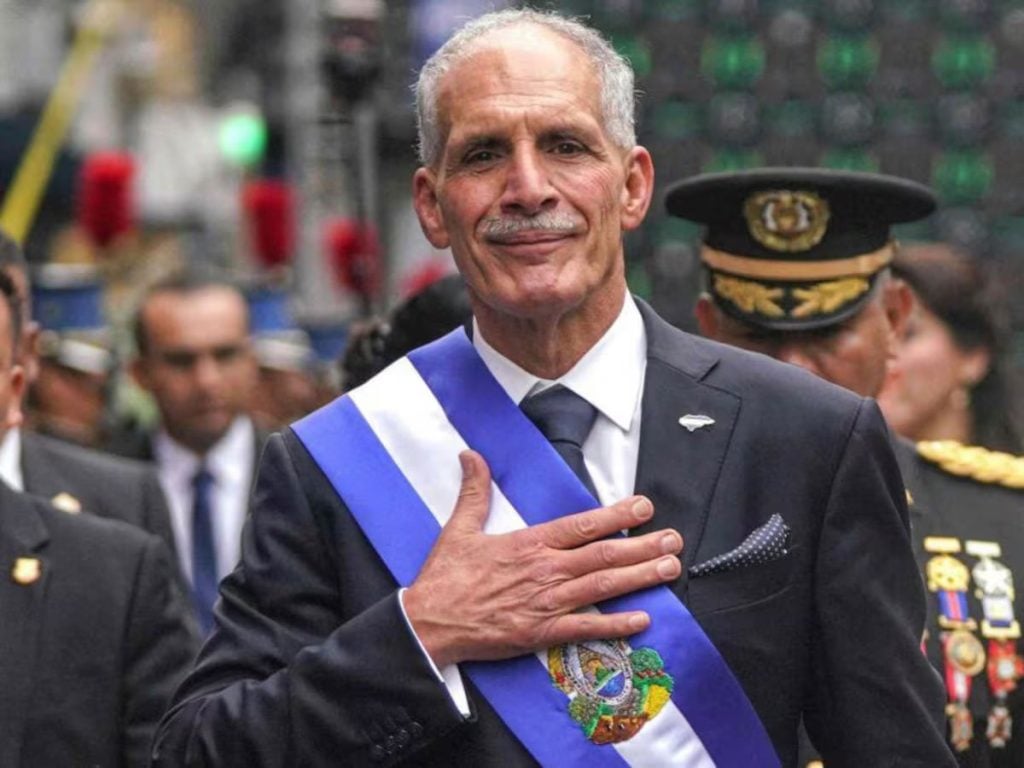
The expression «SELECTIVE JUSTICE,» employed by Menjíbar and echoed as a critique by those questioning these actions, should not be settled through slogans. It demands resolution through meticulous document comparison.
The Constitutional Chamber must elucidate through its rulings what legal disparities justify the protections granted in the cases of Mauricio Oliva, Ana Paola Hall, Cossette López, or Jorge Cálix, while such protection was denied to cases related to the Permanent Commission.
This explanation is particularly vital when the rights at stake involve the basic principles: knowing the specific facts under investigation, preparing a defense, receiving due process, being afforded effective judicial protection, and being treated equally under the law.
Ultimately, the question that arises after reviewing the documents and hearing Menjíbar’s video is: Are the disparities in treatment a result of objective legal differences between the cases, or are we facing an uneven application of guarantees depending on who is being investigated?
These are undoubtedly politically motivated actions. The answer lies not with a political party, a journalistic headline, or a public statement. It resides with the case files, the evidence, and above all, a justice system capable of demonstrating that the same guarantees apply to everyone and that any differences in treatment can be publicly, objectively, and legally verified.
These precedents also add an element that transcends internal debate: the independence and functioning of the Honduran justice system are increasingly being questioned on the international stage. (What is evident does not require glasses.)
In August 2026, U.S. Congress members Jamie Raskin, Jim McGovern, and Adelita Grijalva questioned the expedited and inexplicable dismissals of high-ranking officials within Honduras’s justice and electoral systems.
Likewise, Congress members Ilhan Omar, Greg Casar, and Jesús “Chuy” García, leaders of the Congressional Progressive Caucus in the U.S., expressly warned that: “The judiciary of Honduras must not yield to political pressures.”
Additionally, joint statements from international organizations like WOLA, CEJIL, DPLF, Robert F. Kennedy Human Rights, Cristosal, and others have criticized the use of political trials against high judicial and electoral officials, warning that such practices may conflict with international human rights standards and threaten institutional independence.
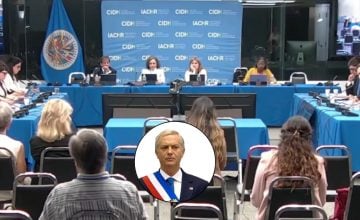
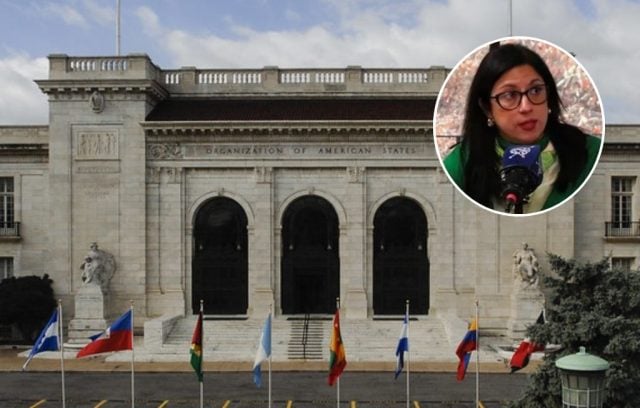
Concerns formally reached the Inter-American Commission on Human Rights, which held a hearing in Washington on August 5, 2026, titled: “Honduras: Situation of Judicial Independence,” where civil society organizations raised issues regarding the political trials against justice operators and other structural weaknesses in judicial independence.
On September 23, 17 U.S. Congress members, led by Jim McGovern and Delia Ramirez, reiterated their concerns regarding Honduras, stating that violence, corruption, and impunity undermine stability, and called for effective investigations and accountability.
Thus, the questions surrounding judicial independence, political pressures, impunity, and the rule of law in Honduras are no longer solely from domestic actors: they reflect growing scrutiny from U.S. congress members, international human rights organizations, and the very Inter-American System.
The Permanent Commission and Luis Redondo are being pursued for demanding that all votes be counted, while the criminals behind these acts and other offenses remain in impunity.
CONSULTED SOURCES
-Jamie Raskin, Jim McGovern, and Adelita Grijalva — questioning the dismissals of justice and electoral officials: https://www.elheraldo.hn/honduras
-Congressional Progressive Caucus — Ilhan Omar, Greg Casar, and Jesús “Chuy” García: https://progressives.house.gov
-WOLA and international organizations — concerns regarding the use of political trials against judicial and electoral authorities: https://www.wola.org
-IACHR — hearing titled “Honduras: Situation of Judicial Independence,” August 5, 2026: https://oas.org
-U.S. Congress — 17 Congress members on violence, corruption, impunity, and rule of law in Honduras, September 23, 2026: https://mcgovern.house.gov
EL CIUDADANO
Obtén tu Pasaporte y apoya a El Ciudadano
Elimina la publicidad, accede a contenido exclusivo y sé parte de la comunidad.
Cancela en cualquier momento · Sin permanencia