Original article: Hotel Genessis: Encanto colonial en Antigua Guatemala
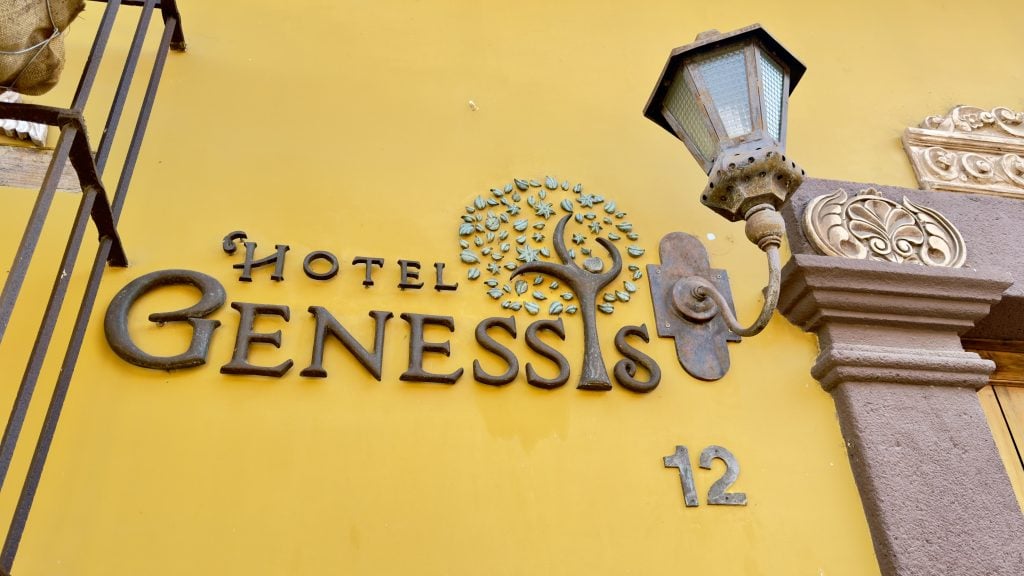
Located just four blocks from the Central Plaza, the Hotel Genessis occupies an elegantly restored colonial mansion where lush gardens, historic architecture, warm hospitality, and stunning views of the volcanoes offer guests a chance to savor the essence of Antigua Guatemala from the serenity of one of its historic neighborhoods.
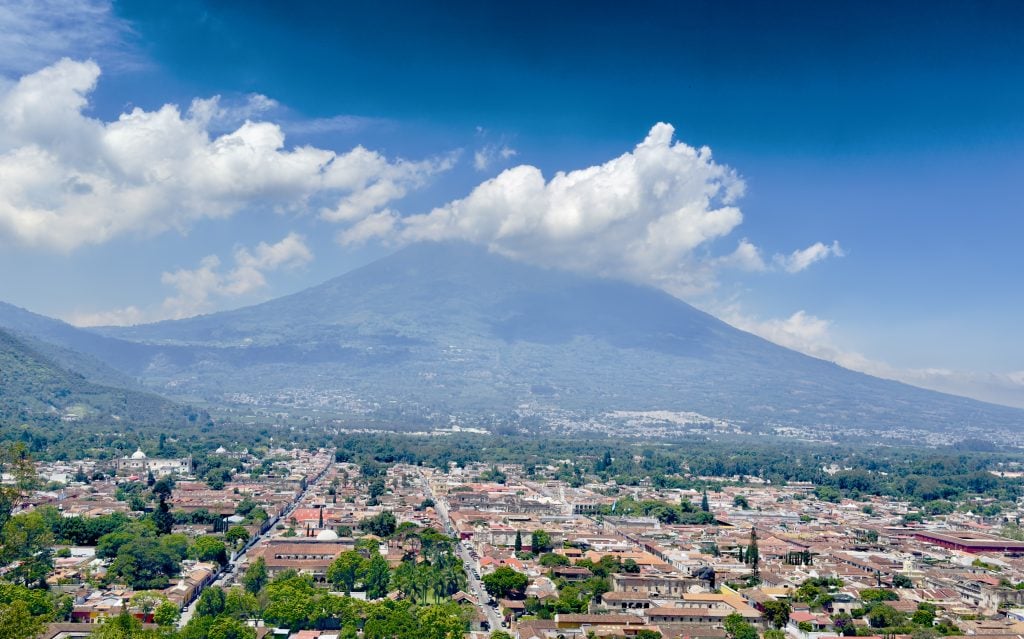
Some cities are best explored at a leisurely pace, and Antigua Guatemala is one of them. Declared a UNESCO World Heritage Site in 1979, this former capital of the Kingdom of Guatemala holds one of the most extraordinary colonial ensembles in the Americas. Its cobblestone streets, warm-colored facades, clay rooftops, and numerous churches, convents, and monasteries built between the 16th and 18th centuries transform every stroll into a journey through history.
However, perhaps one of the greatest charms of Antigua lies hidden behind its thick walls. Many of the old colonial residences conceal spacious interior courtyards filled with greenery, stone corridors, fountains, and gardens that now host hotels and restaurants where visitors can experience a perfectly preserved architectural heritage.
One such gem is the Hotel Genessis, a beautifully restored colonial house located in a peaceful residential area just four blocks from the Central Park. Its location allows for walking tours of the historic city while remaining removed from the constant hustle and bustle of the areas frequented by backpackers and tourist groups. The hotel and its location invite guests to relax in tranquility.
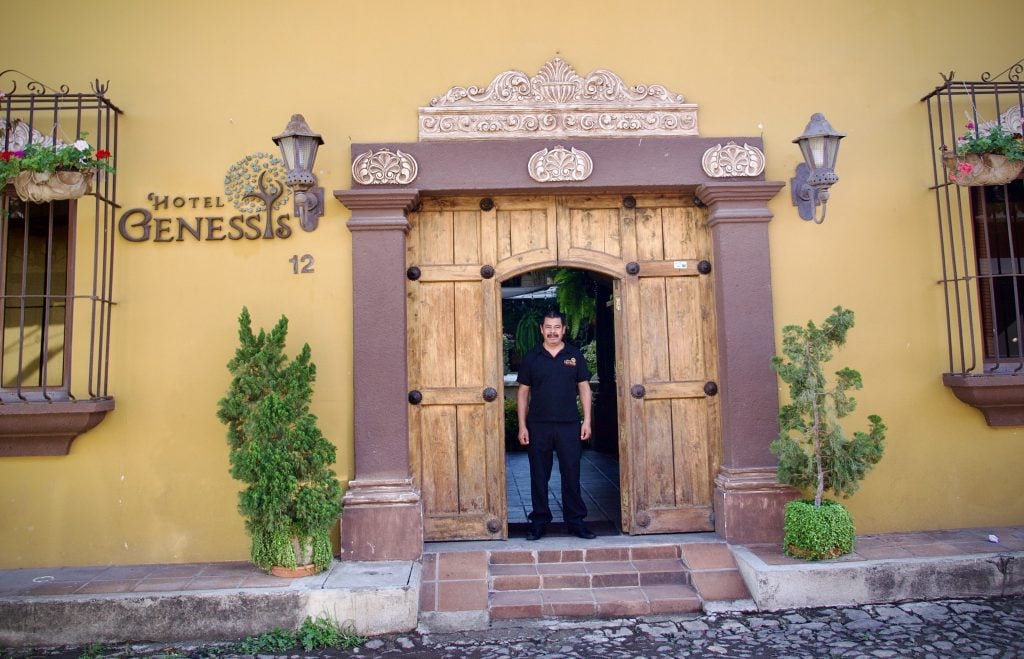
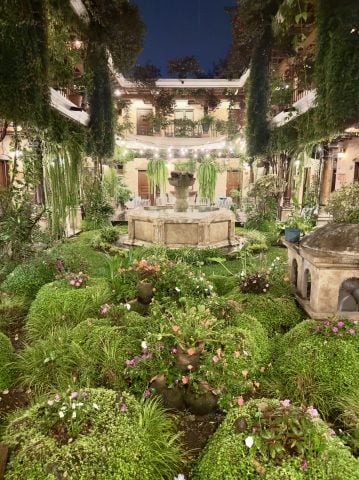
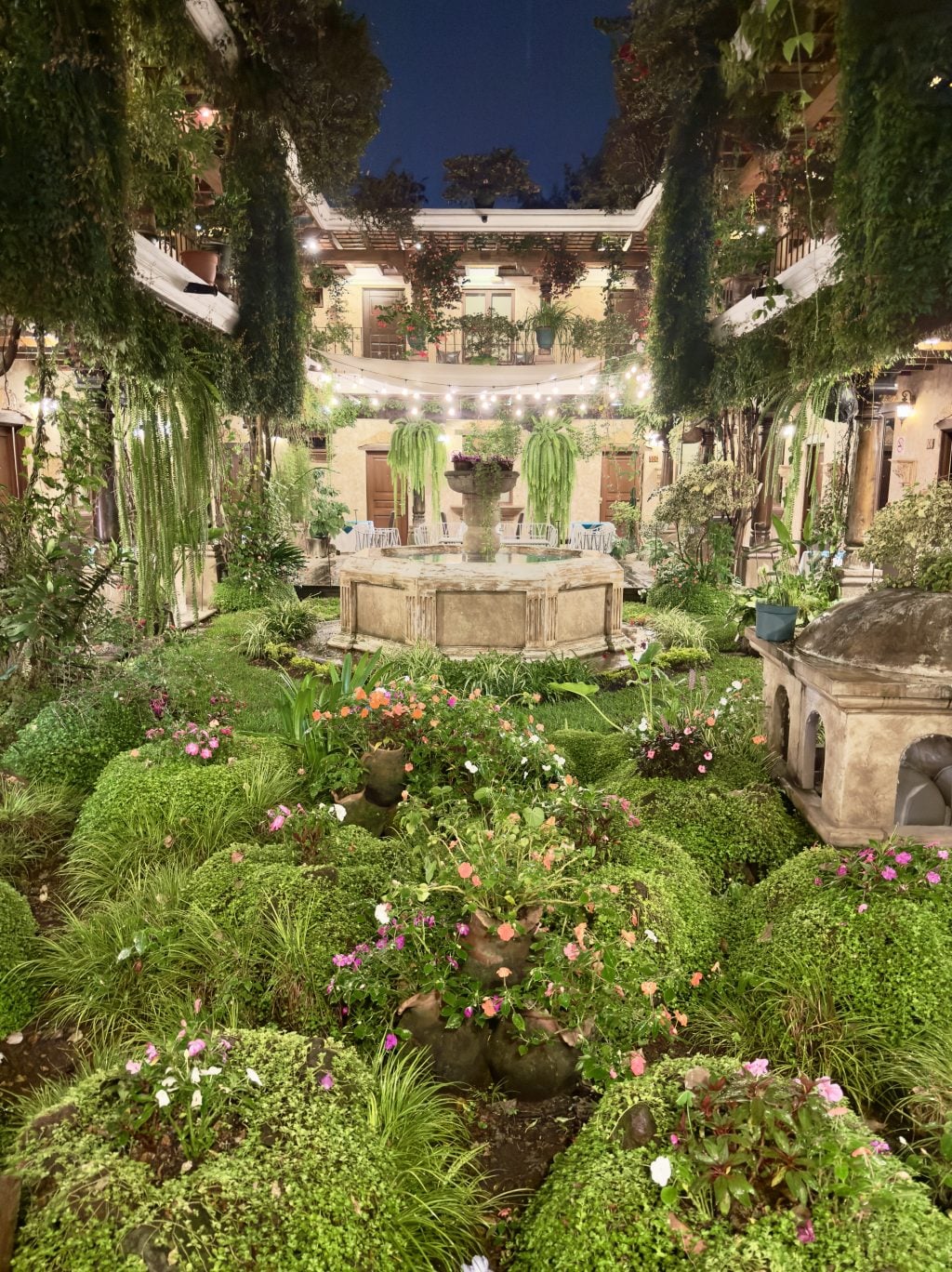
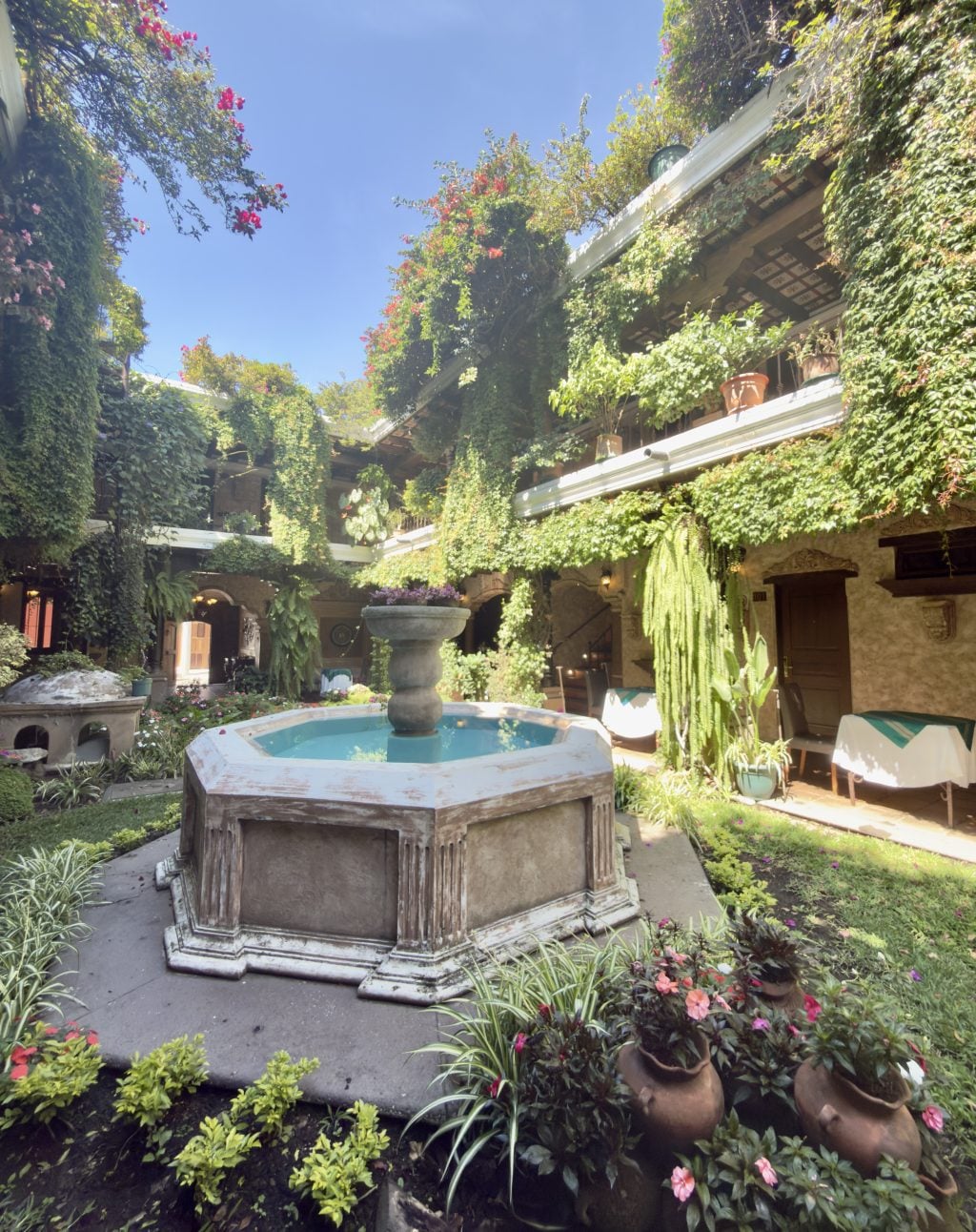
From the moment you enter, the architecture plays a vital role in the experience. The hotel preserves the traditional layout of Antigua’s ancient houses: a spacious central courtyard surrounded by covered galleries, lush gardens, and a vintage stone fountain where water gently flows among the rocks, filling the atmosphere with a soothing sound that beckons relaxation.
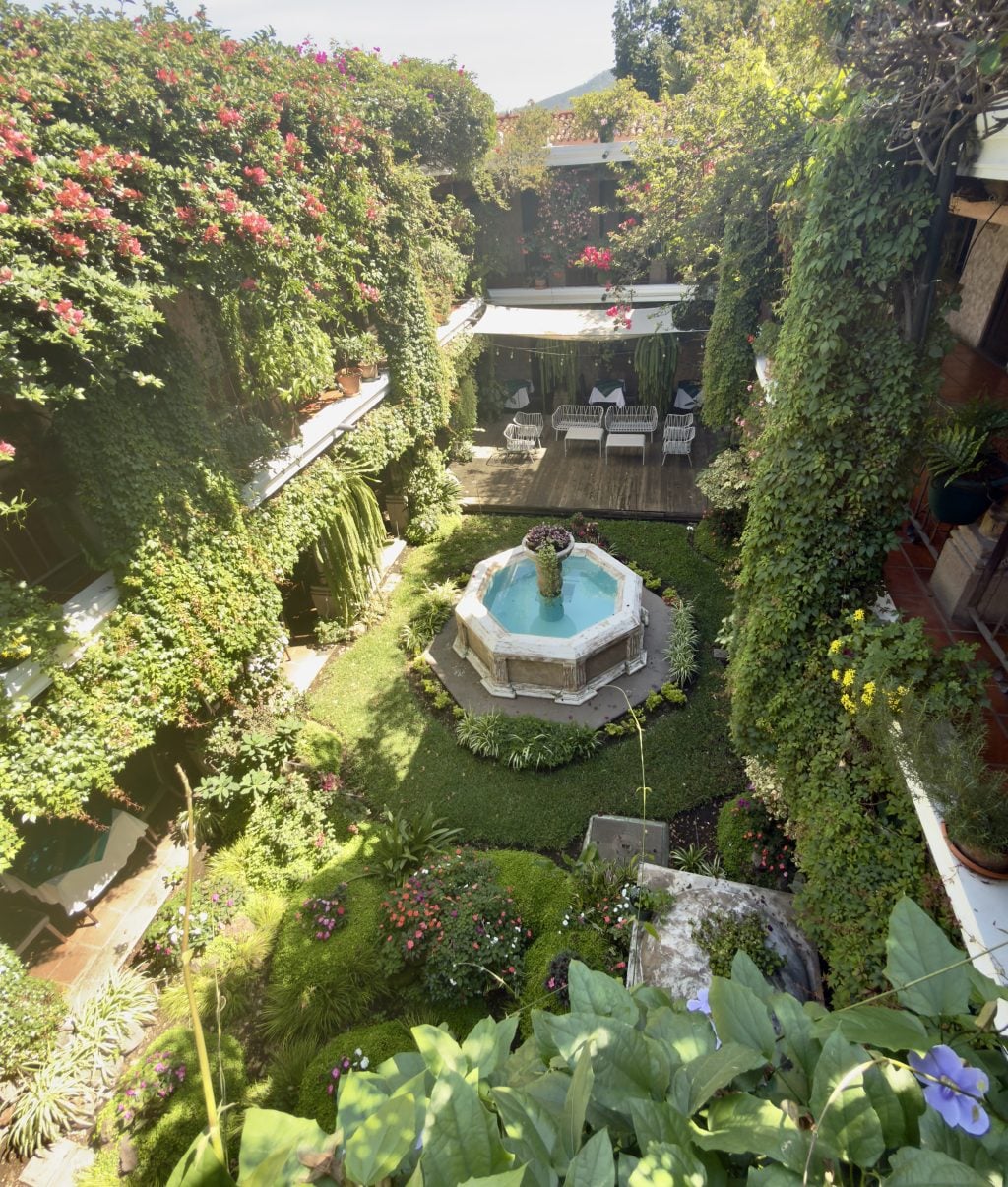
Tropical plants, flowers, vines, and trees breathe life into every corner of the courtyard, while the corridors invite guests to calm their thoughts and enjoy the perfect blend of nature and colonial architecture that characterizes Antigua Guatemala.
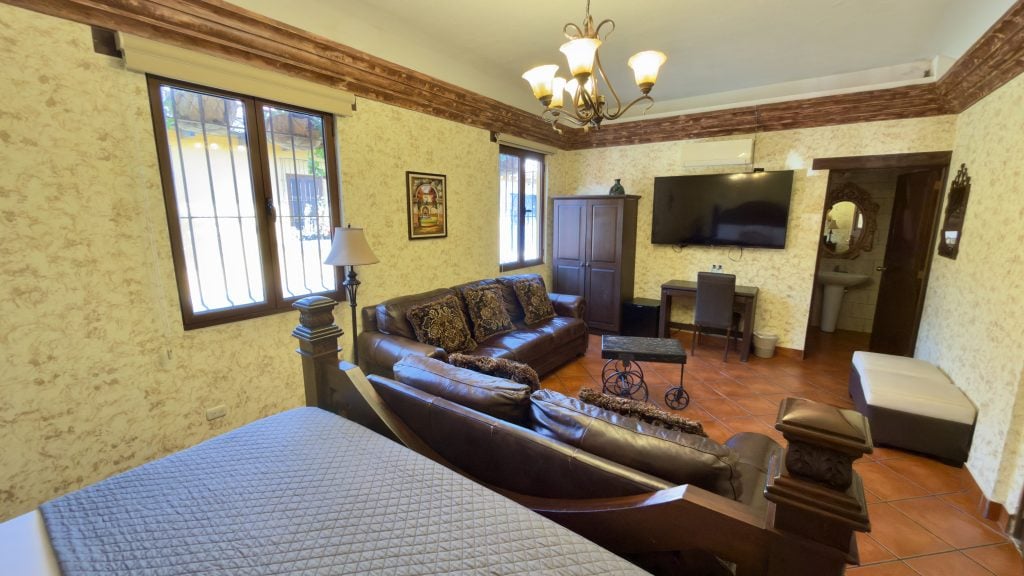
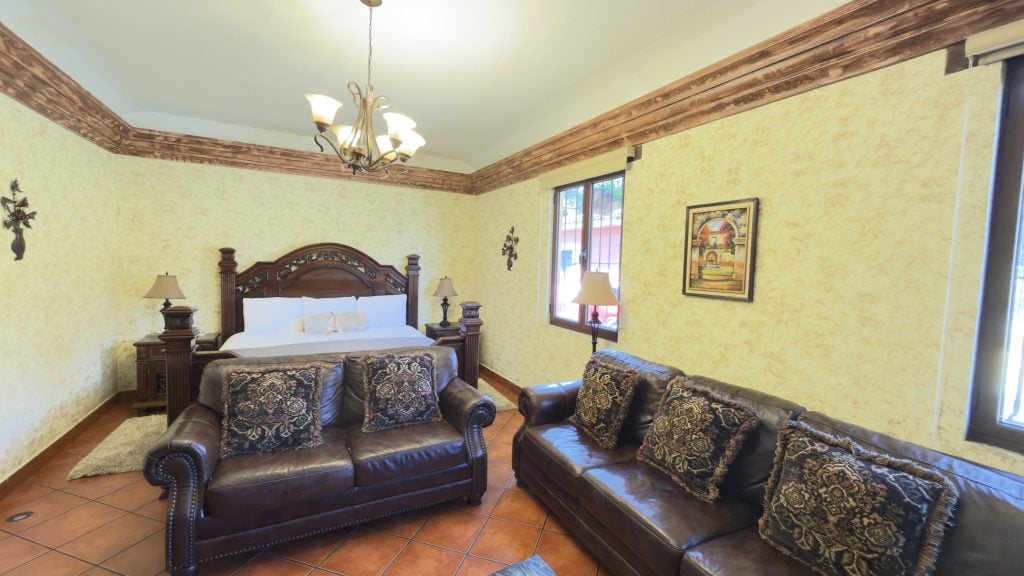
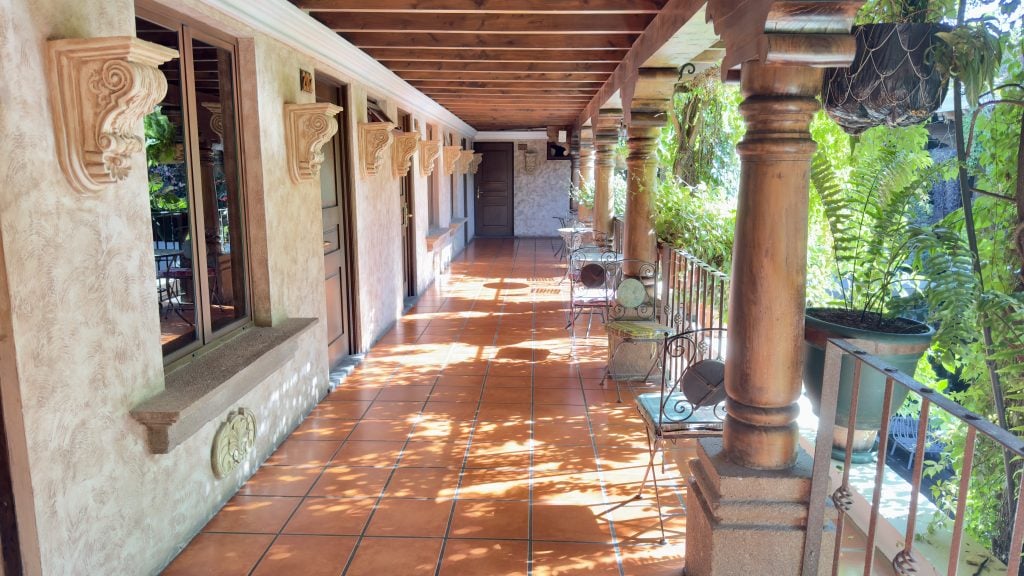
The hotel rooms maintain this same identity. They are spacious, bright, and adorned with elegant antique wooden furniture that harmonizes beautifully with the original floors, beams, and architectural details of the mansion. Each space conveys the feeling of inhabiting a historic colonial residence carefully adapted to provide comfort without sacrificing its historical character.
Our first morning began promptly at seven when the buffet breakfast was set up under one of the galleries surrounding the garden. As the city awakened, the aroma of freshly brewed coffee mingled with the soothing sound of the fountain and birds singing.
The buffet includes coffee, tea, herbal infusions, natural juices, and refreshing waters. Highlighted on the table are scrambled eggs, caramelized bananas, waffles drizzled with honey and caramel, cold cuts, cooked tomatoes, cereals, yogurt, black beans, cheese, a variety of cheeses, breads, cakes, and an abundance of fresh fruits such as papaya, watermelon, and pineapple.
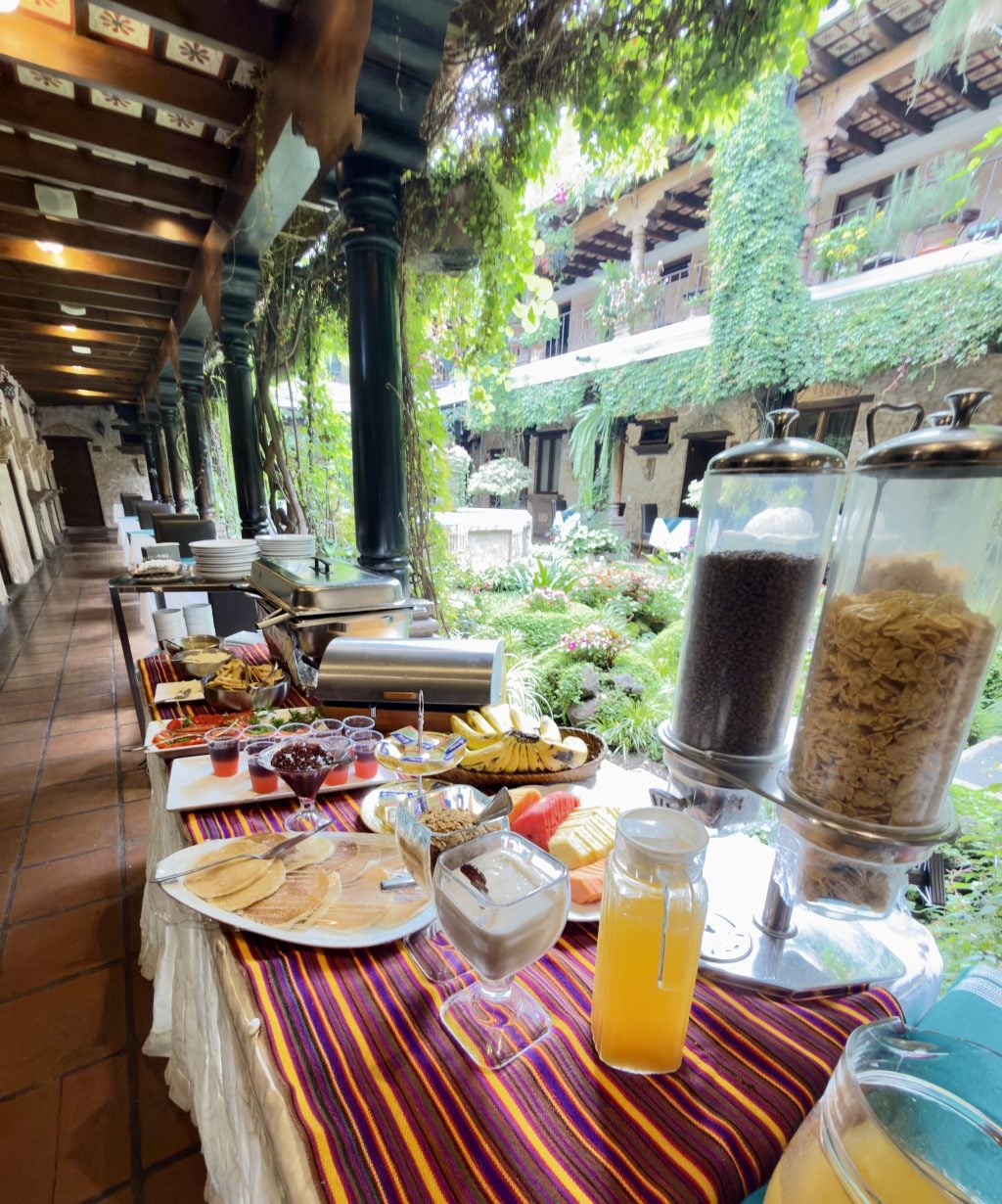
We chose a simple combination: scrambled eggs, coffee, tea, and a generous portion of tropical fruits. There was no rush; the garden invited us to linger a little longer, enjoying the tranquil atmosphere and the slow pace characteristic of Antigua.
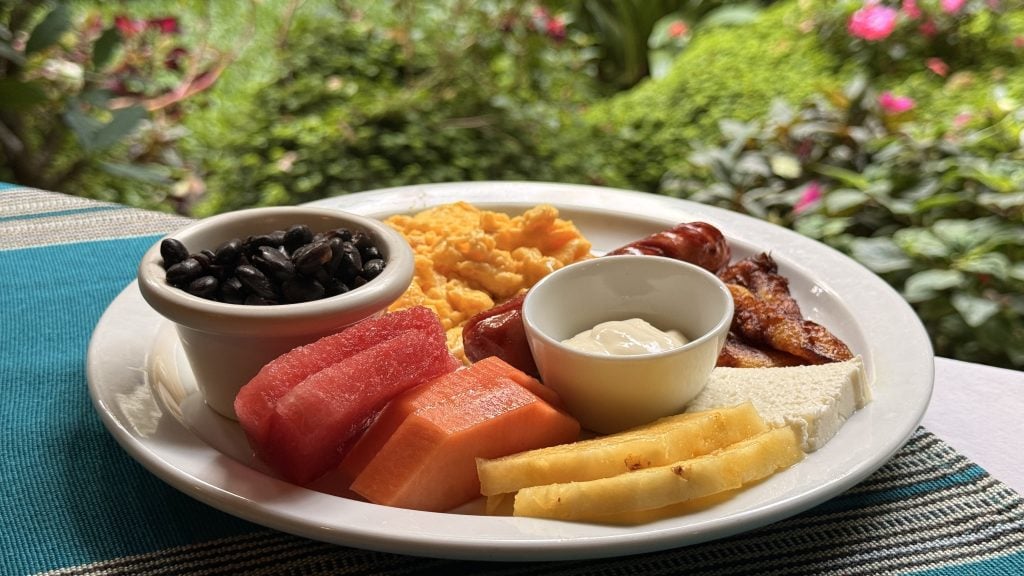
For those who prefer, the Desayuno Chapín, traditional Guatemalan breakfast, is also available. This dish consists of scrambled eggs, sausage, black bean paste, caramelized banana, and fresh fruit, accompanied by natural juice, coffee, and tea. It is a simple yet representative preparation of the country’s everyday cuisine.
One aspect that stands out in the morning is the light that bathes the entire garden. The early hours of the day illuminate the flowers, plants, and corridors with a warm glow that highlights every detail of the mansion. I took the opportunity to grab my camera and explore the hotel’s two floors. That’s when I discovered a wrought iron spiral staircase leading to the rooftop.
From there, one of the hotel’s biggest surprises is revealed. The panoramic view allows guests to appreciate much of the colonial rooftops of Antigua Guatemala and, rising above them, the three giants that dominate the region’s landscape: the imposing Volcán de Agua, the active Volcán de Fuego, and Acatenango, whose silhouette completes one of Central America’s most stunning natural scenes.
In the evening, we returned to the terrace as a thunderstorm began to form on the horizon. For long minutes, lightning illuminated the clouds enveloping the volcanoes, creating a mesmerizing lightshow over the colonial city. It was one of those moments that no itinerary can promise, but become one of the most beautiful memories of the journey.
The hotel’s location also makes it easy to discover some of Antigua’s main historical temples. Within minutes of walking, visitors can reach several of its most iconic churches, stroll its cobblestone streets, and explore cafés, art galleries, and artisan workshops without needing any transportation. Additionally, it’s only a short hike to Cerro de la Cruz, a viewpoint that offers beautiful panoramic views of the ancient city.
Another noteworthy aspect of this beautiful three-star hotel is the human touch. From the reception to the breakfast staff and maintenance team, everyone conveys a warm, friendly, and attentive demeanor, always willing to assist guests. This hospitality transforms good infrastructure into a truly welcoming experience.
In a city where history seems to be present in every stone and facade, Hotel Genessis achieves something uncommon: it offers all the comforts of modern lodging while retaining the spirit of the ancient colonial houses that gave identity to Antigua Guatemala. More than just a place to sleep, it serves as a starting point to understand one of the most beautiful heritage cities in Latin America.
Rating: Excellent.
Reservations: www.hotelgenessis.com
By Sebastián Saá.
Obtén tu Pasaporte y apoya a El Ciudadano
Elimina la publicidad, accede a contenido exclusivo y sé parte de la comunidad.
Cancela en cualquier momento · Sin permanencia