Original article: “Gran ignorancia del derecho internacional”: abogado e investigador en DD.HH. Salvador Millaleo destroza postura de ministro Barros sobre Convenio 169
The suggestion from Defense Minister Fernando Barros to withdraw from the ILO Convention 169 not only reveals a deep lack of coordination within the government, but also demonstrates, according to academic Salvador Millaleo, a «great ignorance of international human rights law.»
The minister labeled the treaty as a «divisive factor» and a «risk to the country.»
“There are Chileans who are treated differently because of their ethnic origin, and that creates a breeding ground for conflict,” he stated in an interview with Diario Financiero, asserting that “Chile is a unination.”
When asked about the possibility of Chile abandoning the treaty, he replied, «yes, it is feasible, there are ways to withdraw.» However, the Minister of the Interior and Secretary General of Government, Claudio Alvarado, contradicted him, while President José Antonio Kast dismissed leaving the agreement as a priority, although he supported changes to the Lafkenche Law.
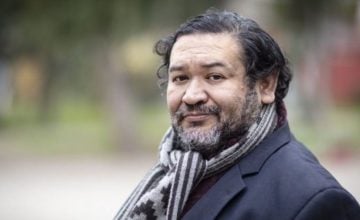
For the University of Chile lawyer, whose paternal family belongs to the Juan Andrés Huenchuleo community living in the La Araucanía region, Barros’s comments signal a symptom of the government’s improvisation and lack of a clear indigenous policy.
Millaleo’s analysis began by questioning the authority of the individual who sparked the controversy. «A Defense Minister without any expertise in these matters has no right to make such judgments,» asserted the legal scholar, emphasizing that these issues should fall under the purview of ministries like Economy, Social Development, or Foreign Affairs.
In his view, this situation «affirms what we’ve seen regarding this government’s indigenous policy, which is improvisational.”
The lack of a robust official definition led the researcher and PhD in Sociology from the University of Bielefeld (Germany) to claim that they «do not have a rational plan, not even a right-wing one, that clearly states what they want.»
At the core of the criticism lies the legal interpretation of the treaty, which Millaleo dismantled, explaining that «Convention 169 does not mention nationality at all», but instead «recognizes the right of indigenous peoples to their culture, the right to exist as a people.»
Millaleo: “Barros’s position is extreme because he is not directly familiar with the issue”
He argued that comparing this recognition to a division among Chileans is nonsensical, asserting «as if recognizing women’s rights means separating them from men.» This misunderstanding, which erroneously links the treaty to a concept of plurinationality that has already been rejected, was labeled «absurd» by the Law professor at the University of Chile.
“Such a position reveals a profound ignorance of international human rights law,” he asserted.
The academic and author also took time to explain the origin and purpose of Convention 169, emphasizing that «it is a human rights treaty» signed under the ILO to ensure the cultural integrity of peoples. One of the most significant rights it grants is the indigenous consultation, which applies to «investment projects affecting indigenous lands or natural resources in indigenous territories», a point that he highlighted has sparked controversy in Chile, considering the economic system heavily relies on raw materials extracted.
In response to this, Millaleo accused Barros of «mixing apples and oranges» by equating the treaty with the Lafkenche Law, as they are discussions of a different nature.
In remarks to Diario U. de Chile, he indicated that those advocating for the repeal of the Lafkenche Law are associated with more extreme positions, noting that “Barros’s stance is extreme, probably because he is not directly familiar with the subject.”
Beyond his critique of the Secretary of State’s statements, Millaleo calls for action and clarity.
“I think it’s necessary for the government to clarify what they plan to do,” he urged, reminding that the discussion about the Lafkenche Law is in Congress and that the presidential announcement on June 1 regarding indigenous policy has yet to be realized.
The former councilor of the National Institute of Human Rights (INDH) for the Senate (2019-2025) described the idea of abandoning Convention 169 as dangerous and shameful, stating that «Chile has never withdrawn from an international human rights treaty» and doing so would be «a very dark precedent.»
According to the lawyer, if the government intends to change direction, they must articulate it, for until now, «they have done nothing» and the country is still waiting for a concrete plan.
Featured image: Diario U. de Chile.
Obtén tu Pasaporte y apoya a El Ciudadano
Elimina la publicidad, accede a contenido exclusivo y sé parte de la comunidad.
Cancela en cualquier momento · Sin permanencia