Original article: Irán golpea radares y bases de EE.UU. en el Golfo tras denunciar 38 muertos por ataques de Washington
The Islamic Revolutionary Guard Corps (IRGC) and Iran’s military carried out on Friday the execution of the eleventh phase of Operation Thunder, launching a series of strikes with drones and missiles that targeted naval radars, air bases, and U.S. troop positions in Oman, Kuwait, and Bahrain, after accusing Washington of continuous bombings against southern Iran, particularly in Iranshahr, which resulted in at least 38 civilian casualties and hundreds of injuries.
In an operation staged in the Gulf of Oman, the naval forces of the Revolutionary Guard destroyed a U.S. maritime surveillance radar located in the Salamah area, as well as another aerial surveillance radar in the Ghanim region, both belonging to the Sultanate of Oman.
The Iranian military command emphasized that this action serves as a protective measure for the residents of the provinces of Khuzestan, Bushehr, Hormozgan, and Sistan and Baluchestan.
Offensive with Suicide Drones Against Bases in Kuwait and Bahrain
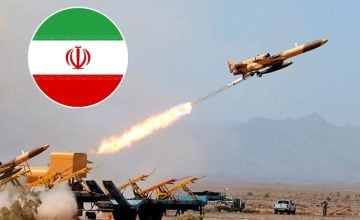
On a parallel front, the Iranian army utilized Arash suicide drones to strike the Sakhir base in Bahrain, impacting U.S. helicopter and P-8 reconnaissance aircraft hangars. This offensive against the strategic military site demonstrates Tehran’s capability to reach sensitive U.S. targets in the Gulf region, expanding the range of its retaliatory operations beyond its immediate borders.
Simultaneously, on Kuwaiti territory, Iranian forces destroyed an enemy radar system, ammunition depots, two ground-to-ground missile platforms, and U.S. troop positions. The Revolutionary Guard made it clear that each U.S. attack will be met with a robust response to their assets in the region, reported HispanTV.
Total Blockade of the Strait of Hormuz
Strategically, Tehran reaffirmed that it will keep the passage through the crucial Strait of Hormuz closed to international navigation as long as U.S. aggression persists.
Thus, it will not be possible to export oil or gas through this key maritime route, a move that directly impacts global energy interests and the stability of the international hydrocarbon market, as it affects the transport of 20% of the crude oil consumed and traded worldwide.
The Iranian command denounced that the attacks ordered by U.S. President Donald Trump have diminished domestic hydrocarbon production due to material damages, resulting in a total halt of exports from the strait and representing a response to foreign siege.
38 Civilians Killed and Damage to Civil Infrastructure
The continuous U.S. bombardments against southern Iran have recently targeted civil infrastructure, such as two bridges, an airport, and a railway station, resulting in at least 38 civilian deaths and hundreds wounded.
According to Iranian media, the bombings carried out by U.S. aviation during the night of Thursday struck non-military logistical and transportation facilities, constituting a violation of international humanitarian law.
Obtén tu Pasaporte y apoya a El Ciudadano
Elimina la publicidad, accede a contenido exclusivo y sé parte de la comunidad.
Cancela en cualquier momento · Sin permanencia
Artículos Relacionados
Ceasefire Ends: Iran Launches Attacks on US Bases in the Gulf Following Fresh Airstrikes
Hace 2 meses