Original article: Minisubmarinos iraníes convierten Ormuz en un dolor de cabeza para EE.UU.
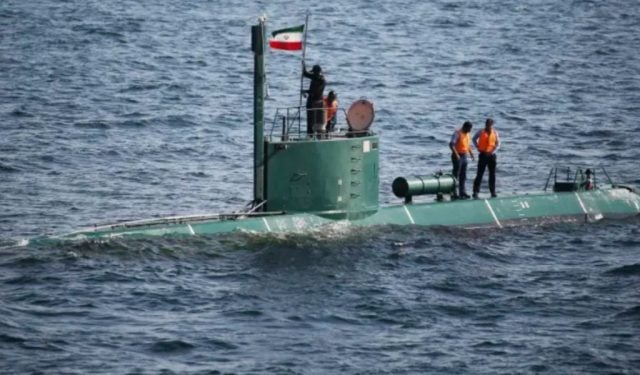
Amid escalating geopolitical tensions surrounding the U.S. and Israel’s conflict with Iran, a silent yet diminutive obstacle has emerged as a significant concern for the Pentagon. As Washington deploys thousands of troops in an effort to reopen the Strait of Hormuz — which has been effectively blocked by Iranian forces since the conflict began — Tehran has introduced the Qadir-class minisubmarines, strategically designed to maximize the unique characteristics of this maritime route, through which approximately 20% of the world’s oil and gas is traded.
According to specialized publications, this fleet poses the greatest threat to U.S. naval aspirations in the Persian Gulf region.
The complex situation was reported by the Israeli daily Yedioth Ahronoth, which cited a recent report from the British newspaper The Telegraph. This analysis suggests that Iran’s advantage does not stem from conventional naval confrontations, but rather from its ability to operate in an environment where advanced U.S. technology struggles to cope.
Reports suggest that U.S. aircraft and detection systems face significant challenges in neutralizing these small vessels, primarily because they are designed to navigate the shallow, murky waters characteristic of the strait.
The report details the technical features that make these submarines such elusive adversaries. As noted by The Telegraph, Iran currently possesses up to ten Qadir-class minisubmarines.
Among their most notable features are their dimensions. Each one is approximately a tenth of the size of a conventional attack submarine.
Additionally, they have a displacement of around 120 tons and measure 29 meters (95 feet) in length. Despite their smaller size compared to American giants like the Ohio-class submarines, which displace 18,750 tons and extend 170 meters long, they can operate in waters as shallow as 30 meters, like those found in the Persian Gulf.
The conditions in the Strait of Hormuz, described by analysts as a cocktail of shallow waters combined with the constant noise of merchant vessels and oil drilling, create a complex environment for U.S. forces to detect, target, and destroy the small Iranian submarines using conventional sonar systems.
Torpedo Launches and Naval Mines to Create Chaos in the Persian Gulf
The lethal threat posed by the Qadir extends further, as these minisubs can create chaos in the waters of the Persian Gulf. According to the report, they can launch torpedoes at tankers transiting the area, turning massive oil vessels into vulnerable targets in a confined aquatic space.
Simultaneously, the Iranian fleet has perfected the art of mine warfare in the Strait of Hormuz. Reports indicate that these submarines can operate at night to deploy dozens of naval mines along this maritime route without being detected, a tactic that would significantly complicate any naval clearance attempts by the U.S.
Iran’s Other ‘Suicide Boats’
Iran’s strategy in these waters is not limited to the Qadir submarines. The British newspaper detailed that, over the past four decades, Iran has focused its efforts on studying the conditions of the Persian Gulf and training its submarine crews in the area.
This military framework is complemented by vessels designed for deploying tactical divers and conducting special operations in shallow coastal waters, including the placement of mines.
«These vessels can also be equipped with warheads, effectively turning them into suicide boats,» revealed the digital outlet HispanTV.
To further bolster the defense of the strait, Iran also operates a fleet of Fateh-class submarines, which displace about 600 tons.
According to intelligence reports, these vessels are equipped with enhanced sensors and torpedo systems, allowing them to operate in deeper waters, serving as a secondary response force to support the smaller Qadir submarines in the event of escalating conflict.
Crisis in the U.S. Due to the Closure of the Strait of Hormuz
The closure of the Strait of Hormuz has had immediate repercussions on global energy markets, as it is an essential maritime route for crude oil exports from countries like Saudi Arabia, the United Arab Emirates, Kuwait, and Iraq.
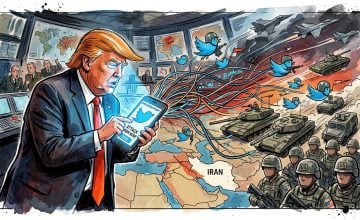
The disruption of this flow has caused a severe spike in oil prices, turning the crisis into a direct geopolitical and economic headache for Washington, prompting President Donald Trump to order the deployment of thousands of troops to the Persian Gulf in preparation for a potential ground invasion to seize control of the narrow maritime passage.
However, Iranian authorities have issued direct warnings about the catastrophic consequences a military incursion into their territory or jurisdictional waters would have for the North American nation.
The ramifications of the conflict extend beyond the Middle East, threatening to generate a global-scale economic, energy, and political crisis.
Artículos Relacionados
Iran Launches Attack on U.S. Oil Tanker, Claims Control of Strategic Strait of Hormuz Amid War Tensions
Hace 4 semanas
Trump Isolated: Europe Refuses to Send Ships to Hormuz After Iran Offensive, Declares 'This Is Not Our War'
Hace 2 semanas