Original article: ¿Estado de Israel socio estratégico de la industria salmonera en la Patagonia de Chile? Webinar devela intereses en biotecnología, automatización y cooperación
International Webinar Connects Chilean Salmon Industry with Israeli Technology and Agencies
A webinar organized by Israel and Chilean industry groups promoted a technological alliance for salmon farming. Israeli company AquaculTech, linked to several ministries, unveiled its innovation ecosystem amidst global criticism regarding actions in Gaza, presenting solutions in AI and automation, with Chile envisioned as a validation laboratory for global markets.
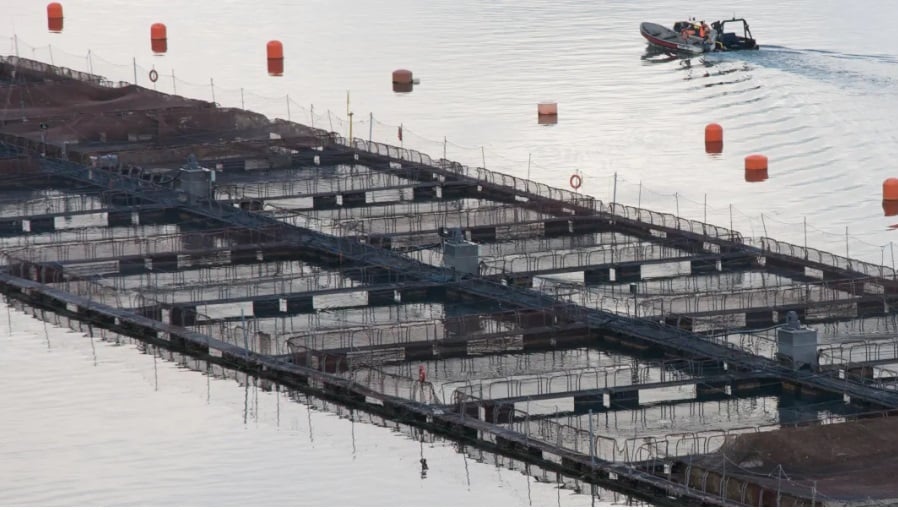
The international webinar titled «Innovation and Sustainability for the Salmon Industry» recently took place as part of Israel’s Commercial Mission in Chile, in collaboration with the Chilean Aquaculture Innovation Club, Innova Puerto Montt, and the Israeli Export Institute.
According to coverage from the specialized portal linked to aquaculture interests, SalmonExpert, the event brought together key players from the Chilean aquaculture ecosystem with Israeli startups and technology companies. Adolfo Alvial, executive director of the Aquaculture Innovation Club, presented the local vision, highlighting nearly 50 years of sector development and Chile’s position as the world’s second-largest producer of Atlantic salmon, a widely circulated fact within the industry. The event was conceived as a starting point for long-term technological alliances and pilot projects.
From Israel, the main presentation was delivered by Roni Sussman (also cited as Roni Hochman Sussmann on the site MundoAcuicola), executive director of AquaculTech Israel. Sussman detailed the nature and goals of this platform.
It is important to mention that Aquacul Tech is a joint initiative of the Ministry of Economy and Industry, the Ministry of Agriculture and Food Security, the Ministry of the Negev, Galilee and National Resilience, the Israeli Innovation Authority, and the Israeli Innovation Institute, all governmental bodies associated with the State of Israel, which faces global scrutiny regarding ideological control by Zionism, actions in Gaza, and interventions in areas of Patagonia in Chile and Argentina.
Sussman explained that the entity «connects the entire ecosystem, from students and researchers to companies, startups, investors, and service providers, with the goal of creating an innovative environment capable of addressing global aquaculture challenges.»
The Strategic Discourse
The representative of AquaculTech provided a rationale for Israeli interest in Chile. Directly quoted by SalmonExpert, Sussman stated: “Israel has developed very strong capabilities in water management, sensors, automation, and applied biotechnology. Chile, on the other hand, has a mature aquaculture industry on a global scale with real challenges that require advanced solutions. That combination makes cooperation very sensible.”
Echoing this sentiment, according to MundoAcuicola, she emphasized that the interest «is not limited to selling technology but to building long-term partnerships where solutions can be validated under actual productive conditions and then adapted to other markets,» highlighting SalmonExpert’s observation of a strategic partner in the development and scaling of aquaculture technologies.
These statements elucidate the vision of Chile as a validation laboratory for technologies developed under the auspices of Israeli ministries.
The webinar reportedly served as a showcase for at least seven Israeli companies whose developments align with the capabilities promoted by the AquaculTech ecosystem. BlueGreen Water Technologies presented solutions for controlling algae blooms, while VBact, represented by CEO Oz Bornstein, showcased a real-time microbiological monitoring system with AI. Bornstein declared, according to MundoAcuicola: “With our imaging technology and artificial intelligence algorithms, we can detect and monitor microbial contamination in real time, continuously, automatically, and without reagents.” Other present companies included GoSmart (precision aquaculture with computer vision), BioCastle (water treatment), Bioled (smart lighting), InnoValley (closed systems), and Mariculture Systems, whose CEO Yaron Bar-Tal expressed interest in «establishing partnerships with local actors in Chile to implement this offshore cultivation technology,» according to the same portal.
The organizers concluded that the event marked the beginning of a long-term strategy. Israel’s Commercial Mission in Chile, as highlighted by SalmonExpert, emphasized that the national aquaculture sector positioned itself as a «natural laboratory to validate, scale, and adapt solutions aimed at other international markets.» Subsequent individual meetings were scheduled between Israeli exhibitors and Chilean stakeholders. The narrative, promoted by industry-related portals, showcases the encounter as an opportunity to «accelerate applied innovation and enhance the competitiveness of Chile’s salmon farming» through sustained cooperation with the Israeli technological ecosystem, of which AquaculTech is the governmental orchestrating arm.
Patagonia in Dispute: Reports Reveal Salmon Farming Expansion, Environmental Damage, and Capture of Chilean Seas
These alliances also emerge amid increasing scrutiny of the industry in Chile. Overproduction of salmon—which has been repeated and sanctioned—has been flagged by communities and scientific sectors as a major source of environmental damage. The case of Australis Mar, which acknowledged producing 80,000 tons over the allowed limit, and the record of the multinational Nova Austral, with conditionally suspended criminal processes, reflect structural misconduct. Experts warn of severe impacts on marine bottoms, anoxia, and contamination, even within protected areas of Patagonia.
Official data from Sernapesca and studies from the University of Austral of Chile indicate that 42% of salmon farming concessions operate within or adjacent to protected areas. Organizations grouped in the campaign Defend Patagonia report the existence of 428 concessions in these territories, labeling them as “salmon farming sacrifice zones.” Annual reports cite tons of antibiotics used, massive mortality events—such as the 5,000 tons of dead fish in Comau fjord in 2021—and direct impacts on unique ecosystems, occurrences that have been repeated in other parts of Patagonia.
In the past decade, over 5.4 million salmon have escaped from industrial centers, a non-native predatory species threatening marine biodiversity, according to official figures cited by Defend Patagonia. Additionally, reports from Interferencia reveal that 587 aquaculture concessions—nearly 40%—are mortgaged to national and international banks with commitments in the billions of euros, complicating their cancellation. Communities and organizations warn that the salmon farming conflict is no longer solely environmental but also social, cultural, and sovereignty-related, with increasingly visible impacts in Chilean Patagonia.
On their part, territorial organizations and indigenous communities have reported that the salmon farming industry has intensified misinformation campaigns against the Marine Coastal Spaces of Indigenous Peoples (ECMPO), in the context of attempts to amend the Lafkenche Law. Leaders and community representatives, as well as experts, warn that the proposed changes would affect ancestral rights, giving a greener light to unchecked expansion of the salmon farming industry. Between 2023 and 2024 alone, over 70 sanctioning processes against companies in the sector have been initiated, highlighting a conflict that intensifies with time.
Relacionados
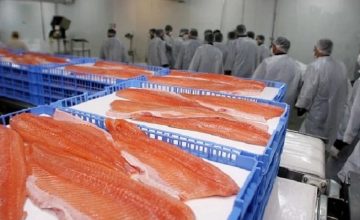
Salmon Industry Celebrates 'Salmon Worker Day' Amid Mass Layoffs and 90 Workplace Deaths in Chiloé
Hace 2 semanas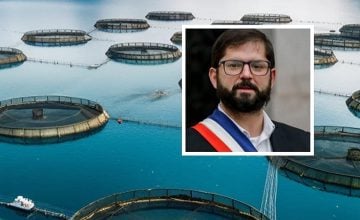
Environmental Contradiction Uncovered: Salmon Production Hits Historic Highs in Patagonia Under Boric Administration
Hace 2 meses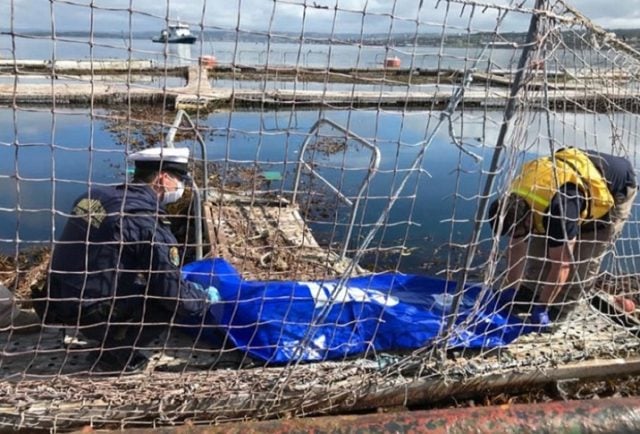
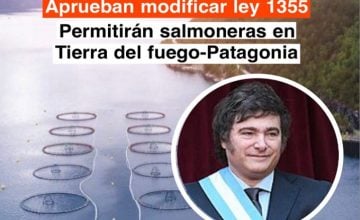
Argentina's Patagonia on Alert: New Legislation May Allow Chile's Salmon Farming Crisis in Tierra del Fuego
Hace 2 meses