Original article: Jeannette Jara compromete medidas para el desarrollo de la ruralidad y la agricultura familiar campesina
On a tour of the O’Higgins Region, presidential candidate Jeannette Jara made several key commitments focused on rural development and particularly on supporting family farming.
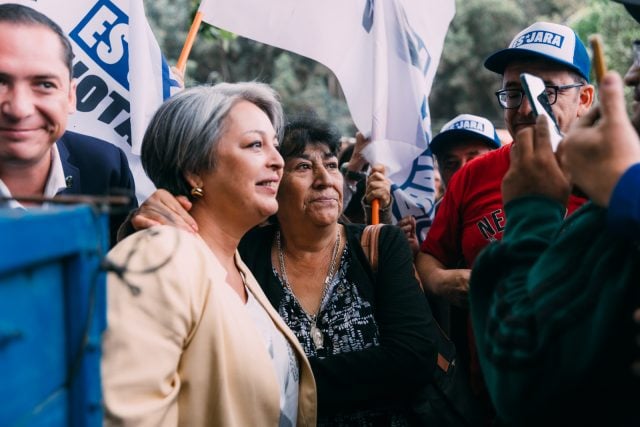
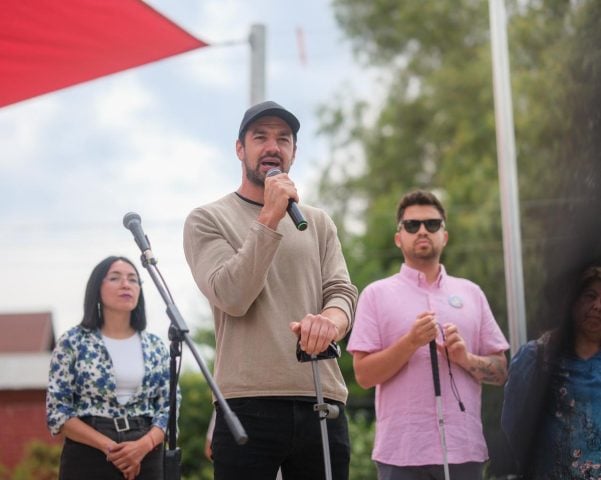
In the municipality of Peumo, the progressive candidate met with Rural Drinking Water Committees, local residents, and representatives from family farming. The event was attended by regional campaign leaders, Senator Alejandra Sepúlveda, Governor Pablo Silva, as well as Deputy Félix Bugueño and newly elected Deputy Carolina Cucumides.
Regarding this, Jeannette Jara stated, «I have come to formalize my commitments to O’Higgins, particularly concerning the rural community and family agriculture.»
She added, «I am aware of the challenges being faced in an agricultural sector that is crucial for our country’s food supply, for managing prices generated from direct sales to consumers, and that has created a situation where individuals and families are experiencing economic hardship, difficulties in selling their products, high market concentration, and I am here to say that we are going to support them.»
In this regard, the lawyer and public administrator emphasized that her potential government would promote greater technological advancement and credit support in agricultural development, alongside strengthening INDAP (National Institute of Agricultural Development). She highlighted, «The commitments we envision also pertain to rural drinking water. We understand its importance in communities and how it is closely linked to housing. I want to emphasize that my government will advance by constructing 125 more sanitation systems.»
Jara also pledged an investment plan in rural health, specifically focusing on gynecological care for women and mental health services through mobile Cosam units. Furthermore, regarding educational infrastructure in rural areas, she stressed the need to modernize schools, secondary schools, and kindergartens to address historical gaps in education and well-being that are more pronounced in rural settings.
Meanwhile, Senator Sepúlveda praised the commitments made to O’Higgins and the rural community, stating, «We are committed to seasonal workers, irrigation, and ensuring that agriculture is sustainable, utilizing INDAP technology.» She added that Jeannette Jara «understands that Chile cannot thrive without the rural communities.»
COMMITMENTS
Comprehensive Drinking Water Supply Plan
– Formulating and initiating the execution of a national plan to ensure drinking water accessibility throughout the territory, simultaneously incorporating adaptation and mitigation strategies in response to the water crisis.
– Accelerating the construction of 125 new Rural Sanitary Services systems within four years, prioritizing regions with lower coverage (southern zone) and semi-concentrated localities, aiming for 100% coverage of semi-concentrated areas by 2030 and reducing reliance on emergency solutions such as water trucks.
National Investment Plan for Rural Health
– Utilizing mobile COSAM units, providing out-of-hospital care, and strengthening local community networks with culturally relevant prevention and promotional strategies.
– Updating Inter-sectoral Health Programs, renewing alliances with educational communities and agricultural entities regarding healthy eating initiatives.
– Ensuring community involvement in Health Emergency Preparedness and Response Plans for Rural Emergencies and Disasters, incorporating training, communication equipment, and alert systems using local and mobile radios.
– Enhancing access to care for gynecological and reproductive health conditions with limited offerings, particularly in rural areas. Conditions include endometriosis, severe dysmenorrhea, and polycystic ovary syndrome.
– Enhancing tele-dental medicine for consultations and rural training.
– Complementing Internet access for all rural health centers nationwide, enabling telemedicine services across the country.
– 120 Primary Health Care devices (CESFAM, rural health posts, SAR, and CECOF).
Education: Infrastructure and Equipment for Disadvantaged Areas
– Giving priority to public education especially in rural areas as part of the National School Infrastructure Plan to improve public schools, high schools, and kindergartens.
Digital Connectivity
– Completing the construction of the 5G network, covering rural areas to enhance productivity in our vast territory, where only 10% of rural areas currently have fixed internet access. Furthermore, digital connectivity is vital for improving health services, educational quality, inclusion, and public safety.
Connectivity: National Program for Suburban and Rural Roads
– Regularizing and cataloging public use roads that currently lack legal recognition, creating a special investment fund for their maintenance and improvement. The priority will be on critical access for basic services, emergency vehicle access, water transportation (water trucks), and productive connectivity.
Sustainable Agro-industry
– Strengthening skills and creating opportunities to encourage permanence in the countryside for building a better rural and agri-silvicultural future. Promoting roots, leadership, and technical-professional training among youth through a Rural Youth Agenda that will provide funds for mentorship businesses, leadership schools, and finance the programs «Digital Roots» and «Agrotech.»
Gender Violence Prevention
– Implementing mobile SernamEG devices, to ensure operational vehicles equipped and staffed with specialists bring public state services to women in rural, isolated areas or those with limited institutional infrastructure. These mobile units will facilitate psychosocial, legal, labor assistance, and timely referrals, thereby strengthening the presence of the State with a gender and equity focus.
Housing
– Extending the Housing Emergency Plan, constructing 260,000 new homes and improving 140,000 existing ones.
– Implementing a National Camps Strategy, regularizing where possible and eradicating where not feasible, providing housing solutions.
– Promoting plans for energy efficiency in homes by encouraging the use of dry wood.
– Providing a mortgage program with zero down payment: first home subsidy for young people aged 25 to 40 years. A fixed interest rate will be ensured for home purchases with monthly payments under $300,000.
Rural Elderly Care
– Implementing a special program for Rural Elderly Care which includes access to health services, social security, infrastructure, and productive opportunities while ensuring active roles within communities.
Relacionados
Jeannette Jara from Tarapacá: "We Will Build a Second Technological Border to Address Global Border Control Issues"
Hace 3 meses