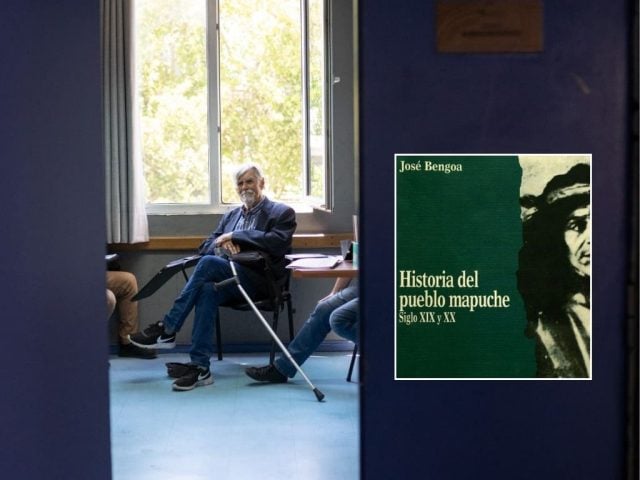
Original article: Muere José Bengoa, una voz imprescindible para entender el mundo mapuche
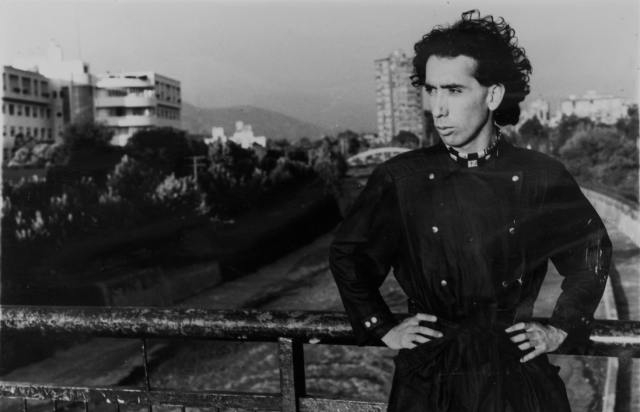
José Bengoa, a renowned historian, anthropologist, and recipient of the National Prize in Humanities and Social Sciences, has passed away at the age of 81, leaving a profound impact on Chile’s understanding of the Mapuche world. For over five decades, his work has contributed to bringing into public debate the history, demands, and tensions of a people long relegated to the margins of the official narrative.
Bengoa’s journey with the Mapuche people is closely tied to a persistent effort to listen and document voices that have historically been marginalized. His work, not without controversy, became an essential reference for understanding not only the past of the Mapuche people but also the contemporary conflicts surrounding territory, identity, and the state.
A Life Committed to Thinking from the South
Born in Valparaíso in 1945, Bengoa pursued an academic career that spanned history, anthropology, and social analysis. He was one of the founders of the Universidad Academia de Humanismo Cristiano and served as rector in two terms, alongside participating in various national and international forums related to human rights and indigenous peoples.
His contributions extended beyond academia. Over the years, he joined commissions and dialogue spaces aimed at influencing public policy regarding indigenous peoples, offering perspectives that fused rigorous research with practical field experience.
His legacy was recognized with the National Prize in Humanities and Social Sciences, an honor he dedicated to his “Mapuche friends,” reflecting the close relationships that shaped much of his intellectual life.
Centering the Mapuche World in National Debate
One of Bengoa’s most significant contributions was helping to shift the Mapuche narrative from the periphery to the center of national discourse. In a country where a homogeneous view of identity prevailed for decades, his work illuminated cultural diversity and the structural tensions between the Chilean state and indigenous peoples.
Through books, research, and public engagement, Bengoa tackled subjects like the occupation of Mapuche territory, rural transformations, and forms of cultural and political resistance. His approach sought to complicate a reality that has often been oversimplified or ignored.
In this respect, his work had a broad impact, influencing not only academic circles but also shaping the next generations of researchers and the political and social dialogues concerning the conflict in the southern part of the country.
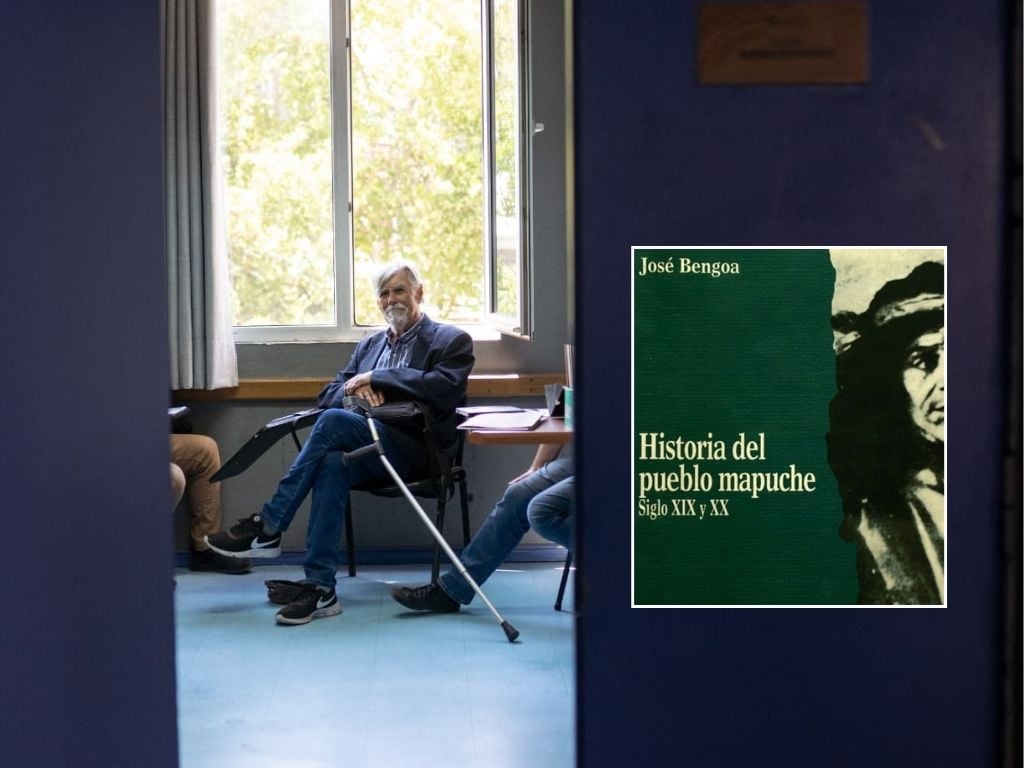
Bridging Research and Public Engagement
Throughout his career, Bengoa navigated between academic research and active participation in public advocacy. He was involved in commissions related to indigenous policies and engaged in dialogue spaces during conflicts, both in Chile and abroad.
This dual focus—between thought and action—was a defining characteristic of his career. His work aimed not only to describe reality but also to influence it, in a landscape marked by unresolved historical and political tensions.
An Open Legacy
The passing of José Bengoa leaves a significant void in Chilean social thought, as his work helped the Mapuche world transition from the margins of official history to occupy a central role in public discussion.
At the same time, his figure serves as a reminder that this dialogue is far from over. The relationship between the Chilean state and the Mapuche people, representation issues, and pathways toward recognition remain open topics, where the questions Bengoa helped pose continue to resonate.
In this intersection of contribution and controversy, his legacy endures: as an essential reference for understanding the past and as a starting point for ongoing discussions about the present.
Artículos Relacionados
Claudia Mix's Powerful Statement on Historical Privileges for German Settlers in Chile Shakes Congress
Hace 3 meses
Indigenous Craftsmanship Seal: 12 Works from Aymara, Mapuche, and Rapa Nui Artisans Recognized in Chile
Hace 3 meses
Adolfo Bañados Passes Away at 103, Renowned Judge Recognized for Historic Human Rights Cases
Hace 2 meses