Original article: Gabinete de Kast bajo críticas por improvisación, limitada experiencia política, intereses empresariales y la sombra de Pinochet
Kast’s far-right cabinet has drawn criticism due to its haphazard formation and the explicit subservience of many members to economic power, combined with the political inexperience of those who will lead various ministries and the inclusion of two lawyers involved in the defense of dictator Augusto Pinochet.
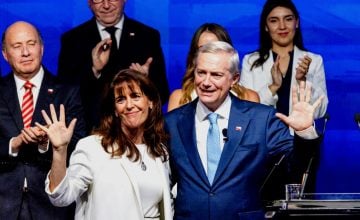
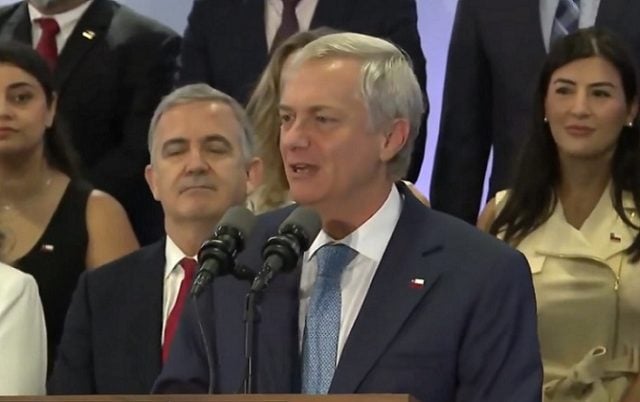
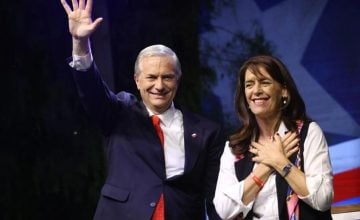
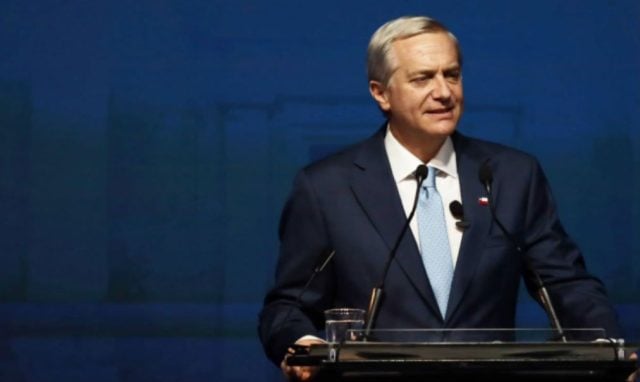
On Tuesday evening, shortly after 9:30 PM, elected President José Antonio Kast took the stage at the venue dubbed «La Moneda chica» to announce his first cabinet members.
The unveiling of the team set to take office on March 11 sparked a wave of criticism—ranging from the opposition to traditional right-wing factions and even parties that initially supported him—highlighting early fragility in his upcoming administration.
Kast’s cabinet has been criticized for its last-minute formation and the clear ties many members have to economic interests, along with the lack of political experience among those assuming key ministerial roles.
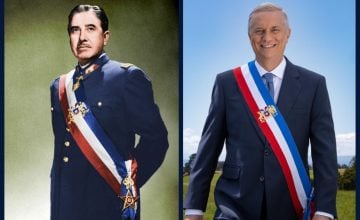
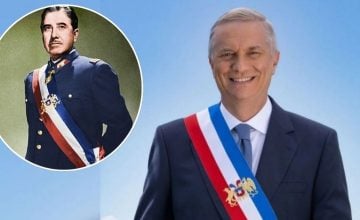
Concerns have also been raised regarding the coherence of the cabinet and the absence of a well-structured coalition to support the Republican, particularly given the political legacy of Augusto Pinochet.
Before revealing the names, Kast delivered a speech discussing the «difficult» situation he believes Chile is facing.
«Our country is going through tough times. There are families in fear, abandoned neighborhoods, weakened institutions, and when Chile faces moments like this, it doesn’t need excuses or endless diagnoses like we’ve been accustomed to. It needs decisions, it needs character, it needs a government to act swiftly, as required today,» he stated.
Following this line, the elected president characterized the cabinet as an emergency team.
«That’s why I present to you a cabinet for an emergency government. A team convened to end inertia and start recovering Chile. There’s no time to lose. We work from day one, from the first minute,» he asserted, while tempering expectations by stating that his administration «does not promise what it cannot deliver.»
Improvisation in Cabinet Formation
One of the most repeated criticisms concerns the improvised manner in which the ministerial team was assembled. Announced names later rejected, offers declined, leaks ahead of the official list, and last-minute changes characterized the process.
The most evident case was that of Santiago Montt, until recently the CEO of Los Andes Copper, who had announced before the event at La Moneda chica that he would accept a ministerial position under Kast.
«I was honored to be asked to serve my country as Minister of Mining,» he stated simultaneously with the company’s announcement.
«Los Andes Copper announces that Santiago Montt has been designated as Minister of Mining in the incoming administration of President José Antonio Kast in Chile, and has submitted his resignation as General Manager of the Company,» highlighted the firm.
However, when the final list of ministers was officially released to the press, Santiago Montt was absent, with the Mining portfolio ultimately assigned to Diego Mas, who will also oversee the Economy, Development, and Tourism as a dual minister.
«What happened with Andes Copper, which preemptively confirmed the name of one of the future ministers publicly, not only highlights a conflict of interest, it actually surpasses it,» indicated DemocratChristian Senator Iván Flores.
It also drew attention that Leonardo Cubillos, chair of the Radical Party, announced that future Minister of Agriculture Jaime Campos would be brought before the party’s supreme tribunal for expulsion.
«Until now, we have not communicated with Jaime Campos to understand if he has resigned his affiliation with the Radical Party. We regret that he integrates into a government whose candidate he did not support», stated the party president after the Republican confirmed the inclusion of the former minister from the governments of Ricardo Lagos and Michelle Bachelet in his cabinet.
«We are obliged to act according to what our statutes dictate: he will be referred to the supreme tribunal for expulsion from our ranks,» the chair asserted, while Campos replied, «I have been radical long before the current leaders of the party.»
«Let them take me to the tribunal then. Now, I don’t know if a declining party has the legal powers to do so,» responded the future State Secretary, who indicated he has no intention of leaving his affiliation.
These situations triggered criticism over the level of improvisation and lack of prior coordination.
«Too much improvisation in forming the cabinet. As if he had won the presidency in a lottery last week. He had a month to assemble the cabinet and ends up pulling rabbits out of a hat at the last minute. Bad omen,» questioned political analyst Patricio Navia, who is close to center-right circles.
In the same vein, former minister and ex-leader of the Independent Democratic Union (UDI), Pablo Longueira, expressed concern that «there are several ministers who will have an expiration date soon; hopefully, I am wrong.»
«I am indeed worried about the level of improvisation,» he stressed.
Business Leaders in Ministerial Roles
A cross-cutting criticism points to the backgrounds of several ministers hailing from the heart of economic power. These former executives and businesspeople will now regulate sectors in which they previously built their careers, raising alarms over potential conflicts of interest.
For the Ministry of Foreign Affairs, the Republican nominated Francisco Pérez Mackenna, who has no diplomatic background and was until now the general manager of Quiñenco, one of Andrónico Luksic’s firms.
The businessman himself described the appointment of Francisco Pérez as a «regrettable loss for Quiñenco, but Chile gains an exceptional professional.»
Kast also appointed a senior executive to jointly lead the Ministries of Economy and Mining: Daniel Mas, who serves as vice president of the Confederation of Production and Commerce (CPC), which is striking given that Chile is the world’s largest copper producer and second in lithium.
Deputy Francisca Bello (FA) expressed concern about this designation.
«I think there is a worrying signal in appointing an agronomist so closely linked to the business world to oversee Economic matters, particularly focused on expanding regulatory permissions in the agricultural sector,» she stated.
«We expect, and I hope this doesn’t lead to a setback, but in areas like Aconcagua, Petorca, and Quillota, there is fear that crucial support for irrigation and water protection may weaken. The economy must be thought of considering the real impact on the territories and, above all, the effect on communities,» she emphasized.
The deputy head of the PPD-Independents Bench and member of the Labor Commission, Héctor Ulloa, noted that «Kast prioritized individuals linked to business interests in his cabinet.»
«This concerns us because we have seen it before, and it harmed our country. We will be attentive to potential conflicts of interest that may harm Chileans or regress labor rights,» he indicated.
The president of the Teachers College of Chile, Mario Aguilar Arévalo, also voiced opposition to the cabinet.
«It is risky that the majority are technocrats from the private sector. When one attempts to govern the state with a private enterprise mentality, the results—based on previous experiences—have not been the best,» he said.
Critiques also target the limited political experience of several ministers, especially in areas requiring ongoing legislative negotiation, as well as the fact that those who will form Kast’s government team criticized him vehemently just months ago.
Such is the case of architect Iván Poduje, announced as the new Minister of Housing, who questioned the potential of José Antonio Kast to reach La Moneda back on October 15 during the presidential campaign.
«I do not believe José Antonio Kast will be president,» Poduje stated at the time, questioning his leadership and asserting he is «not up to the modern challenges the country faces. I believe he is a very conservative candidate for the country we have today, and his statements on various issues have not been fortunate.»
The Shadow of Pinochet
As Kast announced, the portfolios of Justice and Human Rights and National Defense will be held by lawyers Fernando Rabat and Fernando Barros, respectively, a decision that has been labeled a «setback» and «provocation» by analysts and human rights organizations, considering that both professionals were involved at different stages in the defense of dictator Augusto Pinochet.
Rabat, 53, is a civil law expert and part of the law firm of Pablo Rodríguez, the late leader of Patria y Libertad, a far-right paramilitary organization that violently opposed Salvador Allende’s government.
The lawyer was part of the teams defending dictator Augusto Pinochet in cases such as Operation Colombo and the Riggs case.
«It is controversial for Rabat to be Minister of Justice, considering his ties to Pablo Rodríguez,» stated University of Chile academic Octavio Avendaño to EFE, warning that this appointment represents «a negative, even provocative, signal» from the elected president.
Along these lines, Rodrigo Espinoza, a political scientist from Diego Portales University, cautioned that this designation «could become a flashpoint for conflict, particularly with the left.»
Espinoza told EFE it is «usual» for leaders to choose a non-political first team, but pointed out that experience shows such cabinets last briefly and wobble at the first political contingency.
«Sebastián Piñera appointed figures very close at the outset of his second term, whom he had to remove due to the social upheaval and pandemic to create a coalition cabinet,» he recalled.
Simultaneously, sixteen organizations of families of missing detainees and politically executed individuals signed a statement against Rabat’s appointment, which constitutes «a direct offense» to the memory of victims of the dictatorship and their families.
«It is a huge setback for the advances we have made in human rights issues,» asserted Alicia Lira, president of the Group of Families of Executed Political Prisoners; meanwhile, from the Association of Families of the Disappeared Detainees of Paine, Flor Lazo warned that if the Republican administration ends the National Search Plan promoted by the outgoing administration, «we will revolt.»
From the Frente Amplio, questions were raised about the coherence of the cabinet’s construction, which they labeled as a cabinet «politically heir» to dictator Augusto Pinochet.
Who Makes Up Kast’s Criticized Cabinet?
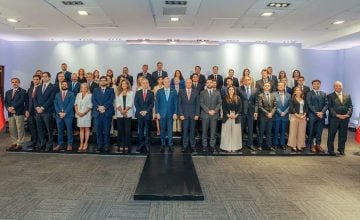
Below is the complete list of those who will form the first cabinet of the elected president:
- Ministry of the Interior: Claudio Alvarado (UDI)
- General Secretariat of the Presidency (Segpres): José García Ruminot (RN)
- General Secretariat of Government (Segegob): Mara Sedini (Independent)
- Ministry of Foreign Affairs: Francisco Pérez Mackenna (Independent)
- Ministry of Defense: Fernando Barros Tocornal (Independent)
- Ministry of Public Security: Trinidad Steinert (Independent)
- Ministry of Finance: Jorge Quiroz (Independent)
- Ministry of Economy and Mining: Daniel Mas (Independent)
- Ministry of Public Works: Martín Arrau (Republican Party)
- Ministry of Labor and Social Security: Tomás Rau (Independent)
- Ministry of Agriculture: Jaime Campos (Radical Party*)
- Ministry of Energy: Ximena Rincón (Democrats)
- Ministry of Environment: Francisca Toledo (Independent)
- Ministry of Social Development and Family: María Jesús Wulf (Republican Party)
- Ministry of Education: María Paz Arzola (Independent)
- Ministry of Health: May Chomalí (Independent)
- Ministry of Justice and Human Rights: Fernando Rabat (Independent)
- Ministry of Transportation and Telecommunications: Louis de Grange (Independent)
- Ministry of Housing and Urban Development: Iván Poduje (Independent)
- Ministry of National Assets: Catalina Parot (Independent)
- Ministry of Sports: Natalia Duco (Independent)
- Ministry of Women and Gender Equality: Judith Marín (Christian Social Party)
- Ministry of Cultures, Arts and Heritage: Francisco Undurraga (Evópoli)
- Ministry of Science, Technology, Knowledge and Innovation: Ximena Lincolao (Independent).
Sea of Criticism
Below are some reactions and criticisms of Kast’s cabinet shared by analysts and political figures via social media.