Original article: Megarreforma de Kast: Rotundo rechazo a propuesta de flexibilizar estándares ambientales a la industria salmonera
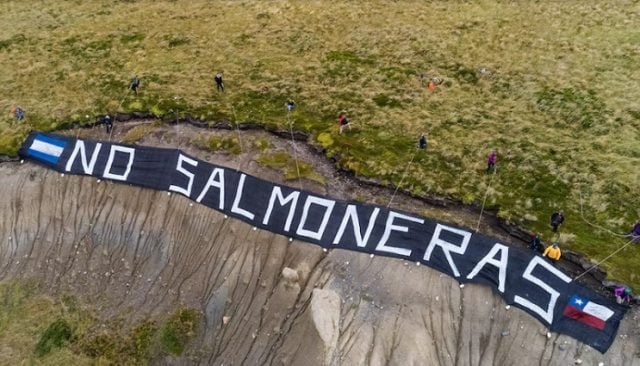
In a public statement, environmental organizations including Greenpeace, Oceana, Fundación Terram, Campaña Salvemos la Patagonia, Observatorio Ciudadano, NGO FIMA, Chile Sustentable, NGO Pesca Sustentable, NGO Ecosistemas, NGO Yaqu Pacha Chile – CECEM, Centro Ballena Azul, Fundación Centinela Patagonia, Fundación Lenga, Agrupación Aisén Reserva de Vida, Uno Punto Cinco, Fundación Oceanósfera, Fundación Relaves, Fundación Basura, and Codeff expressed their strong opposition to the proposed easing of environmental standards for Chile’s salmon industry.
Initially, they stated that «the major reform promoted by the Government enables the expansion of the salmon industry in our southern seas without any checks and balances. This is a sector that has historically demonstrated compliance failures, and its impacts on marine ecosystems are well-documented.»
They warned that «approving the National Reconstruction Bill would be a significant setback for ocean protection, environmental institutions, and human rights, including the right to participation and access to justice that Chile committed to protect and promote upon adhering to the Escazú Agreement.»
«In simple terms, this project as it currently stands would widen the gaps in environmental justice and ecosystem protection, particularly concerning the impact on Chile’s marine environment,» the organizations noted.
Among the harmful modifications proposed by Kast’s initiative is a stipulation requiring the State to compensate when a court rules that a project has lost its environmental permit due to deficiencies and illegalities.
They also warned that the time for individuals and organizations to file complaints about illegalities in environmental assessments would be reduced, stating that «discretion will be given to the Environmental Assessment Service to dismiss observations from other services, increasing the potential for political manipulation of decisions that should be technical.»
«Finally, the timeframe for environmental courts to declare precautionary measures in cases of projects posing risks to the environment and/or human life would be limited,» the statement underscores.
Salmon Producers Set to Gain Significantly
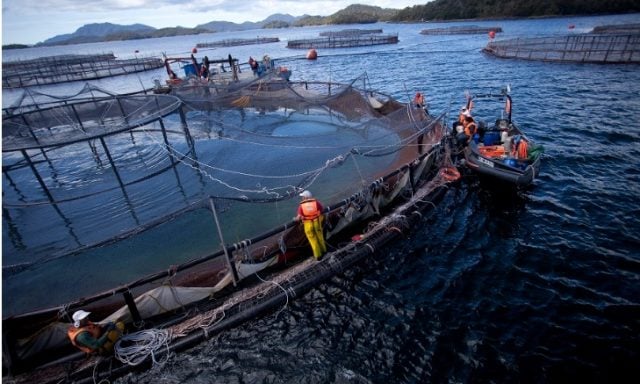
Environmental organizations argue that one of the biggest beneficiaries of this major reform will be the salmon industry, which will be able to expand easily, allowing numerous projects to proceed without environmental assessments, thereby deepening their impacts on marine ecosystems.
«In a last-minute move, the Senate’s Environment Commission approved the Government’s proposal, led by Finance Minister Jorge Quiroz, which under the concept of ‘micro-relocations’ will allow aquaculture concessions to move 350 meters outside the authorized area in search of clean, underserved locations, ignoring the pollution of the seabed and its biodiversity caused by this industry, while disregarding that salmon are introduced species that invade local species’ habitats during escape events,» the groups stated.
«This false concept of micro-relocation will give a free pass to pollute new healthy ecosystems, which is currently prohibited under Law 21.600 that established the Biodiversity and Protected Areas Service (SBAP). This allows concessions to move within a protected area, even without management plans,» they added.
«This means that not only will the impacts not be evaluated, but there will also be no need to adhere to the regulations governing the use of these territories, which have been declared as areas of special value for biodiversity conservation due to their ecosystemic relevance,» they cautioned.
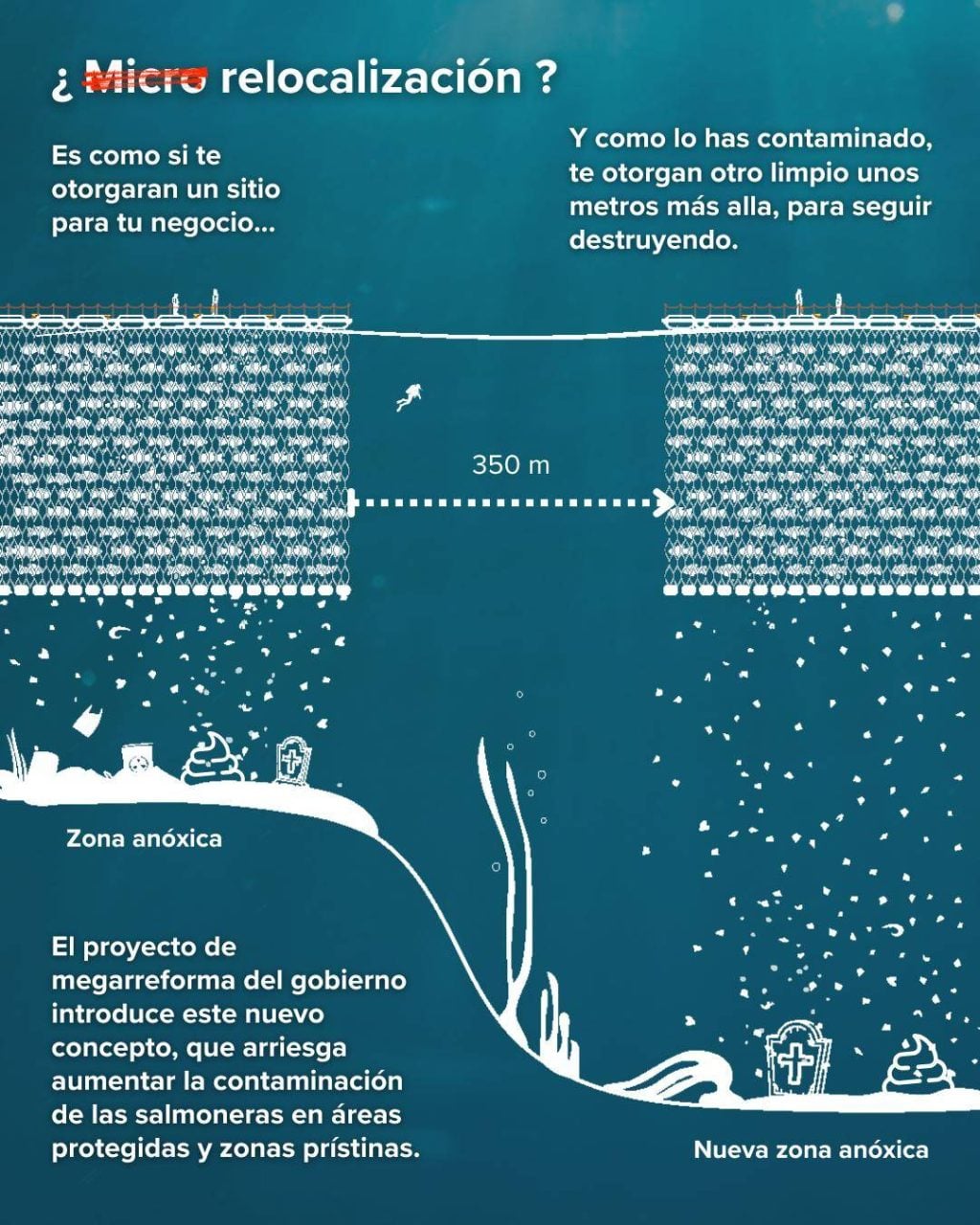
It is noteworthy that 79% of the concessions seeking to relocate were granted in perpetuity, meaning they have no time limit to operate freely in our oceans.
«Additionally, it’s essential to understand that 350 meters under the conditions of these types of projects in the fjords and waters of our Patagonia may involve entirely different variables due to the differences in depth between locations; the currents present in different areas; the biodiversity that inhabits them; or the overlap between the areas of influence (how far the impact reaches) of the various cages, along with other factors,» the organizations warned.
«Today, with the Senate’s approval, President José Antonio Kast’s Government is giving away our seas to an industry with severe environmental impacts—widely documented by science—and with a known history of violating environmental law, so it can expand with impunity,» the declaration adds.
«Facilitating the movement of current salmon concessions without environmental assessments or the corresponding technical analyses, nor verifying whether the concession complies with existing regulations, can only be interpreted as a coldly calculated strategy to continue privatizing our country’s natural resources,» they concluded.
We will continue to provide updates.
Obtén tu Pasaporte y apoya a El Ciudadano
Elimina la publicidad, accede a contenido exclusivo y sé parte de la comunidad.
Cancela en cualquier momento · Sin permanencia