Original article: Keiko elige a EE.UU. como socio prioritario y tensiona el vínculo estratégico de Perú con China
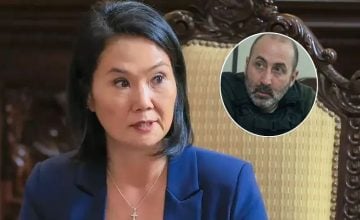
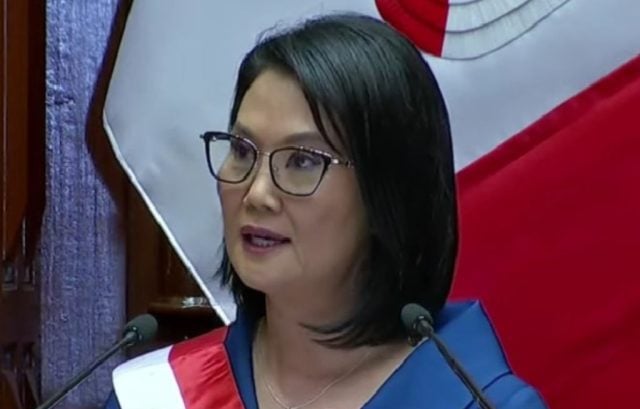
The administration of Keiko Fujimori has clearly indicated its intention to position the United States (U.S.) as its primary ally and strategic partner, a move that could strain the bilateral relationship that Peru has with China.
The potential accession to the Shield of the Americas, a program initiated by the Trump administration to coordinate military and security efforts among nations against organized crime, is shaping up as the first concrete step in this new direction of Peruvian foreign policy.
U.S. Ambassador to the South American nation, Bernie Navarro, confirmed the far-right president’s interest in joining this international coalition, which already includes participation from ideologically aligned regional leaders, such as Javier Milei in Argentina, Nayib Bukele in El Salvador, and Rodrigo Paz in Bolivia.
«The United States will support Peru in this new phase. The president has been clear; she wants to be a member of the Shield of the Americas,» stated Navarro, arguing that this alliance would enable efforts to combat crime and drug cartels affecting the country.
Fujimori’s stance is not improvisational. During an interview with Semana magazine following her election, the president expressed her enthusiasm for the «multiple opportunities» this Trump initiative offered to restore peace and fight organized crime.
Support from Washington materialized quickly: a day after taking office, the United States announced an expansion of its cooperation with Peru, with Undersecretary of State Christopher Landau leading a delegation of U.S. officials at the presidential inauguration, reaffirming a commitment to collaborative security efforts.
Key Figure Behind the Diplomatic Shift
According to La República, Peruvian Foreign Minister Carlos Espá emerges as the principal architect of this new diplomatic direction. With over 15 years of experience within the U.S. diplomatic corps, Espá maintains a strong relationship with Washington’s diplomacy, having previously served as Communications Director in the U.S. Embassy in Peru.
Ambassador Navarro expressed being «very pleased» to work with Espá again, highlighting his extensive knowledge of international issues.
The minister himself has justified this approach towards the United States, describing it as a necessary response to the country’s security crisis. «The number one priority is citizen security. We want cooperation from countries to help us fight extortionists and transnational criminal organizations,» stated Espá, defending adherence to the Shield of the Americas as a legitimate tool for addressing this issue.
Geopolitical Alarms Sounded
However, analysts such as internationalist Óscar Vidarte have raised warnings about the implications of Fujimori’s decision.
«The relationship with the United States does not necessarily have to be built by participating in the Shield of the Americas,» he asserted, questioning whether this is the optimal path to strengthen bilateral ties.
Vidarte identified a clear ideological bias in this alliance that places Peru within a «hardline logic» shared by several far-right governments in the region, cautioning about two fundamental dangers. First, equating transnational criminal organizations with terrorism could legitimize armed U.S. action on Peruvian soil, as seen in Venezuela. Second, and perhaps more concerning, he noted that this adherence positions Peru uncomfortably against China, its primary economic partner.
«The Shield of the Americas is also designed for any other threat against the region, including what the U.S. perceives as ‘the Chinese threat,'» Vidarte explained.
He also pointed out that appointing a clearly pro-U.S. foreign minister sends troubling signals to Beijing. «China must question how much of a partner we are. The idea that I am only interested in China for economic matters must generate much concern,» the internationalist added, suggesting that the Asian giant is carefully observing these moves that might be interpreted as alignment with anti-China interests in the region, jeopardizing a trade relationship that has been crucial for Peru’s economic growth in recent decades.
Obtén tu Pasaporte y apoya a El Ciudadano
Elimina la publicidad, accede a contenido exclusivo y sé parte de la comunidad.
Cancela en cualquier momento · Sin permanencia
Artículos Relacionados

New Insights on Cerimedo's Impact in Peruvian Elections Driven by Technology and Strategic Alliances
Hace 1 semana