Original article: La “varita mágica” de Keiko: militares en calles y buses ante una crisis que no se resuelve sin inteligencia ni gestión
Keiko Fujimori’s «Magic Wand»: Military Presence in Streets and Buses Amid Ongoing Crisis
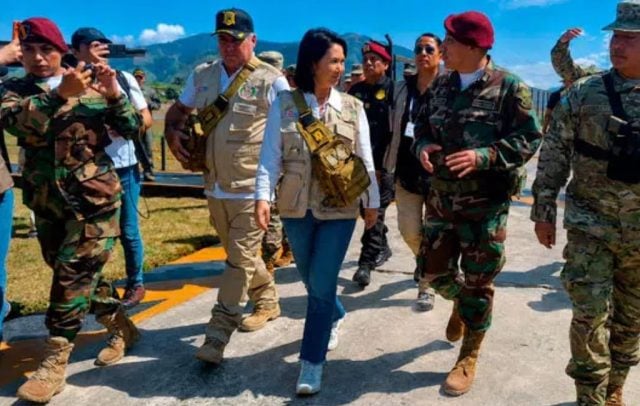
The president of Peru , Keiko Fujimori, has decided to deploy the Armed Forces to tackle the security crisis plaguing the South American nation, announcing their presence on streets, public transportation, and in prisons. However, specialists and former officials warn that this measure, which Fujimori promotes as a «magic wand,» appears to be a political gesture that repeats past mistakes and sidesteps the real challenges that require a coordinated management approach: intelligence, technology, and recovery of the National Police.
Yesterday morning, following her first Cabinet meeting, the far-right president confirmed during a live broadcast that the cabinet approved military collaboration for public safety.
«The Armed Forces will be on the streets and also in the transport system,» declared Fujimori, who reiterated her intention to formalize this proposal in the coming weeks. What initially began as a request for temporary legislative powers for the control of prisons—according to the original draft—has now been expanded to include internal patrols.
The context of this announcement is particularly critical. Data analyst Juan Carbajal noted that, based on records from the National Death Information System (SINADEF) as of July 31, 2026, Fujimori’s administration started with 25 confirmed homicides in just the first four days, averaging 6.25 murders per day nationwide. Statistics show that on July 28, there were 5 deaths; on July 29, the number rose to 9; on July 30, there were 8 cases recorded, and July 31 added another 3, with figures likely to climb as reports from various regions continue to process, as reported by La República.
Furthermore, there’s a more alarming statistic: between January and July 2026, the number of adolescent homicides in Peru surged to its highest peak since 2017, with gunfire being the primary cause. Carbajal warned that if this trend continues, 2026 could end up being the year with the highest number of adolescent homicides in the last decade, a scenario that demands comprehensive responses and not just military presence on the streets.
Critics Claim Fujimori Aims to Make the Armed Forces a «Magic Wand» to Solve Crime Surge
Criticism of Fujimori’s decision was swift. Former Interior Minister Rubén Vargas described the measure as a recurring error, stating that the government aims to turn the Armed Forces into a «magic wand» to address the crime surge. Vargas recalled that previous states of emergency have been a complete failure and reflect a profound misunderstanding of the real problem. His questions were pointed: «What do we do about warehouses that are also being extorted? Are we going to fill warehouses with soldiers? What about barbershops? Are we going to place a soldier in every shop?» he questioned, emphasizing that military patrols do not tackle the root causes of organized crime, according to La República.
For the former minister, the focus must be different. Instead of militarizing the streets, the priority should be to rid the police of corruption and equip them with modern technology. He also highlighted the urgency of developing specific strategies against cellphone theft, organized crime, and illegal economies, which fuel criminal gangs. Vargas pointed out that while he agrees the Armed Forces should play a role in prisons, maritime and aerial interdiction, and control of illegal mining, investigation and intelligence against crime are the exclusive responsibility of the National Police.
Meanwhile, Ricardo Valdés, Deputy Minister of Internal Order and Public Security, was even more critical, labeling the announcement as a «political message» rather than a technical management plan. Valdés argued that the president is sending a signal to the public to show she is taking responsibility for the issue, but «I actually see a problem here,” he stated. His diagnosis was clear: the government needs to approach this as a management issue, conducting a proper assessment of the types of extortion in the most problematic areas and getting crime experts to work on concrete solutions.
«A soldier with high firepower is absolutely dangerous; the fire capacity of a FAL or Galil rifle is over a kilometer, which could penetrate anything in its path,” he explained, underscoring the danger this poses to civilians on streets and buses.
Featured photo: Diario Expreso.
Obtén tu Pasaporte y apoya a El Ciudadano
Elimina la publicidad, accede a contenido exclusivo y sé parte de la comunidad.
Cancela en cualquier momento · Sin permanencia
Artículos Relacionados

Peru Faces Choice Between Fujimorism and New Constitution: Sánchez Promises Referendum Amid Keiko's 'War' Rhetoric
Hace 3 meses