Original article: La abogada de Krassnoff participó en la redacción de proyecto que abre la puerta a criminales de la dictadura
Attorney Carla Fernández Montero, who represents several individuals convicted of human rights violations, including former Army brigadier and DINA agent Miguel Krassnoff, acknowledged her participation in the drafting of a contentious alternative sentencing bill. This legislation allows older inmates and those with terminal illnesses to serve their sentences under house arrest.
The proposal, introduced by senators Francisco Chahuán, Luz Ebensperger, Luciano Cruz-Coke, Alejandro Kusanovic, and Carlos Kuschel, aims to create mechanisms that would permit suspended or alternative sentencing methods.
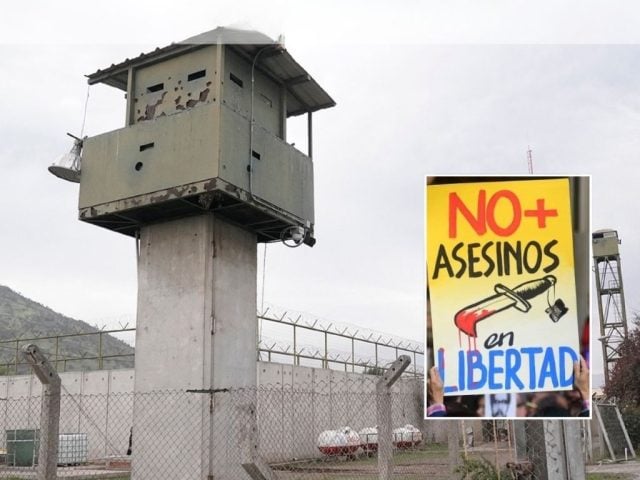
Essentially, this law, which narrowly passed in the Senate with 23 votes in favor and 22 against, would directly benefit inmates at Punta Peuco convicted of crimes against humanity and human rights violations. Should it advance, it is estimated that over 300 individuals convicted of crimes against humanity, alongside more than 300 criminals convicted of homicide, femicide, and sexual assaults against minors, could have their sentences commuted.
Amid controversies and opposition from lawmakers, President Gabriel Boric’s government, the families of politically executed victims, social organizations, and legal experts, Krassnoff’s attorney and defenders of other convicted human rights violators, such as former CNI chief Álvaro Corbalán and ex-DINA Raúl Iturriaga, stated that her involvement with this right-wing initiative stemmed from her professional experience within the penitentiary system.
In an interview with El Mostrador, she recounted that legislators approached her “because I am familiar with the prison reality as I visit jails and defend desperate inmates.”
She noted that when they requested her collaboration—she claimed it was pro bono—she was recognized for her victories in the Supreme Court, noting that among the most significant was the “ELEAM ruling from September 2024 (Rol 249.389-2023), which equated prisons housing elderly and ill inmates with open-air facilities.”
“All this experience was what we wanted to encapsulate,” she emphasized.
As reported by Informe Especial from TVN, the draft prepared by the attorney reached Senator Chahuán in early January 2025, just weeks before the initiative, which bore a striking resemblance to her legal text, was officially submitted to the Senate.
Hidden End-of-If Law
Legally, the right-wing proposal modifies sentencing compliance regulations and opens the possibility for certain convictions to be served under alternative modalities, such as house arrest. However, the controversy centers on the fact that among those who could potentially benefit from these mechanisms are individuals convicted of human rights violations committed during the dictatorship.
Legal experts, including former prosecutor Carlos Gajardo, warned legislators that they are voting on a “hidden end-of-if law”. Gajardo argued that the initiative allows individuals convicted of various offenses to serve their sentences at home under specific health criteria.
He explained that the issue is not solely about the age of the convicted individuals, but that the text approved in general would allow for benefits due to the presence of chronic illnesses that cannot be adequately treated in prison. This logic could expand the law’s reach far beyond cases linked to human rights violations, opening the door for individuals convicted of serious crimes—including homicide or sexual abuse—to request to serve their sentences outside of prison.
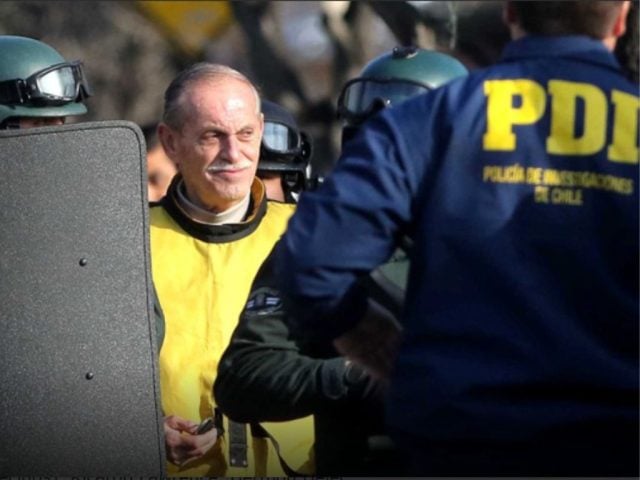
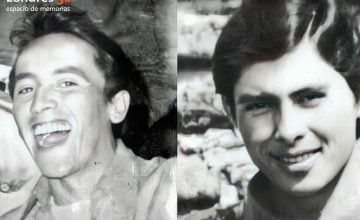
This situation pertains to Miguel Krassnoff Martchenko, a former agent of the National Intelligence Directorate who has accumulated over 80 convictions for qualified kidnapping, homicide, and other crimes against humanity committed during the dictatorship in clandestine detention centers such as Londres 38, Cuatro Álamos, and Villa Grimaldi. The total of his penalties amounts to nearly a thousand years in prison.
The criminal known as “The Russian,” defended by the attorney who participated in drafting the proposal introduced by right-wing senators, has never acknowledged his involvement in the crimes committed under DINA’s command.
Krassnoff’s Attorney: Aims to Address a ‘Prison Problem’
In light of the criticisms and warnings that have emerged amid ongoing political debate and public opinion, attorney Carla Fernández Montero challenged the dismissal of the project’s humanitarian perspective.
“Unfortunately, this project has so far been approached from a purely political-party standpoint, without regard for its ‘soul,’ so to speak, which is nothing other than combining humanitarian factors with political-criminal efficiency criteria,” she told El Mostrador.
In defense of the legislation, she argued that it aims to mitigate a structural issue within the penitentiary system.
“It is about providing a solution to a ‘prison problem’ such as overcrowding and the state’s inability (due to lack of will and economic resources) to maintain sick and elderly inmates in dignified conditions,” she reasoned.
In her view, the prison system fails to adequately care for vulnerable inmates.
“It is a widely known and public fact that the prison system has not been able to safeguard the dignity of vulnerable prisoners beyond mere empty formulas in the penitentiary regulations, which assure health and well-being inside the prison but lack a factual basis for compliance,” she stated, calling for attention to the situation faced by inmates, among them those convicted of crimes against humanity.
For the jurist, the intention is to refine the controversial proposal within the legislative debate.
“Hence the idea of drafting this project, hoping that in its discussion, its contours can be refined and something better emerges than what currently exists. If we can improve the situation for the prisoners who are the subjects of this motion, I believe that the task would be accomplished, and I would feel that justice has been served in penal execution matters by restoring dignity to suffering individuals,” she emphasized.
Relacionados
Senator Flores Opposes Bill That Could Release Krassnoff from Prison Amidst Human Rights Concerns
Hace 2 meses
"Human Rights Criminals Like Krassnoff Don't Deserve Mercy": Jara Rejects Pardons in Archi Debate
Hace 3 meses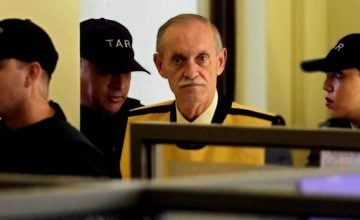
Low Pensions for Most, $3.7 Million for Krassnoff: How the State Compensates Human Rights Violators
Hace 6 días