Original article: “Se volvió a la dictadura”: Kremerman cuestiona megarreforma y denuncia que grandes fortunas pagan menor tasa de impuestos que sectores medios y pobres
Kremerman Critiques Major Tax Reform, Claims It Reinstates Dictatorial Policies Favoring the Wealthy
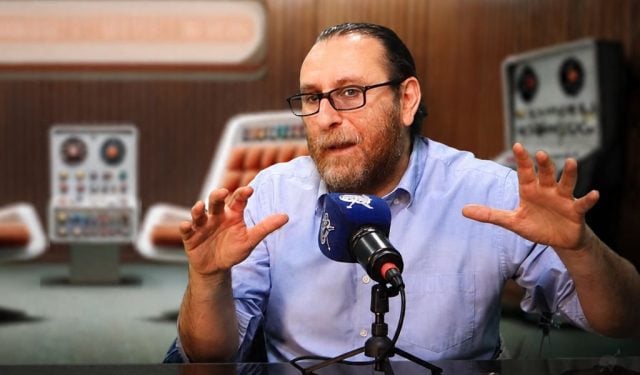
Economist and researcher from the Sol Foundation, Marco Kremerman, launched a harsh critique against the major economic and tax reform championed by President José Antonio Kast, claiming that its approval by Congress represents a regression to mechanisms reminiscent of the dictatorship of Augusto Pinochet, negatively impacting lower-income sectors while benefiting the wealthy.
«What happened to the recently approved tax reform? The ‘Major Reform,’ which is really a covert tax reform. We have regressed, we have returned to dictatorship, back to the 80s, to the 70s, and it once again allows for a 100% credit for the taxes that companies pay on their profits for the owners of the companies paying as individuals,» he stated during an interview with the show ‘Podcastpitalismo’, hosted by Javier Pineda Olcay, director of El Ciudadano.
«We have a phenomenon that explains, along with other factors, that the Chilean tax system, rather than significantly reducing inequality, maintains it at levels consistent with those found in the production space,» he pointed out.
Kremerman did not only question the content of the project, which includes controversial measures such as lowering the first category tax, tax invariability, and the reintegration of the tax system; these measures enable business owners to reduce their personal taxes using the taxes already paid by their companies. He also highlighted how the Chilean tax system penalizes middle and lower-income sectors while favoring the wealthy.
According to the economist, it is essential to understand the dual dimension of inequality in Chile: the inequality generated in the production space and the inequality that is perpetuated through the tax system.
Kremerman: “In Chile, Inequality is Not Reduced in Either the Production Space or the Tax Space”
In the interview, he explained that in the production sector, income distribution is inherently unequal, with capital appropriating a much larger share of wealth than labor.
«In the realm where goods and services are produced, labor usually takes a very small piece of the pie while capital takes a large piece. This is the initial space of income and subsequently wealth distribution,» Kremerman stated, adding that this dynamic is not exclusive to Chile and is mirrored in developed countries like Germany. However, the radical difference lies in how this inequality is addressed.
While in economies like that of the European country taxes serve a compensatory function, in Chile, rather than bridging the gap, it deepens it.
“In Chile, inequality is not reduced in either the production space or the tax space,” he asserted.
The core issue, according to the Sol Foundation researcher, lies in the very structure of the tax system, which he described as «upside down«. He detailed that, in practice, the poorest sectors and the middle class in Chile pay a proportionally higher tax rate than the great fortunes.
«When one reviews some of the available studies that have undertaken this exercise, one might arrive at the following conclusion: the poorer and middle sectors, in terms of the total income generated, are paying around 17% in taxes, while the wealthiest, the major fortunes of the country, numbering no more than 2,000 people, pay less than 12%,” he denounced.
He indicated that this scenario occurs mainly because those who generate the most have multiple opportunities to save, and much of those savings are directed to investments that are either untaxed or taxed very little.
He also referred to the heavy burden of indirect taxes in fiscal collection.
«In Chile, we collect more from indirect taxes, which do not tax the individual or the legal entity, but rather what those people purchase in VAT, which taxes goods and services, remains the main source of revenue in Chile,” he explained.
Since VAT taxes consumption equally for a low-income individual as for a millionaire, and lower-income sectors allocate a larger proportion of their income to consumption, the relative burden of the tax is much heavier for them.
Reintegration of the Tax System and the Return to Dictatorial Policies
In the interview with Podcastpitalismo, Marco Kremerman pointed out the heart of Kast’s major reform: the reintegration of the tax system, which in his view represents a return to the policies of the Augusto Pinochet regime.
To explain this argument, the researcher provided a historical overview. He noted that in 1984, during the dictatorship, mechanisms were created to facilitate the accumulation of wealth among the wealthiest sectors, integrating the tax system. This meant that the taxes paid by companies on the profits they generate serve as a credit for the taxes paid by the owners of those companies as individuals. Practically, this reduces the final tax burden of those who concentrate capital ownership.
He pointed out that during Michelle Bachelet’s second term, a reform was implemented that partially disintegrated this system, establishing that only 65% of the tax paid by the company could be used as a credit. However, according to Kremerman, the Kast administration has undone that progress.
The “Capitalist Tale” of Kast’s Major Reform
The expert questioned the arguments used by defenders of the project who present it as a necessary measure to foster growth and investment.
«There is no compelling academic evidence that this occurs,» he concluded.
For the researcher, it is a “capitalist tale” that seeks to reduce labor costs, extend working hours and keep the minimum wage low.
«An investor today certainly has many more opportunities than he did 50 years ago to move his capital due to technological advancements. That’s undeniable,” he acknowledged. “But the investor is not just going to look at taxes; he will consider political conditions, stability, and the country’s culture,” he emphasized.
In the opinion of the economic analyst, Chile remains a privileged space for investment, with high profitability rates, so a tax modification would not trigger a capital flight.
«The large groups that accumulate vast fortunes do not like a modification that will reduce their profit from a billion to 995 million; they will always claim that the world will collapse. They will always say they will go elsewhere,” he asserted.
You can watch the full interview with Marco Kremerman on Podcastpitalismo below:
Obtén tu Pasaporte y apoya a El Ciudadano
Elimina la publicidad, accede a contenido exclusivo y sé parte de la comunidad.
Cancela en cualquier momento · Sin permanencia