Original article: Hito científico en Rapa Nui: Instalan por primera vez un marcador satelital en una ballena jorobada
Major Scientific Milestone in Rapa Nui: For the First Time, a Satellite Tag is Installed on a Humpback Whale
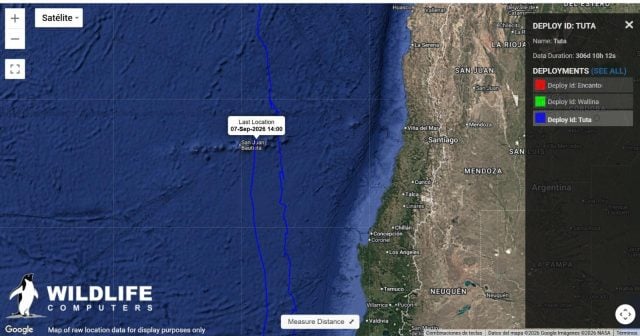
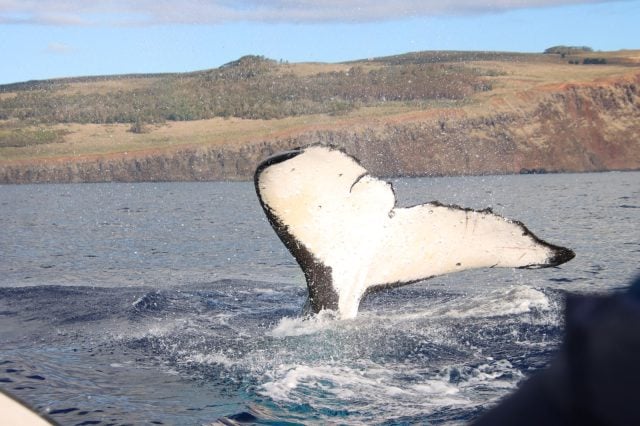
A scientific mission organized by researchers from the University of Antofagasta in collaboration with WWF Chile has achieved a significant milestone in marine science in Rapa Nui: for the first time, a satellite tag has been successfully installed on a whale in the waters surrounding the island.
This particular whale, named Vinapú, is accompanied by her calf.
The tagging was one of the results of a 23-day field mission that included daily land observations, which allowed for the identification of 10 individuals, the recording of male songs, and three biopsies from adult whales. This procedure provides essential information regarding sex, maturity status, stress hormones, and other vital aspects.
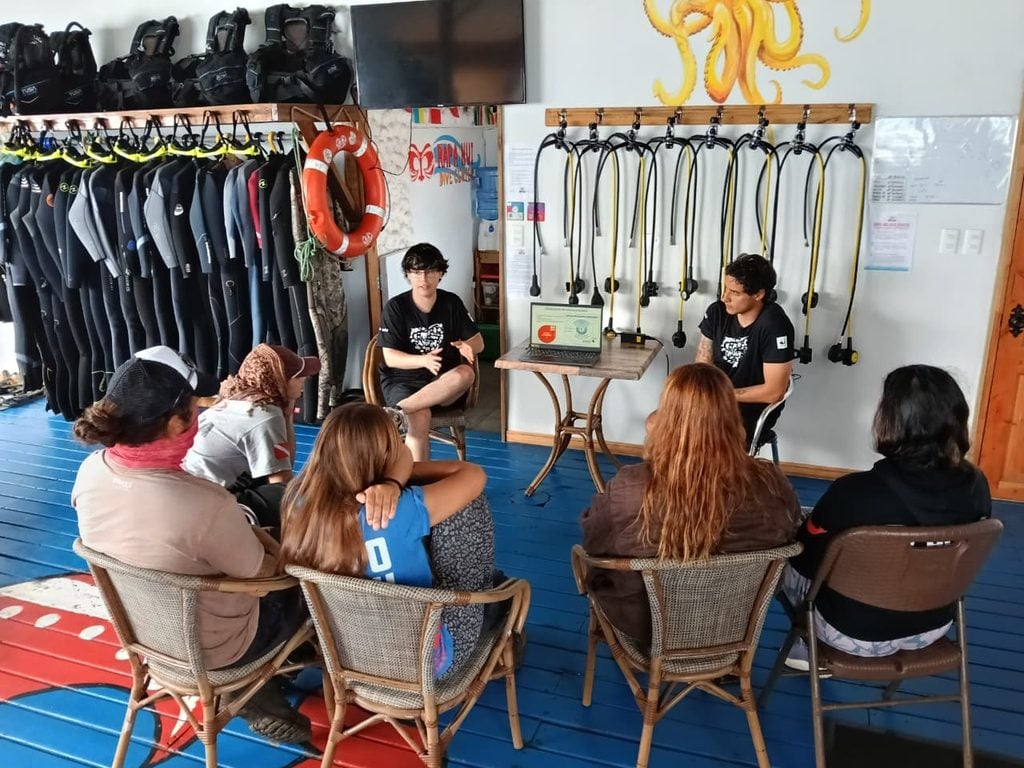
Additionally, activities aimed at raising awareness and sharing scientific work were carried out, including talks at local schools, the Koro Nui (Local Marine Council), and dive centers.
Valuable Information
«The lives of these large cetaceans that visit Rapa Nui remain a mystery to science, and the satellite tracking of Vinapú along with her calf is an event that will provide us with valuable information to better understand the migration routes of whales observed around the island,» explained Yacqueline Montecinos, coordinator of WWF Chile’s Pacific Blue Corridor initiative.
«The data obtained will help us learn more about their stay in the marine protected area of the island and understand their migratory paths from Rapa Nui to their feeding areas, something crucial for identifying and proposing effective conservation measures to ensure the ecosystem connectivity needed by this species within the Eastern Pacific Blue Corridor,» added the expert.
Dr. Ana García, lead researcher from Cetalab, expressed gratitude to the Rapa Nui community «for reporting sightings of humpback whales and to Al Koro Nui or te Vaikava for supporting this pioneering research on the island.»
«The subsequent genetic studies along with telemetry data will help identify the stock to which the humpback whales visiting Rapa Nui belong during their breeding and rearing season. It is also important to assess their health and understand the threats they face during migration,» detailed the researcher.
Finally, Cristóbal Paoa, a researcher from the University of Antofagasta and CetaLab, outlined that this individual could belong to the Tahiti population (Stock F) or the Eastern South Pacific population (Stock G).
«She was named Vinapú because she was observed for several weeks in shallow waters in the sector of the same name along the southern coast of Rapa Nui,» Paoa shared.
Stay tuned for updates.
Obtén tu Pasaporte y apoya a El Ciudadano
Elimina la publicidad, accede a contenido exclusivo y sé parte de la comunidad.
Cancela en cualquier momento · Sin permanencia