Original article: «La comisión, una vez más, niega nuestros derechos sobre el borde costero»: Comunidades del Wadalafken acusan a CRUBC Los Ríos de obstrucción sistemática
Mapuche-Lafkenche Communities in Los Ríos Denounce Systematic Obstruction by State in Recognition of Their Ancestral Coastal Marine Space
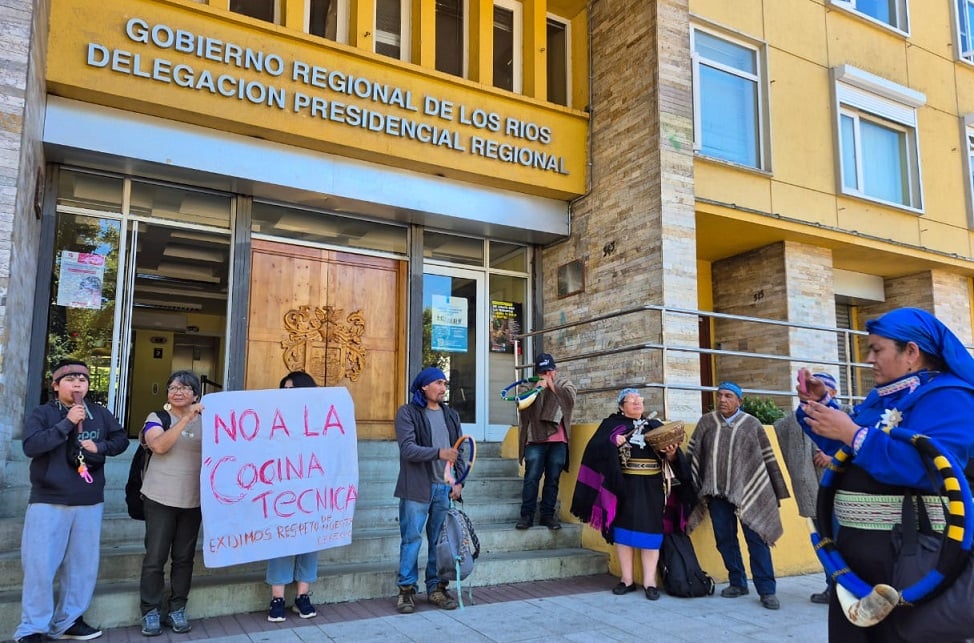
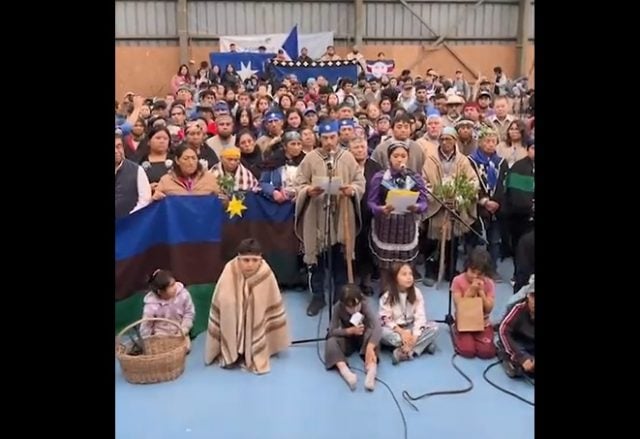
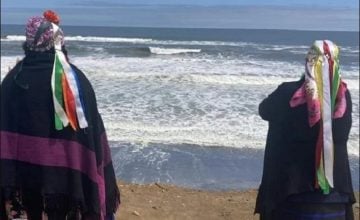
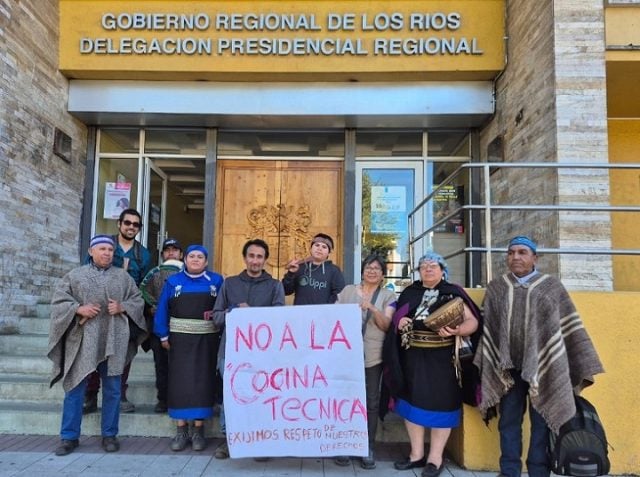
The Lafkenche Wadalafken Communities Association has released a public statement condemning a recurring pattern of obstruction, discrimination, and denial of their ancestral rights by the Regional Commission for Coastal Use (CRUBC) of Los Ríos. This body has effectively rejected more than 97% of the area requested as Coastal Marine Space for Indigenous Peoples (ECMPO) Wadalafken, a region previously recognized by CONADI as a customary use area after over seven years of processing.
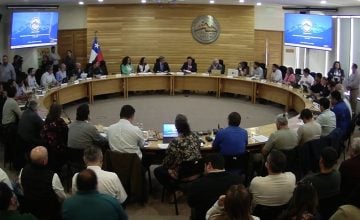
The CRUBC’s most recent decision, made in January 2026, only partially accepted a claim, maintaining almost total rejection of the original request submitted for the municipalities of Valdivia, Corral, and La Unión. The Commission justified its ruling based on sector reports and criteria of «spatial and functional proportionality», asserting that its actions complied with legality while attempting to balance ancestral use with «strategic public sector interests». However, the actual outcome has resulted in a fragmented mosaic of small scattered areas that do not reflect the territorial logic of the communities.
Sergio Quinan, spokesman for the Wadalafken Association, highlighted serious inconsistencies in the process: «The argument used to completely reject the ECMPO was artisanal fishing… but in the southern part of the ECMPO, that fishing does not exist. In the end, what the technical team did was present the proposal to the CRUBC.» Quinan challenges the arbitrary nature of the process: «If that argument had been used elsewhere, there would be no ECMPO because fishing occurs everywhere.»
In a public statement dated January 22, 2026, the applicant communities detailed how they presented concrete proposals to the Regional Government to ensure coexistence with other activities such as maritime safety, tourism, and artisanal fishing, even going so far as to exempt large sectors of their request. «However, the Regional Government, through this commission… did not consider any of our proposals,» they claimed.
Quinan denounced the internal dynamics of the CRUBC, where particular interests prevail: «The opinion of the fishing service… imposes its terms within the technical tables of the CRUBC: ‘Where the Lafkenche law is not on the table as a center for debating what should logically be discussed, the fishing law dominates the conversation.’ All discussions that take place in the CRUBC are based on fishing law. This completely diverts the nature of the discussion.» This approach, according to the communities, marginalizes the spirit of the Lafkenche Law.
The Wadalafken public statement strongly criticized the CRUBC arguments as «false, discriminatory, and even racist.» They pointed out that using artisanal fishing as an excuse is an act of bad faith, as multiple ECMPOs currently coexist in regions where both activities thrive. «The State of Chile once again is not fulfilling the agreements made with Indigenous peoples,» they stated.
Quinan expressed the sense of disillusionment and lack of political will: «We have lost all credibility in these institutions… There are no arguments based on laws… Just opinions. Opinions that seek to deny our rights.» He also criticized the message sent by the State: «Here in the Los Ríos region: ‘Oppose dialogue and you will win’, based on the propaganda campaign of a leader in artisanal fishing, president of a federation: ‘This person engages in propaganda against the ECMPO within unions and lobbies within services. We have sought dialogue, proposed conversations, and if they have concerns about artisanal fishing, we said we would sign agreements to ensure their rights. But they have rejected any form of dialogue. What the State has done is give credence to those who do not want to engage. The State’s message is clear—here in Los Ríos.'»
In this context, the CRUBC has only agreed to technically review two limited zones – Calfuco and the southern section between Punta Galera and the Río Bueno – commissioning a new report from the Technical Committee within 30 days, but clarifying that this «does not imply prior approval.» Additionally, Quinan commented on this measure: «To clarify, the Calfuco polygon is merely an adjustment resulting from an agreement with the University and does not exceed half a hectare.»
Regarding this, Quinan notes: «Next week, there is a third technical committee to also determine this polygon, which has yet to reach an agreement, as fishing is now claiming that it also occurs in that sector, hence they are also reluctant to proceed. And thus the situation remains unresolved.»
He emphasized that there are opinions attempting to deny rights: «Unfortunately, a chance is being lost in this region to reach agreements, to harmonize, and to implement the law, because there is no threat, pressure, or lobbying, and all the political power that the salmon industry holds in the Lakes region. This could resemble what has happened in the Araucanía region, where ECMPO initiatives have been established. But here, there has been no willingness to dialogue. We have sought a willingness to dialogue and it does not exist. It is not desired.»
It is worth mentioning that in the actions of the CRUBC in Los Ríos and other Regional Government bodies, the Exempt Resolution No. 2,456 from the Ministry of Interior (October 30, 2024), which establishes guidelines for the processing of Coastal Marine Spaces for Indigenous Peoples (ECMPO), was omitted, being emphatic in declaring full compatibility between these areas and artisanal fishing. The document states that the Lafkenche Law (20,249) and its regulations «safeguard the rights of artisanal fishing» at all stages of the procedure, ensuring that neither the processing nor the creation of an ECMPO will affect their usual activities. It also emphasizes that a new management plan will only be necessary if new resources are to be extracted, reaffirming that legislation «ensures the compatibility of artisanal fishing with the establishment of ECMPOs.»
The Wadalafken communities have announced they will continue to fight for their rights until the end, denouncing that the CRUBC has abdicated its legal mandate to harmonize different interests along the coast, instead becoming a space of obstruction.
Relacionados
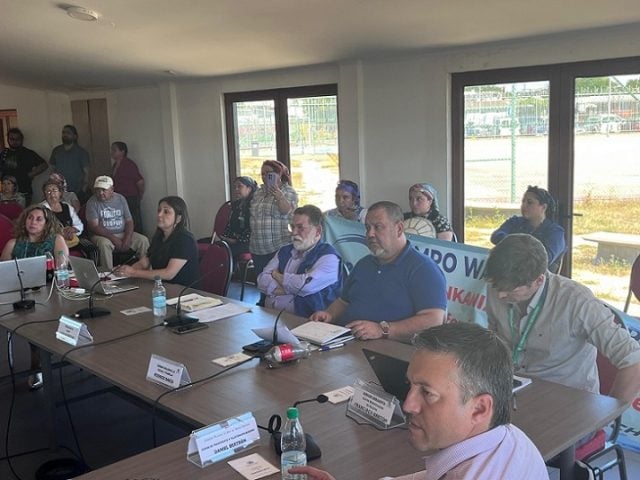

Wadalafken Communities Present Compatibility Proposal at CRUBC Los Ríos Technical Committee
Hace 2 meses
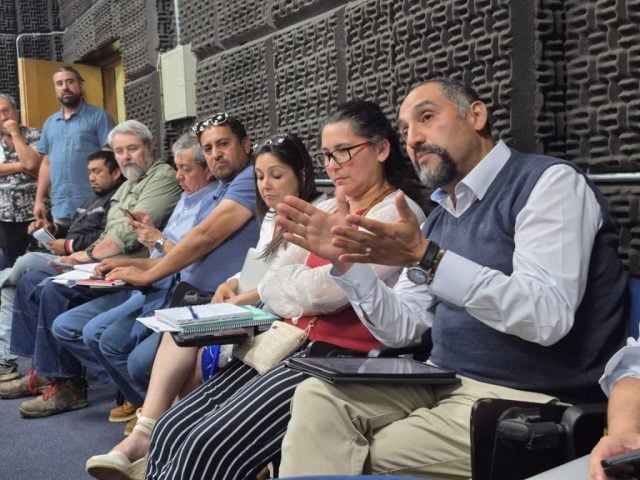
Comunidades de Wadalafken presentaron propuesta de compatibilización en Comité Técnico de la CRUBC Los Ríos
Hace 2 meses
Comunidades del Wadalafken acusan de racismo e irregularidades a Comisión de Borde Costero de Los Ríos
Hace 2 meses
"It's a Distortion, a False Report": Authorities Deny El Mercurio's Claims About Coastal Spaces of Aysén Communities
Hace 3 meses