Original article: «Ahí tienen su orina»: Marcha en Arica exige catástrofe ambiental para salvar el Lago Chungará
Social Organizations March in Arica to Demand Environmental Disaster Declaration for Lake Chungará
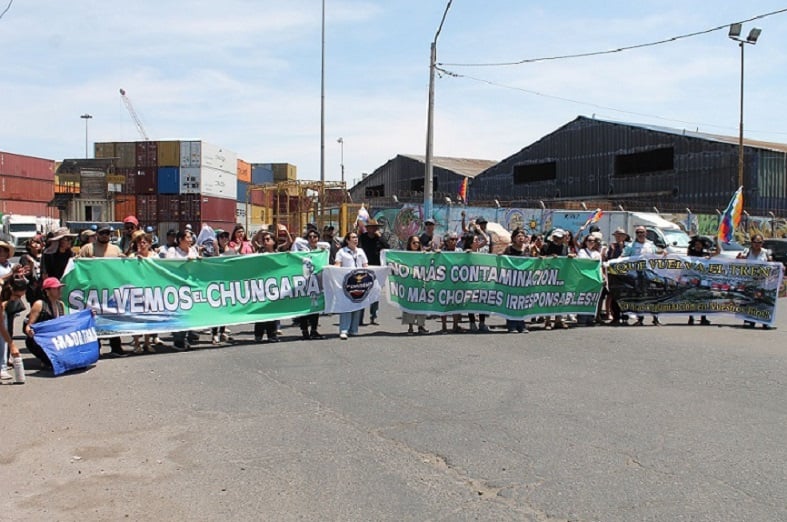
Various social organizations, environmental collectives, and community groups mobilized this Friday in Arica to demand urgent measures to protect the ecosystem of Lake Chungará, one of the country’s most ecologically valuable water bodies, recognized globally for its unique biodiversity.
The gathering brought together over 20 individuals at the San Marcos Cathedral, where an open call was made for community involvement in a demand that, according to the organizers, “involves all of us.” The central focus of the rally was to formally request the declaration of Lake Chungará as an environmental disaster zone, aimed at enabling more effective and urgent actions by the state.
The groups warned that the environmental situation in the Altiplano has reached critical levels. Among the most serious incidents is the spill of over 25 thousand liters of soybean oil into Lake Chungará, highlighting the fragility of the ecosystem and the lack of preventive and emergency response protocols in the area. This is compounded by constant truck spills from Bolivia on Route 11-CH, which have caused soil and water contamination as well as the death of microbiota in the wetlands, crucial for the ecological balance of the territory.
“Lake Chungará is not just a tourist attraction. It is a unique ecosystem in the world, home to endangered species and a vital natural reservoir for the Altiplano. Its deterioration is a warning about the development model we are allowing,” stated representatives from the rally.
“There You Have Their Urine”
The march proceeded to the Presidential Delegation to deliver a letter and engage in dialogue with the delegate. They then moved towards the Port of Arica, where Bolivian trucks park.
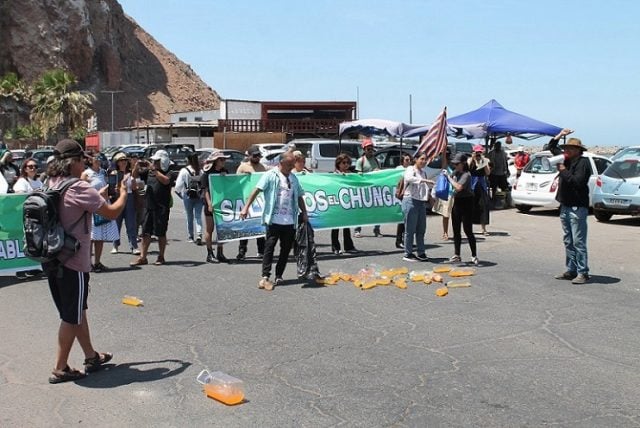
At this location, a performative act named “There You Have Their Urine” took place in front of the Arica Port Terminal, where dozens of bottles were thrown on the ground simulating urine.
This intervention aimed to highlight a common practice on the Altiplano routes: the abandonment of waste and plastic containers with human waste along the roadside, a form of silent and persistent pollution.
Additionally, the organizations demanded a review of the 1904 Treaty, arguing that current international transit conditions do not meet modern environmental and safety standards. “There are fuel spills, contaminated waters, and frequent accidents on Route 11-CH. We cannot continue operating under a treaty over 120 years old without provisions to protect people and the environment,” they emphasized.
Finally, the organizers warned that damage to the ecosystem of Lake Chungará not only impacts the present but also jeopardizes the environmental future of the region and the country. “The way we tackle this crisis will be a clear indication of how we are addressing the care of the planet we inhabit,” they concluded.
Save Chungará is a collective that brings together the following organizations:
- Fenasenf (Federation of Nurses and Nursing Staff of Chile)
- Asenf (Association of Nurses and Patients of the Regional Hospital)
- Methodist Church of Chile Imech
- FESA (Federation of Students of Arica)
- BRP (Ramona Parra Brigade)
- Base LER (Secondary Students Base Luis Emilio Recabarren)
- Arica and Parinacota Guides Association
- MODATIMA
- NGO AUPM
- Save Chinchorro
- Indigenous community of the Codpa people
- Bird Observers of Arica and Parinacota
- Akapacha Foundation
Relacionados
"Ahí tienen su orina": Marcha en Arica exige catástrofe ambiental para salvar el Lago Chungará
Hace 2 meses
Environmental Crisis at Lake Vichuquén: Legislature Approves Resolution Demanding Urgent Action from the President
Hace 2 meses
Lago Ranco: Major Real Estate Project Linked to Piñera Family Enters Public Consultation Phase
Hace 2 meses