Original article: El Maule: Investigadores desarrollarán sistema para anticipar eventos climáticos extremos
The goal of a new project led by the Thinkagro Extension Center from the University of Talca is to develop an early warning system utilizing artificial intelligence, machine learning, and integrated climate data management. The initial focus will be on frosts, heat waves, and extreme precipitation.
This initiative, set to span over 36 months, is funded by the Regional Government of Maule’s Fund for Productivity and Development (FRPD) with a budget of 250 million pesos. It aims to enhance regional capabilities to anticipate and respond to climate phenomena directly impacting agriculture.
The primary objective is to improve decision-making processes in response to events that affect agricultural production.
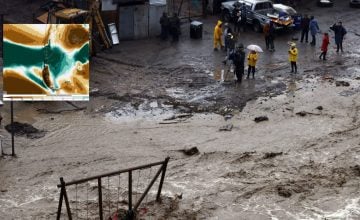
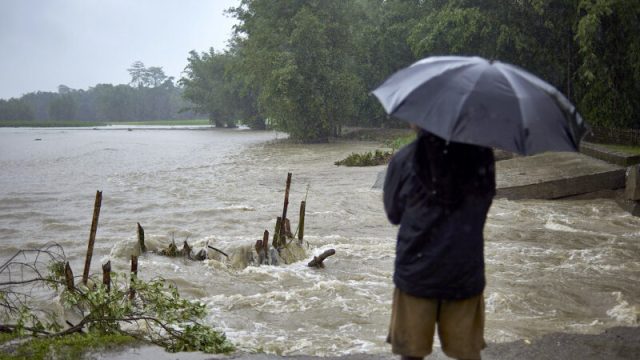
Regarding this, regional governor Pedro Álvarez-Salamanca emphasized that the research arises in the context of increasing climate variability, where phenomena such as frosts, high temperatures, heat waves, and heavy rainfall can significantly impact production, agricultural planning, and the response capabilities of producers and businesses.
Regional Climate Metabase
One of the project’s key developments will be the creation of a regional climate metabase designed to integrate historical records and data from various sources, establishing an infrastructure capable of continuously storing, processing, analyzing, and updating information.
From this foundation, predictive models supported by artificial intelligence (AI) and machine learning (ML) will be developed and evaluated.
José Antonio Reyes, director of Thinkagro-UTalca, explained that «we will analyze historical series from 50 to 60 years to understand how the climate has evolved in different areas of the region and where changes and extreme events are concentrated.»
«Based on this foundation, we aim to develop artificial intelligence models that can predict frosts, precipitation, and extreme temperatures, taking into account the specificities of different territories and agricultural contexts,» noted the Maule academic.
«The value lies in integrating and systematizing the information, learning from it, and transforming it into useful knowledge so that producers, businesses, and institutions can make better decisions,» added Professor Reyes.
The project collaborates with several associated institutions, including the Regional Ministerial Secretariat of Agriculture of the Maule Region, the Maule River Surveillance Board, the AgroTech Chile Business Association, the Rural Development Corporation (Codesser), and the Innova Foundation.
We will continue to provide updates.
Obtén tu Pasaporte y apoya a El Ciudadano
Elimina la publicidad, accede a contenido exclusivo y sé parte de la comunidad.
Cancela en cualquier momento · Sin permanencia