Original article: Maurice Bishop: Adelante siempre
By Kris González*
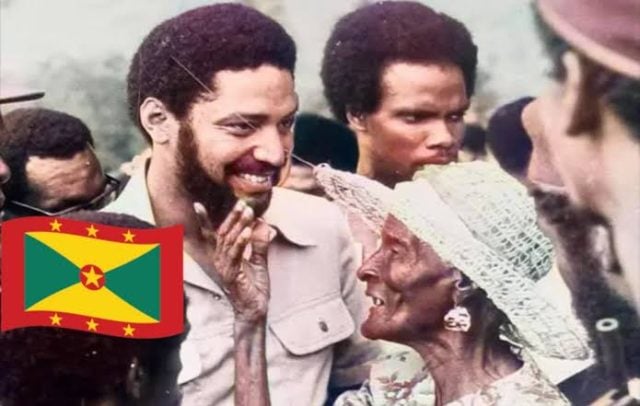
On October 19, 1983, Maurice Bishop, Prime Minister of Grenada, was executed in Fort Rupert, Saint George’s, alongside Jacqueline Creft, Unison Whiteman, and other government and combat colleagues.
The rifles were wielded by soldiers of his own Army, serving a faction within his own party. Six days later, the United States invaded the island. The bodies were never found, and there is no singular account of what happened to their remains.
The revolution on the spice island lasted four years and seven months, in a territory barely 344 km² large, with 100,000 inhabitants who dared to undertake the first anti-colonial, anti-imperialist, Marxist, and Afro-descendant revolution in the English-speaking Caribbean.
As we mark 43 years since his death, it is worthwhile to revisit Bishop’s legacy. This is not merely to honor a Marxist icon of the Caribbean left; it also serves as a stark lesson for the left in Latin America: internal divisions opened the door to the perennial enemy, who was waiting for the opportunity.
Cuba and the Caribbean: Breaking the Blockade
To understand Bishop, one must first look at the surrounding Caribbean.
After its expulsion from the Organization of American States (OAS) in 1962, Cuba found itself isolated in its own neighborhood, with the blockade breaking from the English-speaking islands.
On December 8, 1972, Barbados under Errol Barrow, Guyana under Forbes Burnham, Jamaica under Michael Manley, and Trinidad and Tobago under Eric Williams established relations with Havana. Fidel Castro would later describe this as «a decision of unquestionable political courage,» made by small countries «in a hostile environment under great pressure.» This date is now celebrated as CARICOM-Cuba Friendship Day.
This brotherhood was not without violence. On October 6, 1976, a Cubana de Aviación airplane, the target of a CIA bombing, exploded off Barbados with 73 people aboard, including young Guyanese en route to study in Cuba.
«When an energetic and virile people cry, injustice trembles,» said Fidel during the mourning farewell. In that awakening Caribbean, seeking its own voice amidst colonial heritage and pressure from Washington, grew the young lawyer who would lead the smallest and boldest revolution in Eastern Caribbean history.
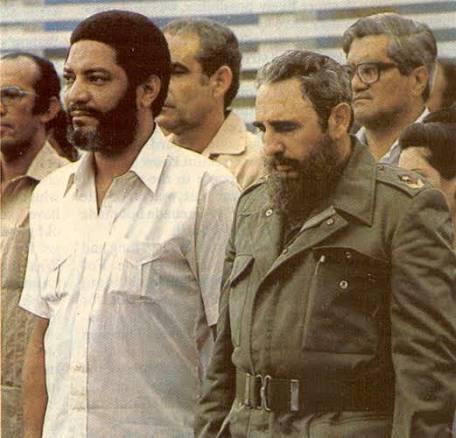
Born of a Volatile Caribbean
Maurice Rupert Bishop was born in Aruba on May 29, 1944, to Rupert and Alimenta Bishop, Grenadians from the northeastern part of the island who had migrated to work in an oil refinery. He returned with his family to Grenada as a child.
He was tall and handsome, with an athletic build, engaging in sports from an early age. Standing just over 1.90 m tall, with a calm voice, transparent gaze, and warm smile, he became a beloved leader, filling public squares and igniting hope, as noted by his cousin Bob Evans.
He won one of the four government scholarships to Presentation Brothers’ College, where he presided over the student council, debate club, and history study group, and led the newspaper Student Voice. In 1962, he graduated with the Director’s Gold Medal for his academic excellence.
That same year, he co-founded the Grenada Youth Assembly for Truth with Bernard Coard; their story started long before the eventual split.
In December 1963, he traveled to England to study law at the University of London, later being admitted to Gray’s Inn in 1966. In the UK, he led student associations, participated in the Campaign Against Racial Discrimination, and helped establish a free legal aid office for the Caribbean community in Notting Hill.
There, he encountered the ideas shaking the colonial world: Pan-Africanism, the thoughts of Frantz Fanon and Julius Nyerere, and the Black Power movement that rocked Trinidad in 1970, along with the works of Walter Rodney and the legacy of Marcus Garvey. He also admired Fidel Castro and Che Guevara from a young age.
He returned to Grenada in 1970, where his first battle was in the courts, defending striking nurses at Saint George’s General Hospital, resulting in his arrest alongside 30 others, all of whom were acquitted after seven months of trial.
In 1972, he organized the Movement for People’s Assemblies with Kenrick Radix and Jacqueline Creft, which merged with JEWEL, led by Unison Whiteman, in January 1973 to form the New Jewel Movement, with Bishop and Whiteman as coordinating secretaries. He was elected a deputy in 1976 and became leader of the opposition. By 1979, at just 34, he would become Prime Minister.
Throughout this journey, Unison Whiteman, his friend and partner since the movement’s inception, was by his side.
Whiteman had created JEWEL, the peasant movement of Saint David, and when it merged with Bishop’s movement, they jointly led the New Jewel Movement. With the revolution, he was appointed chancellor and represented small Grenada in international forums.
Life’s paradox would have both friends, who began the struggle together, also end it together: on October 19, 1983, Whiteman was executed alongside Bishop in Fort Rupert.
Grenada then lived under the regime of Eric Gairy, a strongman sustained by electoral fraud and his own militia, the Mongoose Gang.
In November 1973, Bishop was violently beaten by police alongside other leaders, and in January 1974, the same month of independence, his father, Rupert Bishop, was murdered by Gairy’s gang during a protest.
The struggle against Gairy also became a bloody affair for him. On March 13, 1979, while Gairy was in New York, the New Jewel Movement seized power with near silence. It was the first successful revolution in the English-speaking Caribbean and occurred the same year as the Sandinista revolution.
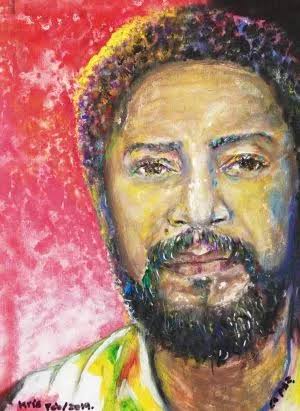
«We Are Not Anyone’s Backyard»
Just a month later, the U.S. ambassador warned that Washington would disapprove of Grenada’s rapprochement with Cuba. Bishop responded on April 13, 1979, through national radio, with the defining speech that would resonate through history: «No one, no matter how powerful, can dictate to the government and people of Grenada with whom we can be friends. We are not anyone’s backyard, and we are certainly not for sale.»
The Revolutionary Government aimed to change the daily lives of a poor island. It launched a literacy campaign through the Popular Education Center, expanded free health and education services, provided milk to children, and according to the Revolutionary Government’s own statistics, reduced unemployment from nearly half of the workforce to around 14%.
Cuba responded by sending doctors, teachers, scholarships, and hundreds of workers to construct the Point Salines International Airport, a dream of an island wanting to open itself to tourism and the world without dependency. Washington portrayed it as a future Soviet military base.
On May 1, 1980, before a million and a half people in Havana’s Plaza de la Revolución, Bishop expressed gratitude: «Without the Cuban Revolution of 1959, there would have been no Grenadian revolution, nor the Nicaraguan revolution of 1979.»
He warned: «If they touch Cuba or Nicaragua, they are also touching Grenada.» He concluded with the slogan that still resonates throughout the Caribbean: «Always forward, never backward!»
The Friends of the Revolution
Grenada was not alone. Its closest ally was Fidel Castro, whom Bishop first visited in May 1977, forging a relationship built on trust that transcended politics.
In Nicaragua, the Sandinistas, victorious the same year, were his generational brothers; Bishop referred to them alongside Cuba as part of the same destiny.
In the English-speaking Caribbean, leaders such as Michael Manley in Jamaica and a network of intellectuals he met during Black Power gatherings, like George Odlum from Saint Lucia and Trevor Munroe from Jamaica, stood with him.
The revolution also garnered sympathy from artists and intellectuals worldwide. Caribbean-rooted singer Harry Belafonte, whom Bishop called «our Harry Belafonte,» was a close friend in the United States. Poet Audre Lorde, daughter of a Grenadian mother, passionately followed the process and wrote Grenada Revisited, a Testimony Against the Occupation after the invasion.
Activist Angela Davis and much of the U.S. Black movement expressed solidarity with the island, which Bishop remembered as the land of Malcolm X’s mother. The echoes even reached Sweden: journalist Stieg Larsson, future author of the Millennium series, visited Grenada in 1981 with his partner Eva Gabrielsson, writing about the «unknown revolution,» organizing collections for the island’s cooperatives, and later portraying its landscape in The Girl Who Played with Fire.
In the Caribbean, Barbadian novelist George Lamming supported the process, and after its fall, honored Bishop at a tribute event in Trinidad in December 1983. Visiting Grenada were African heads of state like Kenneth Kaunda and Samora Machel, and many young people from the region volunteered to work there.
In August 1983, two months before his death, Bishop delivered his last major international speech at Hunter College in New York, before a Caribbean community that welcomed him as one of their own. Within his movement, his most loyal companions were Unison Whiteman, Kenrick Radix, and Jacqueline Creft, the woman who bore him a son, Vladimir Illich (killed in Canada at the age of 16), who at the time of his death was four months pregnant.
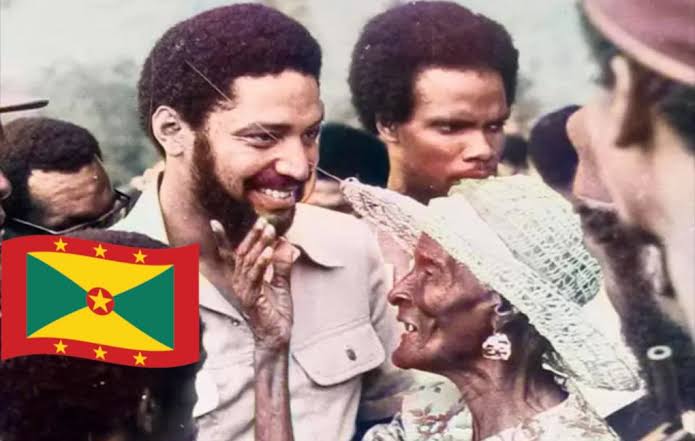
A Revolution of Words and Women
Bishop viewed the Revolution as a continual dialogue with the people. Parish and neighborhood assemblies, as well as councils of workers, peasants, and youth, discussed the national budget and government plans. It was a democracy measured by everyday participation.
He himself traversed the island, speaking in plazas and listening, with a blend of closeness and charisma that made his figure more than just that of a leader; for many Grenadians, he was the sole leader of the Revolution.
Women held a central role in this process. The National Organization of Women promoted equal pay, maternity leave, and political participation, with figures like Jacqueline Creft, Minister of Education, embodying a project that viewed education as the foundation of sovereignty.
Creft died alongside Bishop in Fort Rupert. Her name, often forgotten, deserves remembrance in every tribute.
The Rift: Bishop and Coard’s Faction
The Revolution, which resisted pressures from Washington, began to fracture from within.
Bernard Coard, Deputy Prime Minister and Minister of Finance, was the party’s main organizer and the theorist of the harder line. Educated in England and Caribbean universities, he pushed for an increasingly closed New Jewel Movement characterized by Leninist discipline that diverged from Bishop’s open and popular style.
In 1982, he withdrew from the party’s leadership bodies citing differences with Bishop’s leadership, but retained significant influence over the membership and the Army.
In September 1983, the Central Committee criticized Bishop’s leadership and approved a «joint leadership»: Bishop would manage mass relations and foreign policy, while Coard would handle the party organization and strategy.
Bishop seemed to accept at first. Later he traveled to Hungary and Czechoslovakia, passing through Havana, and upon his return, decided to confront the division threatening the political process. The Central Committee did not accept the critique and decided to place the young leader under house arrest.
For many of his comrades, this was the fracture of the principle of collective leadership; to the people, Bishop remained the embodiment of the Revolution.
There is an important detail that the Cuban government would later emphasize. In his discussions with Fidel, Bishop did not mention the serious internal divisions affecting his party. Havana interpreted this as a testament to his dignity and respect for both the party and Cuba. Yet it also reveals the solitude in which he fought that battle.
October 1983: The End
On October 12, accused of spreading rumors that Coard planned to murder him, Bishop was placed under house arrest by the Central Committee’s order. News of this swept across the island. For a week, mediation, meetings, and threats occurred as popular indignation grew.
On the morning of October 19, thousands of Grenadians marched to Bishop’s residence in Mount Wheldale and liberated him. He was carried on the shoulders of the crowd to Fort Rupert, the military command headquarters, where the soldiers on guard surrendered their weapons without resistance. From there, Whiteman and union leader Vincent Noel sent a message to Fort Frederick, where Coard’s faction was gathered, demanding their surrender.
The response was military. Troops from the People’s Revolutionary Army armed with armored vehicles left Fort Frederick. Upon reaching Fort Rupert, they opened fire on the gathered crowd; many jumped over the walls to save themselves. Soldiers and an uncertain number of civilians were also killed in the shooting.
When the fort was taken over, Bishop and his companions were separated from the rest and taken to the courtyard. According to a radio operator’s testimony, Lieutenant Colonel Ewart Layne ordered Officer Callistus Bernard, known as Abdullah, who commanded the troops there, to execute them. Both Layne and Abdullah have denied this allegation.
Political responsibility fell on the leadership headed by Bernard Coard, though it has never been proven who gave the final order.
Against the courtyard wall, Maurice Bishop, Prime Minister; Unison Whiteman, Foreign Minister and co-founder of the Movement; Jacqueline Creft, Minister of Education; Norris Bain, Minister of Housing; Fitzroy Bain, leader of the agricultural workers’ union; Vincent Noel, union leader; and supporters Keith Hayling, Evelyn Bullen, and Evelyn Maitland, were executed.
That night, General Hudson Austin announced a Revolutionary Military Council and a four-day curfew, with orders to shoot anyone who was on the streets.
According to the accused’s accounts, the bodies were thrown into a pit at Calivigny camp along with tires and debris, then burned. Similar to the dictatorships in Southern Cone countries during those years, the disappearance of the bodies became a method to erase memory.
Forty-three years later, Grenada still does not know where they are. His mother, Alimenta Bishop, spent three decades seeking them. She had lost her husband at the hands of Gairy’s gang and her son in a tragedy that no one ever explained to her.
In 2005, she formally requested the return of the body and left words that are an open wound: “I can go to the grave and say: here lies my husband. But I cannot say the same about my son. Every time I ask why I am not given a word about my son’s body, they tell me to forgive. How can I forgive when I have no answers about my son?”
Alimenta died on August 24, 2013, at the age of 99, without knowing where Maurice was.
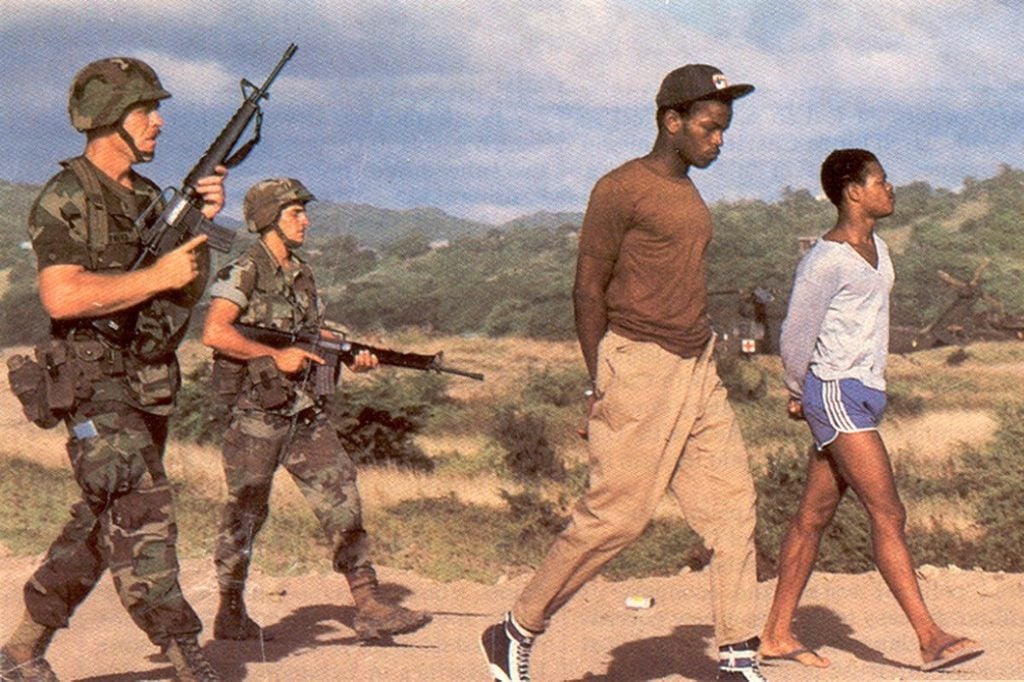
On October 25, under the pretext of protecting American students and with the support of some Eastern Caribbean governments, the United States invaded the island with thousands of soldiers. The Cuban workers constructing the airport, totaling about 784, most of them construction workers, resisted at Point Salines. Twenty-four Cubans were killed.
The Revolution was overthrown in three days. The invasion, which according to many analysts had been rehearsed since 1981 in military maneuvers in the Caribbean, found in the crime at Fort Rupert the pretext it had sought.
Fidel: “They Are Not Corpses, They Are Symbols”
On November 14, 1983, in Havana, Fidel bid farewell to the fallen Cubans in Grenada with a speech that combined mourning with judgment.
About Bishop, he stated that «he was not an extremist, but a true revolutionary, conscientious and honest,» and if he had any flaw, it was «his excessive tolerance and trust.» He referred to the faction that killed him as the «Pol Pot group» and left a warning for any emancipatory project: «No crime should be committed in the name of revolution and freedom.»
Fidel did not hide that Cuba had refused to intervene in the internal dispute of the Grenadian party, nor that Bishop’s death left the Revolution without the support of the people and vulnerable to invasion. Of the Cuban workers and soldiers who fell far from their homeland, he said: «They are not corpses; they are symbols.»
And he concluded with a phrase that sounds prophetic today: “The bells that toll today for Grenada may toll tomorrow for the entire world.”
What Happened Next
In 1986, a Grenadian court sentenced 14 of the accused to death, including Bernard Coard, his wife Phyllis Coard, and Hudson Austin. The trial, known as the «17 of Grenada,» was criticized by Amnesty International, which in 2003 deemed it unjust.
The sentences were commuted, and in September 2009, the last prisoners were released. In 1997, the group issued a public apology taking collective responsibility for the tragedy, and Coard stated in subsequent interviews that the leaders took «the moral and political responsibility» for what happened, though he attributed the executions to the revenge of untrained soldiers.
Between 2001 and 2006, a Truth and Reconciliation Commission operated, attempting to heal the wounds opened by the Revolution, the crime, and the invasion.
Some historians, like Richard Drayton, emphasize the responsibility of the faction that destroyed the party from within. Others, including Stieg Larsson in his reports from 1983, noted that the primary beneficiary of the tragedy was Washington, which had spent four years isolating and threatening the island, and after the invasion, took away the bodies of the murdered leaders.
Both truths coexist: division opened the wound, and the United States exploited it.
Other analyses from the Caribbean left have pointed out that the growing distance between an increasingly small cadre party and a populace that continued to support Bishop led to a temptation to replicate foreign models in an island of 100,000 inhabitants, alongside a failure to resolve differences without resorting to force.
The fundamental question remains open: How does one build collective leadership without destroying the leaders that the people recognize as their own?
What Bishop Tells Us Today
Forty-three years later, the Caribbean and Latin America are once again hearing old words. The doctrine that views our region as the backyard of a power has been invoked again without shame, and the pressures on countries choosing their own friendships have not disappeared.
Bishop’s quote, «we are not anyone’s backyard, and we are definitely not for sale,» remains profoundly relevant.
But his legacy is not just a slogan against external power; it is also a warning for the internal front. Grenada demonstrated that a revolution can withstand the blockade, propaganda, and threat, yet still fracture when its leaders forget that power belongs to the people who sustain it.
Unity, which Fidel defended until the end, was not an empty word for Grenada but rather the difference between life and death for a project.
The Return
In August 1998, Fidel landed in Grenada, at the airport built by Cuban workers, led by Bob Evans, Bishop’s cousin and a man of impeccable professional integrity.
Fidel unveiled a plaque in memory of the 24 fallen and visited Alimenta Bishop, Maurice’s mother. In 2009, that airport was renamed Maurice Bishop International Airport. As of 2023, October 19 is a national holiday in Grenada. Prime Minister Dickon Mitchell explained that the day exists “to recognize the grim and tragic nature of what occurred”; and in 2024 he stated that this date “will forever be etched in our collective psyche and history as a day of tragedy.”
His government announced the establishment of a sanctuary at Fort George, the former Fort Rupert, and a bust of Bishop created alongside a Cuban foundation.
Bishop’s story is one of a Caribbean that refused to be a backyard, and also the tale of a Revolution that paid the highest price for its division.
Forty-three years later, his voice still resonates through the radio of memory, firm and serene, with the slogan they could not assassinate: «Always forward, never backward!»
*Kris González is an international analyst, poet, visual artist, journalist, and founder of the Correo del Alba Magazine.
Bibliography and Sources
-González, Kris. Bishop and the Grenadian Revolution.
-Revista Correo del Alba, www.correodelalba.org. Grenada
-Bishop, Maurice. Speeches from April 13, 1979, and May 1, 1980, in In Nobody’s Backyard. Maurice Bishop’s Speeches, 1979-1983, Zed Books, London, 1984.
-Castro, Fidel. Speech at the mourning farewell for the victims of the Barbados crime, Havana, October 15, 1976.
-Castro, Fidel. Speech at the mourning farewell for the Cubans fallen in Grenada, Havana, November 14, 1983.
-Castro, Fidel. Speech at the CARICOM-Cuba Summit, December 8, 2002 (cuba.cu, caricom.org).
-Statement from the Cuban Party and Government on the events in Grenada, October 1983.
-Global Voices, Forty years later, Grenada officially remembers the murders of its Prime Minister Maurice Bishop and others, 2023.
-Nation News, Mother of Maurice Bishop passes, 2013.
-The New Today, Government to build Shrine at Fort George, 2024.
-Jamaica Observer, Maurice Bishop put country before self, says his widow, 2023.
-Caribbean Life, Slain Grenada revolutionary leader Maurice Bishop.
-Bishop, Maurice. Speech at Hunter College, New York, August 1983.
-The New Today, The order to kill Maurice Bishop.
-Powers, Martine; Muldoon, Ted and Svirnovskiy, Rennie. U.S. may hold key to finding remains of Grenada’s prime minister, The Washington Post, December 8, 2023.
-The Voice (Saint Lucia), Corbyn backs bringing back Bishop’s body, October 31, 2020.
-Gabrielsson, Eva. Stieg Larsson, Millennium and Grenada (marxistarkiv.se).
-Lorde, Audre. Grenada Revisited: An Interim Report, 1984.
Obtén tu Pasaporte y apoya a El Ciudadano
Elimina la publicidad, accede a contenido exclusivo y sé parte de la comunidad.
Cancela en cualquier momento · Sin permanencia