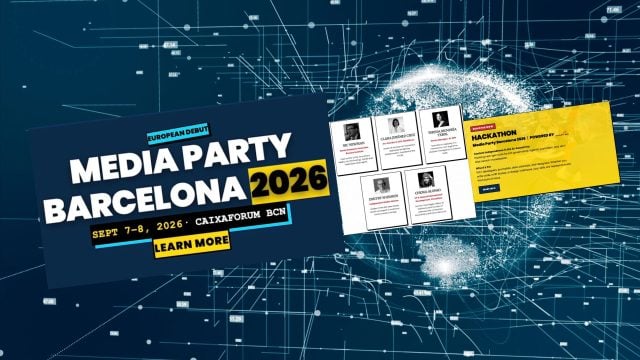
Starting September 7, Barcelona will become a hub for journalists, technologists, researchers, developers, and media innovation specialists to discuss how journalism can survive in an internet landscape where artificial intelligence is poised to act as an intermediary between news and audiences, extracting content from media outlets before readers are even aware of what has been published.
El Ciudadano
The Media Party Barcelona 2026, taking place at CaixaForum, marks its debut in Europe after 15 successful editions held in Buenos Aires and the United States. This edition is described by the organization as a «global laboratory,» placing a fundamental question at the heart of the program: How can we uphold the integrity of information in the age of artificial intelligence and beyond traditional search?
The schedule includes keynote speeches, hands-on workshops, lightning talks, and a hackathon. Key topics include generative AI, autonomous agents, machine-assisted investigative journalism, AI governance, misinformation, Google, new authority metrics, content creators, business models, and community building.
Nic Newman: Journalism in the Era of AI and Creators
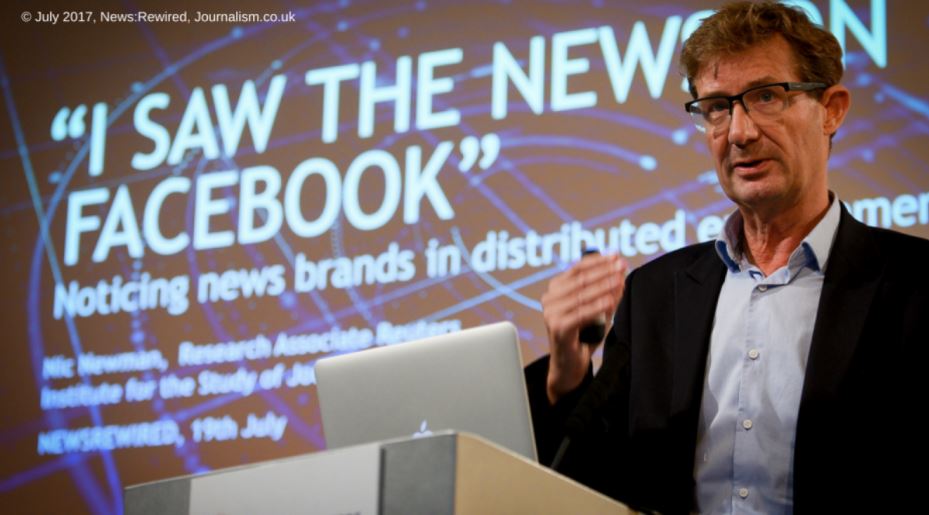
One of the central figures of the event will be Nic Newman, a journalist and digital strategist currently serving as Senior Researcher at the Reuters Institute for the Study of Journalism at the University of Oxford. Prior to joining the institute, he spent two decades at the BBC, contributing to the development of its digital services; he is also the lead author of the Digital News Report and reports on media and technology trends.
Newman will kick off the second day with a crucial question: How must journalism evolve in response to the simultaneous rise of AI-driven response engines and digital creators?
His analysis identifies two threats. AI systems can directly answer users’ queries, reducing traffic to media outlets, while creators are capturing audiences through authenticity, community engagement, and audiovisual formats.
Chema Alonso: When AI Begins to Claim the Value of Content
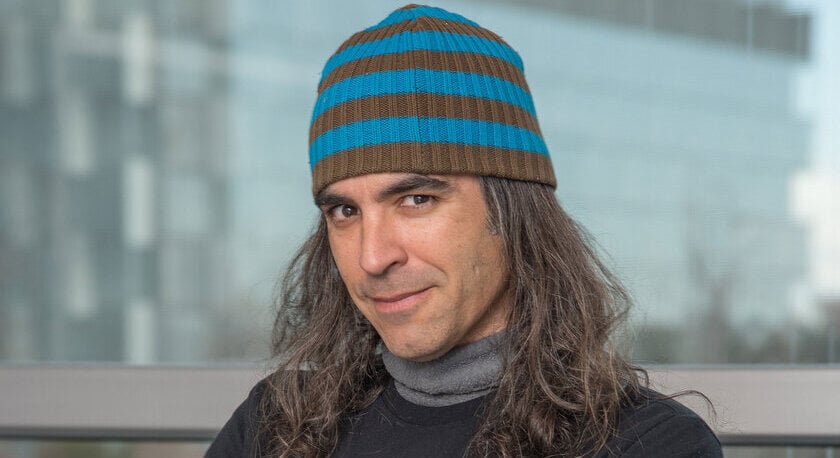
The economic dimension of the technological revolution will be addressed by Chema Alonso, an engineer and cybersecurity expert, currently serving as VP and Head of International Development at Cloudflare. The program also notes his past role as Chief Digital Officer at Telefónica and as the founder of ElevenPaths and Informática 64.
His presentation will tackle one of the major issues facing media: what happens when AI models use their content, generate responses from it, while simultaneously failing to direct users back to the original sources.
Alonso advocates for reconstructing the “pact” between creators and platforms through mechanisms that allow differentiation between tracking for search, model training, and use by AI agents.
This question directly impacts the press’s business model: who produces knowledge, who utilizes it, and who retains the economic value generated from that knowledge?
Teresa Mondría Terol: AI for Uncovering Impossible Investigations
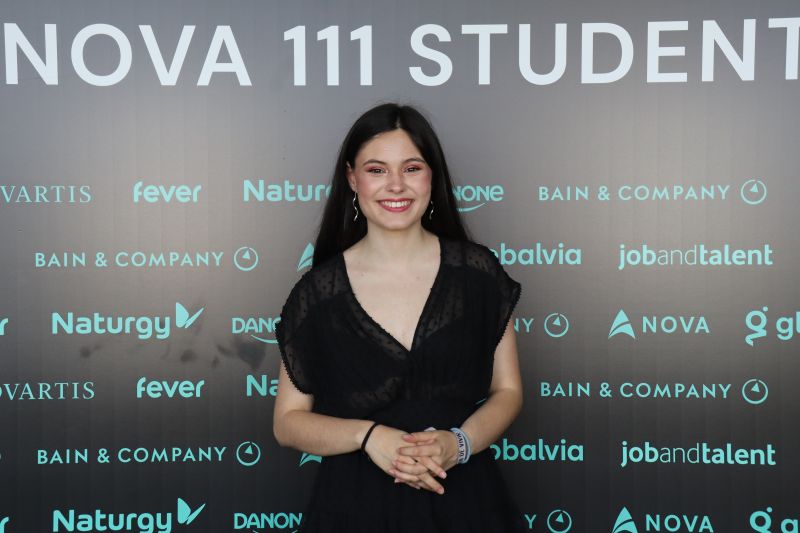
Teresa Mondría Terol, a journalist and expert in product and artificial intelligence, is currently Senior Product Manager at AI Labs at NPR, according to the official schedule.
Her participation will be particularly relevant for investigative editorial teams. She will present AI applications for analyzing large volumes of documentation, using the so-called Epstein Files as a case study.
The proposal is not simply to ask a chatbot to “summarize” documents; it is about learning to use AI to find patterns and evidence within massive datasets.
The program also includes a specific workshop on local LLMs for investigative journalism, teaching how to utilize locally stored text and image models to extract information from extensive document collections.
Dmitry Shishkin: When Readers Start to Become Machines
Dmitry Shishkin is a digital strategy specialist and currently works as an independent media advisor. His experience is linked to the development of the User Needs Model, initially associated with innovative work at the BBC.
In Barcelona, he will introduce one of the most innovative concepts of the event: Agent Readiness Layer.
The idea stems from a radical shift. Until now, media primarily focused on how to meet their readers’ needs. However, AI agents are starting to search, retrieve, and summarize information before users even reach a media site.
For Shishkin, this compels media to consider two audiences simultaneously: the person and the machine.
Clara Jiménez Cruz: Who Controls Big Tech?
Journalist Clara Jiménez Cruz, co-founder and currently CEO of Maldita.es, will be one of the most critical voices regarding the power of large platforms.
After a decade as a television journalist, she participated in founding Maldita.es and currently chairs the European Fact-Checking Standards Network while serving on the Advisory Board of the IFCN.
Her intervention argues that journalism must go beyond mere fact-checking.
The new frontier would be platform accountability: investigating who amplifies information, which algorithms intervene, what incentives exist, and how large platforms influence public discourse.
Olalla Novoa Ojea: How to Establish Rules for AI in Editorial Offices
Olalla Novoa Ojea, a journalist specializing in digital innovation and currently Director of Artificial Intelligence at PRISA Media, will tackle another major question: how to integrate AI without losing trust.
Novoa has worked on digital projects in media and technology companies and develops initiatives related to the application of AI in the media industry.
Her conference will start from a recognition: AI is already present in newsrooms.
Thus, the problem is no longer whether to use it or not, but how to establish governance that determines who can use which tools, for what tasks, with what controls, and under what conditions.
Elena Sanz: From Journalistic Article to Law
Science journalist Elena Sanz, currently Editorial Director of The Conversation Spain, will bring a different question to the gathering: Can journalism influence public policy?
Sanz has over two decades of experience as a journalist specializing in science, health, and neuroscience, having worked for media outlets such as El País, El Mundo, Muy Interesante, and laSexta.
Her presentation will analyze the project “Digital Well-Being and Minors”, developed with dozens of researchers and through in-person events in various Spanish cities.
The experience aims to demonstrate that the impact of a media outlet does not have to be measured solely by clicks, but also by concrete changes in society and public policies.
Judith Argila: The Battle for Audiences
Judith de Argila, a journalist and audience development specialist, is currently Director of Digital Audience Development at 3Cat.
Her work focuses on attracting and retaining audiences through data analysis, social media, and community building.
Her presence is especially significant because the challenge for media now goes beyond just producing content: it is about ensuring that this content reaches audiences who consume information increasingly far from the media’s own pages.
Clara Soteras: Google Changes the Rules of Visibility
Clara Soteras is a digital media specialist, SEO expert, and audience strategy consultant. She currently works as SEO and digital strategy consultant and serves as Head of Innovation and Digital Strategy at AMIC, in addition to being an associate professor of journalism and communication at UAB.
Her workshop will address a critical aspect for any media: what signals Google uses to determine authority and relevance in the era of AI.
Instagram, TikTok, X, and Facebook will now form part of the analysis of digital authority alongside Google Discover and Knowledge Panel.
The question is clear: if traffic from the traditional search engine diminishes, how will a media outlet’s authority be established and measured?
Ismael Nafría: The Strategic Comeback of the Newsletter
Journalist, author, consultant, and professor Ismael Nafría is one of Spain’s well-known specialists in digital innovation. He currently directs and edits the newsletter Tendenci@s and develops projects on the evolution of media.
At Media Party, he will lead a workshop on newsletters and audience retention.
However, the proposal goes beyond email: he will showcase an experimental project that converts nine years of his own newsletter archive into a consultable knowledge base through AI.
Neus Vidal and Sabrina Faramarzi: The Citizen as Researcher
Neus Vidal is a journalist and political scientist, currently Executive Director of Seek Initiative, an organization specializing in civic research. Before joining Seek, she worked on international projects focusing on press freedom and access to information.
Together with Sabrina Faramarzi, a journalist and currently General Director of Are We Europe, she will develop a workshop on participatory research.
The proposal is to turn citizens into co-researchers, contributing local knowledge, leads, and investigative capabilities to journalistic projects.
Vidal will also present the so-called 10 Paths to Research, a methodology designed for communities and organizations to investigate corruption, public spending, environmental harm, and other matters of public interest.
Preethi Nallu: Building Media Outside Major Hubs
Preethi Nallu, a multimedia journalist and migration specialist, currently serves as Executive Director of Report for the World.
Her conference will focus on building decentralized media ecosystems for the so-called Global Majority, especially in contexts where independent journalism has limited resources.
The thesis is that the survival of independent journalism depends not only on creating better content but also on building infrastructure, funding, networks, and shared capabilities.
Cecilia Tombesi: When Creation Becomes Almost as Fast as Thinking
Cecilia Tombesi, an Argentine graphic designer specialized in digital design, is currently the Digital Art Director for The Times and The Sunday Times.
Her talk will explore how to combine AI, UX, and data visualization to create new internal tools and storytelling formats.
The provocative question she poses is: what happens when experimenting with new formats becomes practically free and creating a digital piece is almost as quick as envisioning it?
Adrian Maqueda: An AI Agent Working Within Slack
Adrián Maqueda is a journalist specializing in web development and data visualization, currently working as a developer at Civio. He holds a degree in Journalism and specializes in multimedia journalism, with postgraduate training in investigative journalism, data, and visualization.
He will present TobIAs, an AI agent that operates within Slack to automate administrative tasks.
One of the system’s key features is that it functions locally: Civio donors’ data does not leave the organization.
Graciela Rock Mora: Editorial Intelligence for Small Media
Graciela Rock Mora, a journalist specializing in innovation, currently serves as Director of Innovation at La Silla Rota, a Mexican outlet dedicated to political information.
She will present AURA, a system comprised of three AI agents that utilize n8n and analytical tools to determine which content is performing well, how the audience consumes it, and what implications that data has for editorial decisions.
Her case is especially interesting as it shows that innovation with AI does not necessarily require large technological teams.
Scott Hale: An AI That Learns to Say «I Don’t Know»
Scott Hale, a researcher specializing in AI and information, is currently Research Director at Meedan.
He will present Suwali, a multilingual platform that aims to build conversational systems based on verified documentary sources.
The difference with traditional chatbots lies in its operating principle: the system retrieves information from a curated knowledge base, and each response is backed by sources. When it cannot find the answer, it does not invent: it admits it doesn’t know.
David Sancha: AI is Already Entering the Production Chain
David Sancha is a journalist and consultant who currently serves as CEO of Hiberus Media Labs.
With over 20 years of experience in media, he has participated in digital transformation projects for more than 50 communications groups in Europe and Latin America.
He will present data on the functioning of Assistant, an AI module integrated into the CMS Xalok that intervenes in the creation, editing, and publication of news.
The central idea of his talk is that AI ceases to be an experiment once it systematically integrates into the editorial workflow.
Marcelle Chagas: Lessons from the Global South
Marcelle Chagas do Monte Gontijo is a journalist, researcher, and technologist specializing in AI governance, information integrity, and digital infrastructure focused on communities. She is associated with the Mozilla Foundation and the Rede JP, a network of Black journalists that she founded.
Her workshop will challenge the notion that the global debate on journalistic innovation is constructed exclusively from the perspective of the Global North.
The session will analyze the experiences of Indigenous, Black, quilombola, and peripheral communities in Brazil and how they build trust and alternative information systems.
Eli Vivas: Who Can Afford to Get Informed?
Eli Vivas, a data journalist and specialist in data-driven communication, is currently CEO of Storydata.
His intervention addresses one of the major economic taboos in the sector: the subscription model may not be enough to fund open and universally accessible journalism.
Vivas will question whether media can rely solely on readers who can pay, in a context where subscription models may increase inequalities in access to quality information.
Richard Höchner Gallicani: Building Community Instead of Chasing Conversions
Richard Höchner Gallicani is co-founder and Head of Community at Republik Magazine, a Swiss outlet based on a member community.
His proposal is to abandon the traditional sales funnel logic and replace it with a strategy focused on community building.
According to the program, Republik has reached 36,000 members after ten years, relying on a relationship rooted in belonging, participation, and trust.
Ignacio Zaccagnino: The Same Story No Longer Exists the Same Across Five Platforms
Ignacio Zaccagnino is currently Head of Media Growth at Nomadic, specializing in media growth and distribution.
His presentation will analyze how a single story appears across five platforms to demonstrate that the route through which an audience discovers information varies significantly by channel.
Google, YouTube, and social media construct distinct paths for discovery and consumption.
Catherine Sotirakou: Greece as a Laboratory for Automation
Catherine Sotirakou is currently a visiting professor at the National and Kapodistrian University of Athens.
Her research focuses on how AI is beginning to be utilized in journalistic production in Greece, often without readers knowing that an article was generated or assisted by a machine.
Using the Greek case, her presentation will discuss the effects of automation in less dominant language markets and the tensions between economic pressure, speed, regulation, and information integrity.
The Agenda: Four Major Battles
The entire program can be summarized into four major axes: information integrity, AI in newsrooms, new discovery systems, and economic and ethical sustainability.
The first challenge is integrity: how to verify synthetic content, preserve sources, and prevent machines from amplifying misinformation.
The second is the transformation of newsrooms: deciding what tasks to automate, what processes to keep under human control, and how to establish rules.
The third is distribution: understanding how Google, social networks, and AI agents operate when people stop coming directly to media sites.
And the fourth is economic survival: constructing business models capable of financing quality journalism without solely relying on a small elite of subscribers.
The Third Day: Hacking the Future of News
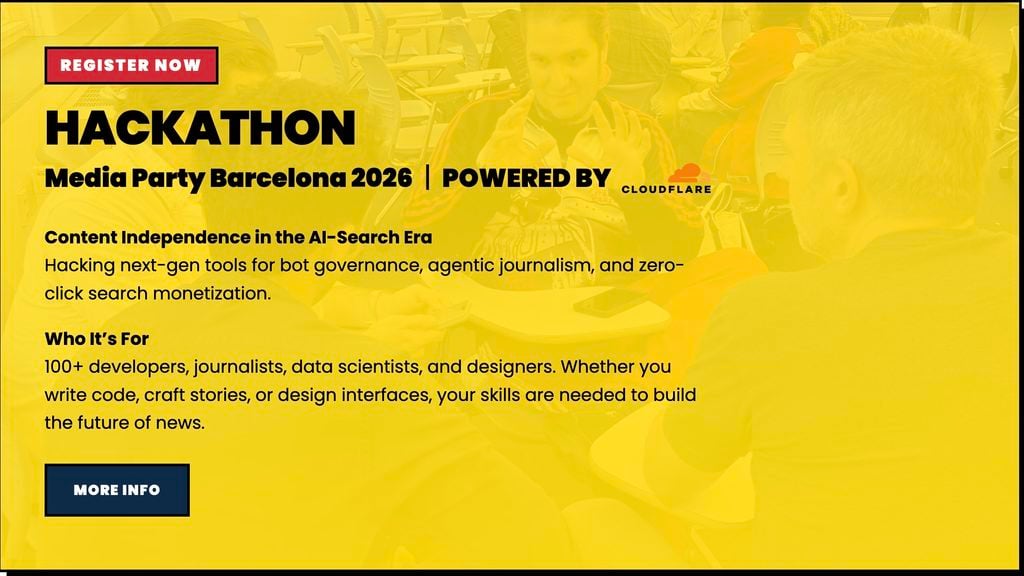
The Barcelona edition will also incorporate a third day of hackathon on September 9, focusing on content independence in the era of AI-driven searches.
The organizers anticipate gathering over 100 developers, journalists, data scientists, and designers to work on tools related to bot governance, agency journalism, and monetization in clickless search scenarios.
The choice of the term “post-search” effectively encapsulates the transformation taking place throughout the event.
The future of journalism will not only be defined by who produces the best information but also by who ensures that information is found, interpreted, cited, and valued by machines that are beginning to fill the roles once held by search engines for two decades.
Media Party Barcelona 2026 presents this challenge: how to prevent the AI revolution from rendering journalism an invisible source of knowledge while other systems capture the audience, traffic, and economic value generated by that work.
The battle that begins in Barcelona is not about learning to use artificial intelligence. It is about ensuring that, in the age of AI, journalism remains the owner of its content, its relationship with audiences, and the value it generates is recognized by AI.
El Ciudadano
Obtén tu Pasaporte y apoya a El Ciudadano
Elimina la publicidad, accede a contenido exclusivo y sé parte de la comunidad.
Cancela en cualquier momento · Sin permanencia