Original article: Se cae el mito: estudio evidencia que los ECMPO no paralizan la industria salmonera
OLMAR Study Debunks Claim That Indigenous Marine Coastal Spaces Halt Salmon Farming

The Legislative Observatory for Coastal Communities (OLMAR) / Citizen Observatory has released a study that challenges a key argument driving proposed amendments to Law No. 20.249, known as the Lafkenche Law: that Indigenous Marine Coastal Spaces (ECMPO) are hindering the development of the salmon farming industry in southern Chile.
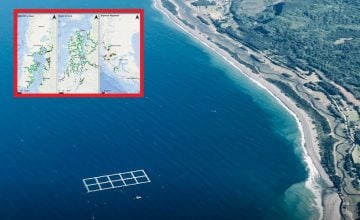
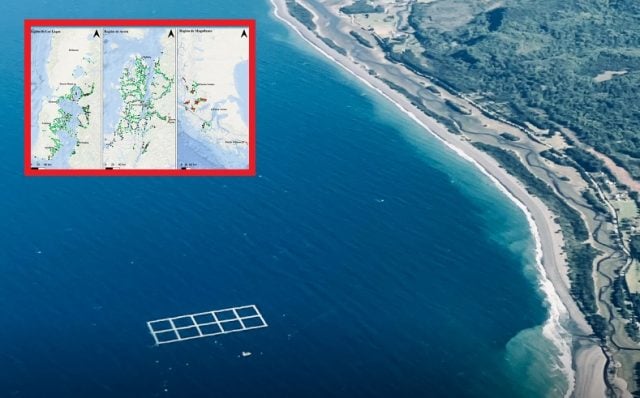
The report, authored by researchers Lorena Arce, Christian Paredes, and Santiago Kaulen based on official information from Subpesca updated to May 2026, analyzed 1,323 salmon farming concessions granted in the regions of Los Lagos, Aysén, and Magallanes. While 760 of these (57.4%) show some degree of territorial interaction with ECMPO, all continue to operate effectively.
The study differentiates between territorial interaction and real impact on applications in process. The so-called «suspensive effect» of the law only applies to requests that have not yet received final authorization. Of the 157 salmon farming concessions currently under consideration, only 55 (4.1% of total granted concessions) could potentially be affected. In cases of relocation requests, out of 253 identified, only 42 (16.6%) may be impacted, according to the report from OLMAR.
The analysis points to factors other than ECMPO that more significantly limit the expansion of the industry: the closure of Suitable Areas for Aquaculture (AAA) and restrictions from Law No. 21.600 regarding Biodiversity, linked to protected areas lacking a management plan. Additionally, an analysis by Fundación Terram indicates that nearly 27% of granted concessions remained inactive between 2012 and 2022, as highlighted by the OLMAR study.
The study does acknowledge real difficulties in applying the law, but these are attributed to state management deficiencies, not the content of the regulation. «The issue does not lie in the existence of the mechanism, but in the state’s inability to comply within reasonable time frames with the procedures established by the law itself,» states the report from OLMAR / Citizen Observatory.
As the salmon farming industry continues to grow—exceeding US$6.5 billion in exports in 2025— OLMAR warns that reform built on unsupported diagnoses risks disproportionately undermining the rights recognized by the Lafkenche Law, which align with the ILO Convention 169 and the United Nations Declaration on the Rights of Indigenous Peoples.
To read the full report and all its details, please visit the official website of OLMAR / Citizen Observatory at:
Obtén tu Pasaporte y apoya a El Ciudadano
Elimina la publicidad, accede a contenido exclusivo y sé parte de la comunidad.
Cancela en cualquier momento · Sin permanencia