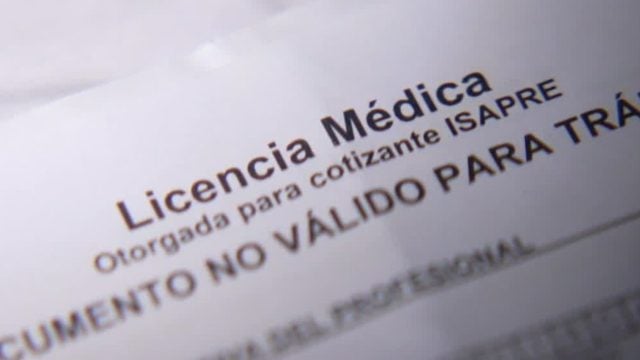
Original article: Cuando la historia de una licencia médica no termina con su pago
By Valídame Foundation
When an individual submits a medical leave request, they expect a straightforward process: review, resolution, and the expected payment.
However, many are unaware that critical elements for their future are also tied into this procedure: their pension contributions.
A medical leave doesn’t automatically conclude when the payment is received; there is also a need to ensure that the related contributions are properly paid and recorded.
If any issues arise during this process, they may go unnoticed for years, surfacing only when the individual seeks to understand their pension status or apply for benefits.
This was the unfortunate experience of Gustavo.
To assess his pension situation, it required a deep dive into various documents, letters, resolutions, and certificates from multiple institutions. This was a lengthy process that extended over several years, necessitating the gathering of numerous records to clarify what had transpired.
This situation raises an essential question: Why must an individual invest so much time and effort to reconstruct their own pension history? Knowing the balance in a retirement account or understanding how that amount was reached should not be complicated.
Yet, when documents do not align or discrepancies appear in the records, members may find themselves facing a daunting task that shouldn’t solely be their responsibility.
Noteworthy Statistics
Gustavo’s case presents attention-grabbing figures.
In April 2021, his pension fund showed a balance of $101,329,060. By April 2023, following his declaration as permanently disabled and accounting for the Disability and Survivorship Insurance (SIS), this amount had risen to $166,577,941. By September 2026, the figure swelled to $321,045,537.
What accounts for this growth? How can an individual determine which contributions were included, which payments were counted, and whether all transactions are accurately recorded?
The numbers alone do not clarify what has occurred, but they underscore the critical need for clear and detailed information.
Simply knowing the balance in an account is insufficient; one must also be able to comprehend its composition and the supporting background for the recorded transactions.
The contributions associated with medical leave must adhere to the conditions established by pension regulations. If discrepancies arise in the records, there are methods to request a review. The challenge is that the member may not always have access to all necessary information.
In this process, a health insurance entity (ISAPRE or FONASA), the COMPIN, and, in cases of complaints, the Superintendency of Social Security (SUSESO) may be involved. Additionally, information must be accurately reflected in the pension fund (AFP) records.
Each institution has specific roles, but for the worker, all these elements are interconnected. It pertains to their health, their income, their contributions, and ultimately, their future pension.
Therefore, just because a medical leave has been compensated does not mean that all related pension matters are resolved. It is crucial to verify that the necessary contributions have been paid and properly recorded against the correct time period.
Should any errors or omissions occur and go undetected, the ramifications can emerge much later.
This situation becomes particularly critical when dealing with disability pensions, old-age pensions, or benefits owed to survivors of a deceased individual.
At those moments, the pension history takes on the significance that is often overlooked while everything appears to be in order. Additionally, it is not guaranteed that the member has the tools to identify discrepancies or understand which institution is accountable.
The Right to Understand One’s Pension History
When individuals must navigate lengthy administrative or legal processes to clarify their pension status, it highlights a challenge that should not be overlooked. Information may be scattered across various institutions, documents can be complex to interpret, and elicit a response can require significant time.
It should not require becoming an expert in social security to ascertain whether contributions have been accurately paid and recorded. Even less should individuals have to wait until pension application time to discover discrepancies needing review.
Pension information must be accessible and allow individuals to understand their status. When discrepancies surface, there should be a clear means to investigate, rectify when necessary, and establish accountability.
Ultimately, the question is straightforward: Is my pension history complete? And if it is not, who is responsible for clarifying it?
Discussing medical leaves goes beyond just authorizations, rejections, or payments. It also encompasses the consequences these decisions can have on workers’ lives and their future pension plans.
When a leave is unjustly denied, when necessary contributions are not paid, or when records show inconsistencies, it is essential to investigate what happened and what can be done to protect the affected individual’s rights.
Chile must move toward a social security system that operates more transparently, where individuals can access their information, receive timely responses, and have effective mechanisms to claim redress when errors or violations occur.
This does not imply that institutions should neglect reviewing medical leaves or applying existing regulations. Rather, it means that decisions should be well-founded and individuals must have real opportunities to assert their rights when they believe they have been compromised.
Because behind every medical leave, there is a person, a family, and a future that also deserves protection.
The right to social security does not end when a medical leave is paid. It also encompasses the assurance that our pension history is complete, that our records are accurate, and that if something goes wrong, there will be an appropriate response.
Valídame Foundation
Obtén tu Pasaporte y apoya a El Ciudadano
Elimina la publicidad, accede a contenido exclusivo y sé parte de la comunidad.
Cancela en cualquier momento · Sin permanencia