Original article: Será ley: Cámara aprobó y despachó proyecto que fortalece las ferias libres del país
New Law to Strengthen Local Markets: Chamber of Deputies Approves Initiative for Free Fairs
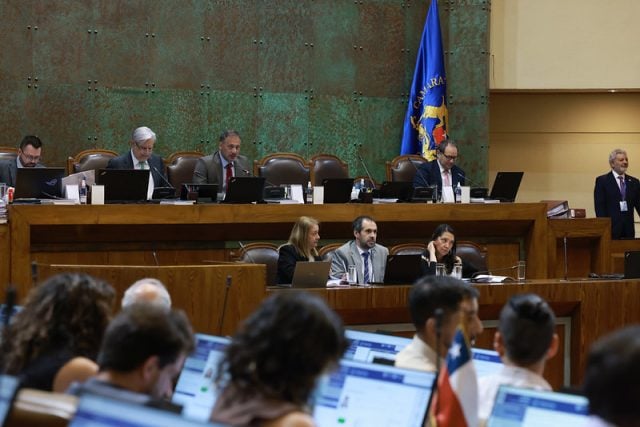
The Chamber of Deputies has approved Senate amendments and passed the initiative—presented by President Boric’s administration—which recognizes and bolsters free fairs as a cornerstone of food security and local development, providing a legal framework for their organization.
The regulation (bill 17117) aims to establish guidelines for the protection and promotion of free fairs, defined as «associative productive units that play a role in enhancing food security and nutrition within the country.»
Thus, the project defines these markets as a collection of retail merchants and independent workers primarily selling plant or animal-based food products.
Furthermore, it standardizes municipal ordinances regarding free fairs to regulate the minimum percentage of permits, criteria for their issuance, duration, and acceptable market categories, along with minimum standards for service space, environmental management, and waste disposal.
The forthcoming law mandates the State to implement coordination strategies among the Ministry of Public Security, regional governments, municipalities, and public order and security forces, «to prevent and reduce opportunities and incentives for criminal activity in the areas where free fairs are located and their surroundings.»
What Does the Initiative Entail?
Specifically, the initiative regulates the representation of free fairs, requiring them to have a general assembly, a representation committee, and an electoral commission.
Additionally, in each municipality where free fairs exist, a Community Participatory Council of Free Fairs will be established to foster dialogue between the municipality and representatives of the markets.
The regulation further establishes the creation of a National Registry of Free Fairs, managed by the Ministry of Economy, Development, and Tourism, which will be updated based on information and documentation provided by each municipality.
Regarding the issuance of permits, the initiative stipulates that municipalities should ensure free fairs are located in appropriate sites, minimizing negative impacts on local residents, ensuring accessibility, and maintaining safety in the surrounding area.
Moreover, all new fairs must be situated at least 1,200 meters away from the perimeters of existing fairs in the municipality or outside it; however, in exceptional cases, the municipal authority may allow a new fair to be located closer, provided there is an agreement from the Community Participatory Council.
Another aspect regulated is that municipalities must coordinate with free fairs to implement actions aimed at preventing food waste, reducing waste generation, and promoting recycling, reuse, or the recovery of byproducts.
Lastly, concerning safety, the future law specifies that a conviction for serious offenses related to drug trafficking and psychotropic substances, or criminal association during the permit’s validity, will serve as grounds for revoking or declining the renewal of the free fair permit.
The Citizen
Relacionados

Legislation Advances to Recognize Free Markets as Key to Food Security and Local Development
Hace 2 semanas
New Law to Protect Rights of Student Caregivers: "I Care and Study" Initiative Approved
Hace 2 meses