Original article: No existen aliados eternos ni enemigos perpetuos
By Sergio Rodríguez Gelfenstein
In memory of Juan Pablo Cárdenas, a companion and friend who would surely have read this article and shared his always insightful opinions and reflections. His life and struggle, his high level of professionalism, and above all, his superior human condition, will always accompany me as a model of the example to follow to be good in life.
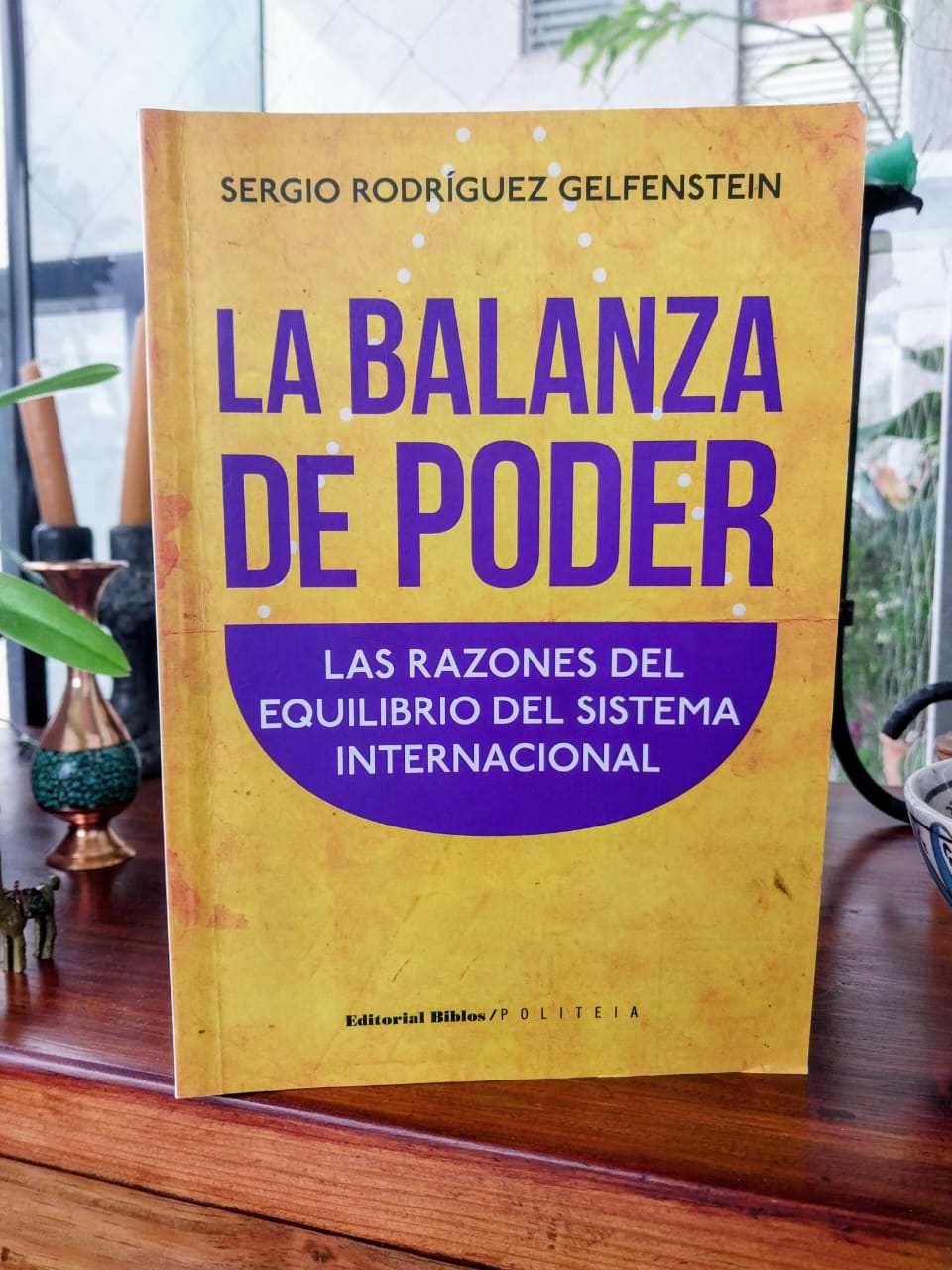
This article serves as a precursor to upcoming debates and a warning for those who believe we are moving towards a multipolar international system. I do not share that belief; I have been expressing this viewpoint for many years. In fact, I wrote a book titled “The Balance of Power: The Reasons Behind the Equilibrium of the International System” to support my position.
Balance of Power and Multipolarity
This issue is not trivial; it extends beyond a mere theoretical discussion confined to academic circles. It involves the behavior of great powers in the immediate future and their projections in the medium and long term, affecting all actors within the international system. It is worth noting that this transition occurs in a world facing unprecedented challenges and significant transformations, indicating the emergence of a new global landscape.
The concept of multipolarity indicates an international system characterized by the dispersion of political, economic, and military power among various centers of influence, which seems to be occurring as the deterrent capacity of the United States and the West has recently diminished. However – and this is the crux of my book – it appears to me that, due to the inability of the leading global power to assume a hegemonic role, we are actually progressing towards a configuration of a balance of power system that, while resembling multipolarity, differs in that power is distributed equitably to prevent a single actor from dominating the others.
Moreover, in a multipolar system, any actor can strive to occupy a dominant position, while the balance of power system is more closed, where each vital national actor seeks equilibrium with peers, driven by two main reasons: first, the realization that they cannot defeat their counterparts, and second, the necessity for mutual survival. Conversely, in a multipolar context, there persists the notion of defeating the opponent. The balance of power aims to sustain the other members to maintain the equilibrium essential for survival.
Kissinger’s Warning
A few months following the publication of my book in 2014, Henry Kissinger released one of his own titled “World Order,” in which, interestingly, he expressed views similar to mine. Of course, Kissinger represented the realist school of international relations and championed some of the most consistent imperialist theories of the late twentieth century and the early twenty-first century, articulating his ideas from a standpoint shaped by his concern over the declining hegemony of the United States and its inability to recognize that its survival depends on accepting the need to share power.
I will quote him for precision: “In the world of geopolitics, the established order proclaimed as universal by Western countries is at a turning point. Its remedies are globally understood, but there is no consensus on their application; indeed, concepts like democracy, human rights, and international law receive divergent interpretations that belligerent parties regularly invoke against one another as battle cries. The rules of the system have been promulgated, but, in the absence of active compliance, they have proved ineffective.”
“In this sense, there are no enduring friends or perpetual enemies. Friendship is contextual and limited to the moment.”
Kissinger’s insights, even at the age of 100, when he was still a frequent visitor to the White House – where both Republican and Democratic governments were eager to hear him – reflect the anxiety he transmitted, which extended beyond mere diagnosis. He stated that: “Achieving balance between the two aspects of order – power and legitimacy – is the essence of the art of governance. Power calculations devoid of a moral dimension will transform any disagreement into a test of strength; ambition will find no rest; countries will be embroiled in unsustainable tours de force of elusive calculations related to the shifting configuration of power. On the other hand, moral proscriptions that disregard balance tend to devolve into crusades or to develop impotent policies that invite scrutiny; both extremes jeopardize the coherence of the international order itself.”
Of course, Kissinger was not just listened to at the White House. It is known that he met publicly with President Xi Jinping at least two times, the last being on July 20, 2023, when the Chinese leader received him at the Diaoyutai State Guesthouse in Beijing, only four months before the veteran U.S. political leader’s passing. Throughout his life, starting in 1971, Kissinger visited China over 100 times, meeting with nearly all of the communist leaders of that nation, from Mao Zedong and Zhou Enlai to Xi.
And this was to be expected. While Kissinger, influenced by Machiavelli and Hobbes, recognized the necessity of establishing equilibrium in international politics as a central axis of the system based on his studies of realism, in China, the concept of balance – along with harmony – has been part of the philosophical backbone of the country since the time of Confucius, Lao Tzu, and the school of Taoism, as well as the schools of Yin-Yang and the Five Elements, extending through thinkers like Han Feizi and the legalists. I remind the reader that we are discussing philosophies that date back 25 centuries.
Three Signs of a Shifting Chessboard
In today’s world, we are starting to glimpse some events that may point towards a probable construction of a new balance of power. We can mention:
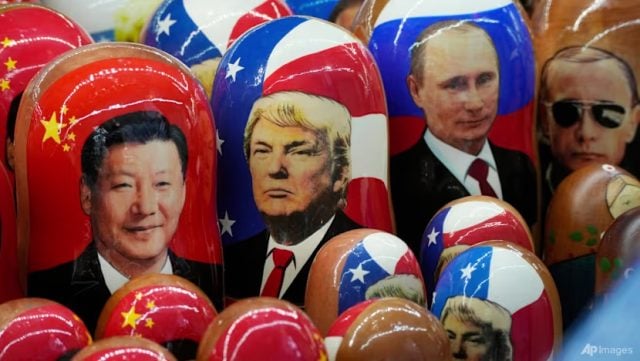
- The definition of relations between China and Russia as a «Comprehensive Strategic Cooperation Partnership in the New Era,» described by both governments as a link of “not allies, but better than allies.”
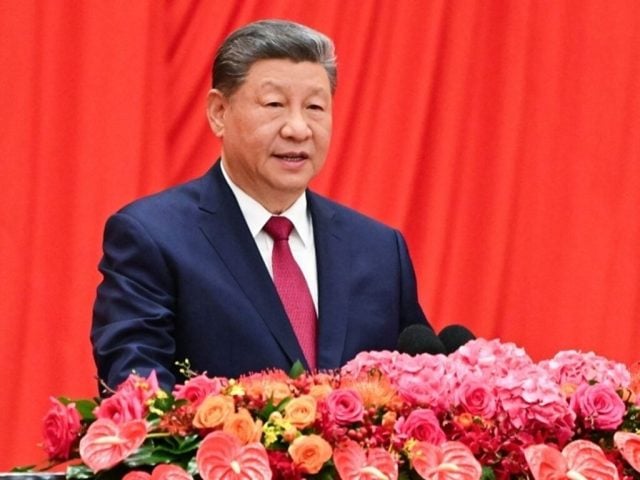
- The agreement between China and the United States to promote «constructive strategic stability,» reached during President Xi Jinping’s visit to the United States in September of this year, where the Chinese leader urged that both powers be «more partners than rivals,» advocating a relationship of peaceful coexistence and cooperation given the deep economic ties between the two countries.
- The decision by President Vladimir Putin to supply diesel to the United States and the global market in order to lower fuel prices, thereby providing a «breath of fresh air» for Trump as he faces pressures ahead of next month’s elections. In response, the U.S. Treasury Department issued a temporary license (valid until April 2027) to authorize trade with Russian diesel despite sanctions, which also means a similar «breath of fresh air» for Russia, allowing it to contend with the over 28,500 coercive measures and economic sanctions imposed by the United States, Europe, and other countries aimed at suffocating the Russian economy.
“It is necessary to free ourselves from the analytical categories of the Cold War because they are outdated and do not serve to study today’s world.”
As observed, agreements arise from where they are least expected. The real loser in this situation is Europe, which has been definitively sidelined from this new global game. Similarly, Ukraine and other U.S. satellites have been discarded for the sake of the national interests of the three powers shaping the balance.
Of course, there are conceptual differences regarding what national interest means for each leader. For Xi Jinping, it represents the interests of the Chinese people and their aspirations. For Putin, it is the interests of Mother Russia, her history, and her century-old culture that Europe has always sought to destroy. For Trump, it aligns with the interests of the billionaires he governs. That is what they will bring to the table.
Shenzhen, November
On November 18 and 19, the Asia-Pacific Economic Cooperation (Apec) Summit will be held in Shenzhen, Guangdong Province, China. Concurrently, a trilateral summit among the leaders of China, the United States, and Russia is being prepared. This would mark the first time such an event occurs. Perhaps this meeting will lay the groundwork for the global balance of power that will govern humanity’s future. We must stay alert to what transpires there. Should the three leaders take a photo together, we may need to consult Abel Prieto, a former Cuban minister and expert analyst on photographs, about what might be discerned in it.
As I have repeated many times in recent years, it is essential to liberate ourselves from the analytical categories of the Cold War because they are outdated and inadequate for studying today’s world. The ideological element is no longer the main organizing principle of international relations; they are now structured around state interests. In this regard, there are no eternal friends or perpetual enemies. Friendship is contingent and limited to the moment.
Today, it is worth recalling that statement by British Prime Minister Lord Palmerston, who in March 1848 said in a speech before the House of Commons that his country had “no eternal allies and no perpetual enemies,” adding that eternal and perpetual were its interests, which it was their duty to defend. If that were not the case, how could we comprehend that Russia is sending fuel to the United States but cannot deliver it to Cuba?
By Sergio Rodríguez Gelfenstein
I invite you to follow me on social media:
YouTube: https://www.youtube.com/@SoySergioRodriguezGelfenstein
Facebook: https://www.facebook.com/share/19pfvYSqSv/
IG: https://www.instagram.com/trinchera_de_ideas_sergior?igsh=aGU1Y2EzbGk3Z2pp
X/Twitter: https://x.com/sergioro0701
Blog: https://sergioro07.blogspot.com/
The views expressed in this section are the sole responsibility of the author and do not necessarily represent the opinions of El Ciudadano.
Continue reading:
Obtén tu Pasaporte y apoya a El Ciudadano
Elimina la publicidad, accede a contenido exclusivo y sé parte de la comunidad.
Cancela en cualquier momento · Sin permanencia