Original article: “Ni un paso atrás, cien pasos adelante”: Coordinadora Feminista 8M convoca a Huelga General ante la asunción de Kast
«Not One Step Back, One Hundred Steps Forward»: Feminist Coordinator 8M Calls for General Strike Ahead of Kast’s Presidency
In what they describe as an «extraordinarily challenging» political context, the Coordinadora Feminista 8M (CF8M) has called for a Feminist General Strike on March 8 and 9, in response to José Antonio Kast’s upcoming inauguration as President of Chile on March 11. In a powerful statement, the organization, which encompasses various feminist collectives across the country, expressed serious concerns about what they see as a regression in human rights, gender equality, and social justice.
The CF8M’s declaration makes their view of the incoming government unequivocal. According to the document released by the coordinator, a «political alliance further to the right than traditional conservatism» will take office on March 11, aligning itself with a globally conservative, authoritarian, colonialist, militaristic, anti-feminist, racist, and neoliberal agenda that promotes global trade while closing borders to people.
This political characterization places the new government in direct opposition to the principles that the Chilean feminist movement has historically championed, which include the decriminalization of abortion, non-sexist education, recognition of sexual dissidence, and the visibility of caregiving work.
Enemies of the Welfare State and Supporters of Authoritarianism
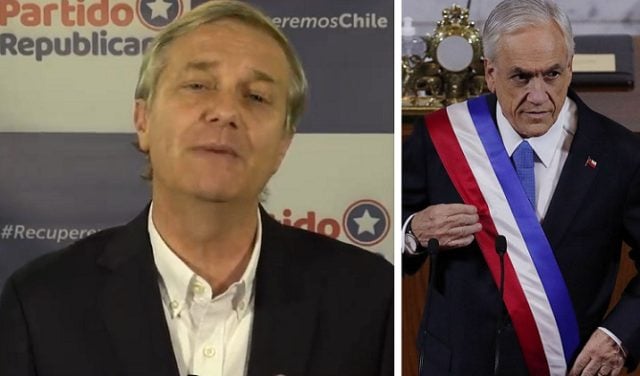
The coordinator’s statement provides a detailed profile of José Antonio Kast and his political party. «José Antonio Kast is affiliated with the recently formed Republican Party, which revives a long-standing political practice in our country,» the document reads, connecting him with conservative political traditions throughout Chile’s history.
The organization accurately describes the self-definition of the Republicans: «They portray themselves as conservatives in regards to life, uphold traditional family values, and believe in parents’ right to educate their children based on religious beliefs, even against a secular state’s guidelines.»
CF8M’s analysis extends beyond ethical stances to encompass the economic and political model represented by the incoming government. «They are enemies of the welfare state, advocates of political authoritarianism, and defend human rights violators from the military dictatorship,» the text strongly asserts, linking economic policies with their perspective on Chile’s recent past under Augusto Pinochet.
In this context, the coordinator highlights the antagonistic relationship between feminism and this political agenda.
«They see feminism as a threat to the traditional order. And we are, because we aim to change everything,» they stated in a declaration reaffirming the transformative essence of the movement.
Kast and His Allies are Part of a Global Anti-Gender Equality Movement
A notable aspect of CF8M’s analysis is the recognition of the far-right as a global movement. The document states that Kast and his allies «believe that international human rights organizations promote a gender agenda.»
The coordinator warned that «Kast and his friends are part of a global anti-human rights and anti-gender equality movement, attacking women’s sexual and reproductive rights and the rights of the LGTBIQ+ community and transgender individuals.»
This international connection is significant, as it shows that the issues in Chile are not isolated but are part of a regional and global trend where political forces are challenging advancements in equality and civil rights.
The text reflects on the political moment the country faces, cautioning that «the rise of the far-right in Chile has ceased to be a mere threat and has turned into a real political force.»»>
Risks to Democracy and Rights
CF8M left no stone unturned in warning about the implications of Kast’s upcoming presidency.
«This new scenario represents an extraordinarily challenging moment for the lives and rights of women, children, workers, indigenous peoples, and marginalized individuals,» they stated. The mention of these groups reveals an intersectional understanding of feminism that extends beyond gender issues to encompass a broader spectrum of social struggles.
The document explicitly warns of a possible democratic regression: «We see a real possibility of democratic rollback.» This assertion is based on the analysis of early signs from the incoming government, particularly regarding its cabinet formation.
«The cabinet formed by Kast reflects this,» the text noted, referring to specific appointments.
«He appointed Judith Marín to lead the Ministry of Women and Gender Equality, a person who previously suggested eliminating or merging this region,» the Coordinadora reminded.
Furthermore, they raised concerns about Kast appointing executives from powerful economic groups aiming to further exploit labor conditions, eliminate rights, intensify extractivism, and remove barriers to business operations.
The context in which this inauguration will occur is, according to CF8M, particularly delicate: «In a climate of growing poverty and social inequality, criminalization of poverty, migrants, and the homeless.»
The coordinator extended its critical analysis beyond the right, also examining problematic continuities with the outgoing administration. «This scenario has not caught us off guard,» the text claims, suggesting that certain authoritarian and repressive trends were developing previously.
«The rightward shift and fascitization of public policies, along with the propagation of hate speech through hegemonic media, are not exclusive to the right,» they stated.
The document cites specific examples that illustrate this trend.
«This reactionary wave even echoed within the self-proclaimed ‘progressive and feminist’ government of Gabriel Boric, which supported the Nain Retamal law, a law that guarantees impunity for crimes committed by members of repressive forces, that undermines not only justice and the rule of law but also the right to mobilization and social protest,» they highlighted.
«The squatting law has created conditions conducive to ordering evictions from camps, consolidating the viewpoint that social issues are criminal matters and that those who suffer from them are criminals,» they added.
The Feminist Response
In the face of this scenario, CF8M is not limited to denunciation, but offers a pathway for action and organization. «Our collaborations with various feminist and women’s groups have been invigorated and strengthened in opposition to the threat posed by this new government,» the document states, noting a process of regrouping and strengthening ties between organizations.
«We are conducting open assemblies in which we declare our opposition and resistance to those taking power on March 11,» they emphasized.
The text underscores the movement’s combative disposition: «We are alert and are multiplying our organizing, thought processes, and our actions, which are varied and diverse.» This multiplicity is seen as a strength, not a weakness, enabling different dimensions of oppression to be addressed through various perspectives and strategies.
The Political Identity of CF8M Feminism
Central to the document is the definition of the political subject that calls for mobilization. Rather than presenting a monochromatic feminism limited to gender demands, CF8M emphasized that it advocates a broad and unifying agenda.
«The feminism we champion defends a transversal program, speaking out on the political, economic, social conditions, and international factors that fuel the precarity of life and the violence against women and sexual dissidents.» This definition positions feminism as a lens capable of analyzing the social totality, rather than merely a sectoral struggle.
The text lists adjectives that qualify this feminism: «It is a plurinational, transgenerational, cross-border, anti-colonialist, anti-imperialist, and environmentalist feminism, and this has concrete consequences.» Each of these descriptors refers to specific dimensions of the struggle: the acknowledgment of indigenous peoples, intergenerational alliances, solidarity without borders, opposition to colonialism and imperialism, and environmental defense.
The most significant consequence of this political definition is, according to the document, that «it is a program that matters to millions of women from diverse ethnic and national backgrounds.»
«In the Coordinadora Feminista 8M, we are anti-racist and stand alongside migrant women from all countries.» This assertion is particularly relevant in a climate of growing xenophobic rhetoric and restrictive immigration policies.
The group also addressed the economic dimension: «We are a feminism that values the work performed by women across all fields. This includes both formal and informal productive work, reproductive work, and caregiving traditionally made invisible, which has begun, thanks to sustained struggle, to occupy the public and legislative agenda in our country.»
«Our program is what opens the doors and facilitates engagement with broad social sectors,» they emphasized.
Political Strength of Feminism
A central argument of the document is that feminism has not been electorally defeated, providing a legitimacy foundation for its resistance to the new government.
«We are a feminism that Kast did not dare to confront during his last electoral campaign and, in that sense, it is a program that has not been defeated electorally,» the text states.
This observation is complemented by a significant anecdote: «This time, Mr. Kast had to face feminism thousands of kilometers away during a gathering of friends in Europe,» the group recalled.
The document stated that the far-right government taking office in March «has already begun to reveal its true nature: it is anti-feminist, anti-indigenous, and anti-environmentalist. And it is pro-employer.»
For this reason, the call extends beyond the feminist movement, making it clear that it is «an invitation for the entire feminist movement to come together and call on other social sectors to act united.»
«We Will Not Allow the Normalization of the Program of Machismo and Hate»
The call from CF8M is explicitly aimed at various social organizations, including labor movements, human rights advocates, socio-environmental groups, migrant organizations, residents, and students from secondary schools and universities, to come together and articulate a common front against the government taking office in March.
This enumeration of social actors illustrates the coordinator’s broad conception of struggle, which includes not only feminist organizations but aims to unite all sectors affected by the new government’s policies. «We will not allow the normalization of the program of machismo, hate, intolerance, and loss of rights,» they asserted.
«Our task today is to weave networks to prevent the beginning of a rollback to what we have achieved,» they emphasized.
However, the document acknowledges the asymmetry of forces, warning that Kast’s government «will seek to impose its anti-rights agenda, and it will find obstacles because women have memory, and this will not be the first time in history that we confront openly or covertly dictatorial governments.»
The Call for a Feminist General Strike
The main announcement in the document is the call for mobilization in the days leading up to the Republican inauguration.
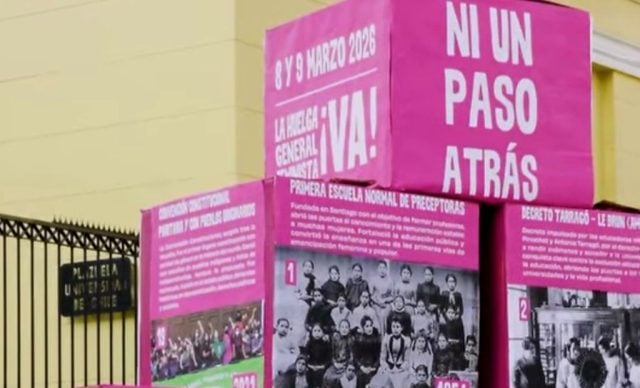
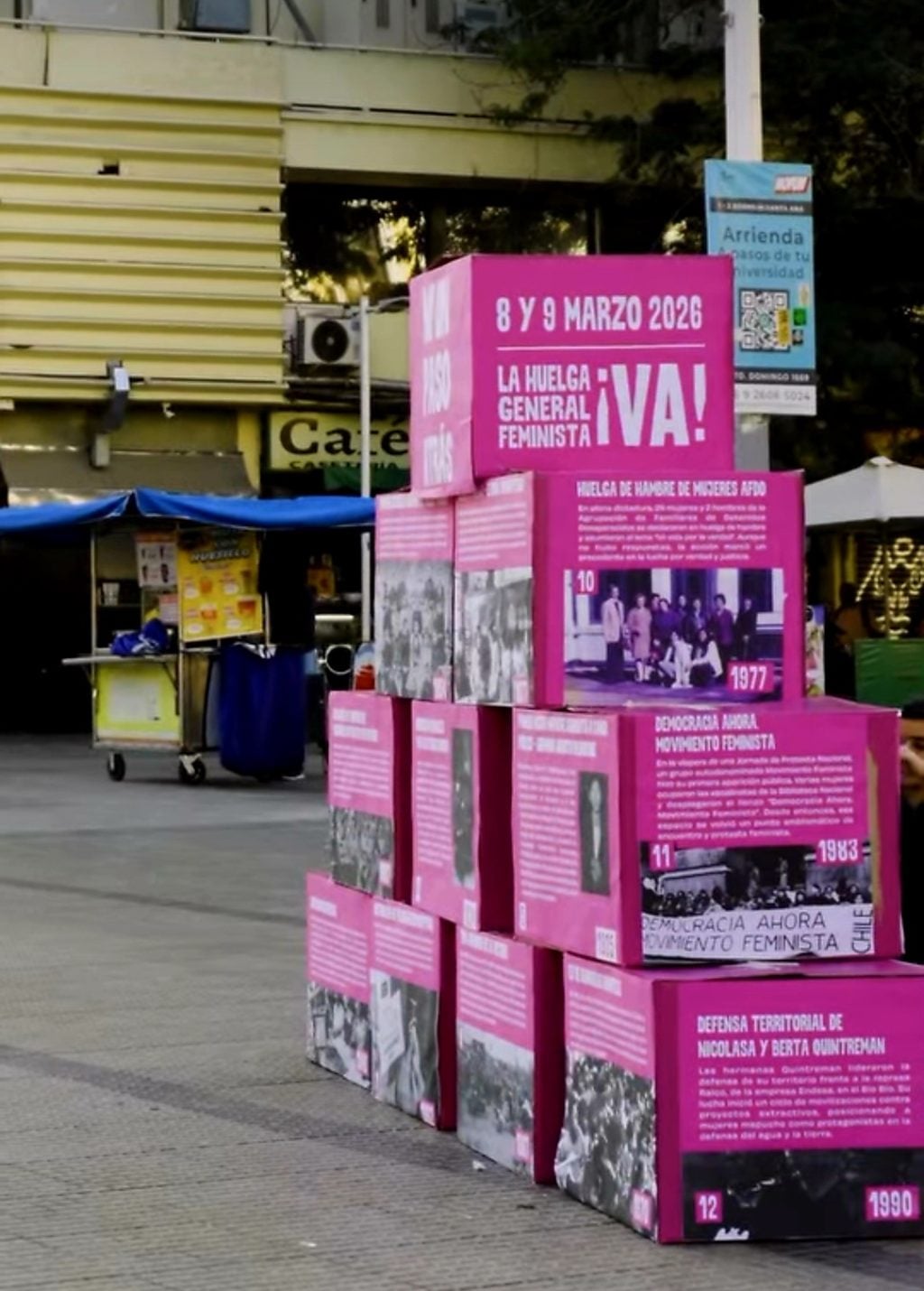
«We are calling for a Feminist General Strike on March 8 and 9,» they declared. The choice of dates is intentional: March 8 is International Women’s Day, an emblematic date for the feminist struggle globally.
The anticipated scale of the mobilization is ambitious: «We will be hundreds of thousands across the nation,» while the slogan of the call encapsulates the spirit of their commitment.
«We will firmly declare that we will allow NOT ONE STEP BACK and that we will take ONE HUNDRED STEPS FORWARD until we claim the life we are owed,» they asserted.
Mobilization Schedules
Through their social media, the Coordinadora Feminista 8M shared the schedule of protests planned for March 8 and 9 in various cities nationwide.
- Arica: Cementerio General, 17:00 hours, March 8.
- Iquique: Front of Liceo Politécnico, 17:00 hours, March 8.
- Calama: Plaza 23 de marzo, 16:30 hours, March 8.
- Antofagasta: Plaza de la Revolución, 17:00 hours, March 8.
- Vallenar: Plaza Matta, 12:00 hours, March 8.
- La Serena: Plaza de la Revolución, 12:00 hours, March 8.
- Valparaíso: Plaza Sotomayor, 11:00 hours, March 8.
- Viña del Mar: Plaza O’Higgins, 18:00 hours, March 8.
- Santiago: Plaza Dignidad, 10:00 hours, March 8.
- Puente Alto: Metro Protectora de la Infancia, 18:00 hours, March 8.
- Rancagua: Plaza de Rancagua, 18:00 hours, March 8.
- Curicó: Plaza sin Armas, 17:00 hours, March 8.
- Talca: 1 Oriente con Alameda, 10:00 hours, March 8.
- Chillán: Plaza de Chillán, 18:30 hours, March 9.
- Concepción: Courts of Justice, 18:00 hours, March 9.
- Los Ángeles: Anfiteatro Plaza de Armas, 18:00 hours, March 8.
- Temuco: Plaza Janequeo, 17:00 hours, March 9.
- Valdivia: Plaza Simón Bolívar, 11:00 hours, March 9.
- Osorno: Plaza de Armas, 18:00 hours, March 8.
- Puerto Montt: Next to the Museum of Art, 12:00 hours, March 8.
- Castro: Plaza de Castro, 18:30 hours, March 8.
- Punta Arenas: Avenida Colón with Bories, 18:30 hours, March 9.
The Feminist General Strike called for March will not only be a response to Kast’s inauguration but also a show of strength and a warning: Chilean feminism is alive, organized, and ready to defend each of the rights it has conquered while continuing to advance towards new horizons of emancipation.