Original article: Obedecer o ser soberano: Chile, Kast y la izquierda que falta
By Leopoldo Lavín Mujica
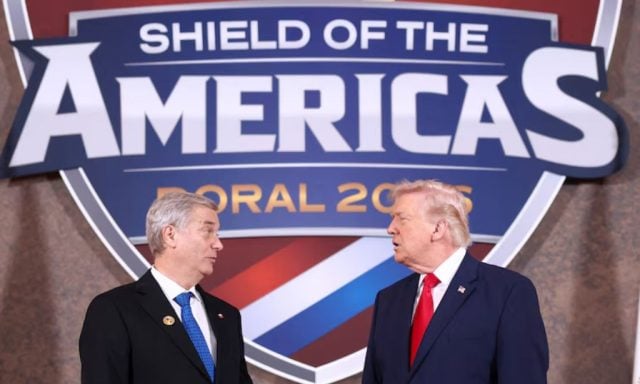
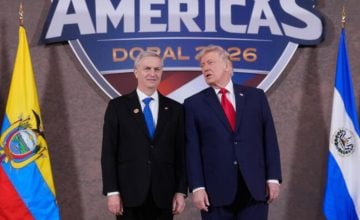
On September 22, in New York, just hours after meeting with Donald Trump, José Antonio Kast announced Chile’s inclusion in the Shield of the Americas. That same morning, Defense Minister Fernando Barros stated that the adhesion was still under study; just weeks earlier, he had declared that Chile is not anyone’s backyard.
Trump set the tone for his allies: if you cannot eliminate drug cartels, we will do it ourselves. In July, Washington imposed a 12.5% tariff on Chilean salmon, fruit, wine, and wood, while Argentina, Ecuador, El Salvador, and Honduras, which are part of the same Shield, received a 10% rate.
The ideological affinity of the far-right yielded no tangible benefits. Senate Vice President Iván Moreira (UDI), a senator from Los Lagos and a representative of the salmon industry’s interests—hit with the highest tariff in a market that purchases $2.6 billion annually—acknowledged in New York: «We are not that close.»
The case against Chile did not accuse it of exporting goods made with forced labor, rather of failing to prohibit their import from third countries. In essence, Washington demands that Chile regulate its trade with Asia according to U.S. standards.
This is the method applied to Canada, which was pressured to align its tariffs against China while the U.S. reserved the right to change its own. Canadian Prime Minister Mark Carney summarized it aptly: the U.S. signature is written in carbon pencil.
This is not whimsy, but the predictable behavior of a declining hegemon: it loses consensus both domestically and internationally and compensates with coercion. It does not withdraw; it squeezes, first its allies, from whom it expects free obedience.
The joint declaration of the Shield states it in its own terms: its members claim to «defend their sovereignty» by sanctioning organizations designated by Washington. The words remain intact; the content changes ownership.
What did Chile gain in return? The price paid is evident: the highest tariff, Michelle Bachelet’s UN candidacy withdrawn just thirteen days after taking office, the cancellation of a submarine cable under threat, pressure from Secretary of War Pete Hegseth to exit the International Criminal Court, and a foreign policy that had survived under governments of various stripes.
What has been received are promises: intelligence, police training, a non-binding declaration on critical minerals. Chile paid upfront but was promised credit; what was promised never reaches salmon workers or those in agriculture, let alone the populace.
The greater cost may still be on the horizon. China accounts for 32.7% of Chile’s trade; the United States, 17%. However, the solution is not to switch allegiances: Beijing also uses trade as a lever, as Australia and Lithuania have learned. A medium-sized country doesn’t choose between Washington and Beijing; it chooses between negotiating or obeying when defending its sovereignty and dignity. Latin American tradition has a term for the former: active non-alignment.
Negotiation requires more than diplomacy. Albert Hirschman demonstrated in 1945 that asymmetric commercial dependence is a tool of the more powerful. A country that bets everything on private export growth negotiates with its hands tied. Sovereignty demands fiscal capacity to avoid reliance on copper; productive capacity to sell lithium and copper with added value; regulatory capacity, and collective goods that don’t depend on tariffs dictated in Washington.
Equality is the material condition for foreign policy. And governments of oligarchies are subservient.
That sovereign state for turbulent times marked by inter-imperial conflicts will not be built by the right, which entrusts sovereignty to the market and security to Washington. Nor was it built by the left that once governed.
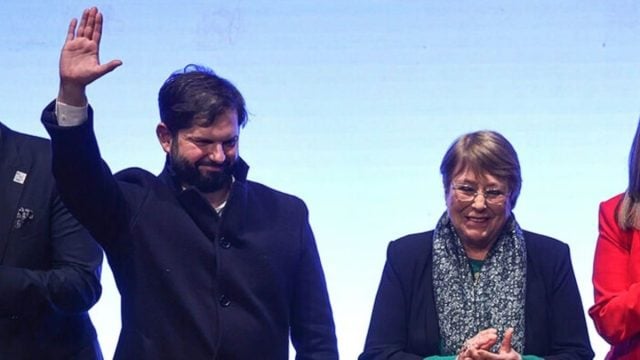
The October 2019 uprising brought to light the demands of the majority, and the program with which G. Boric won in 2021 reflected this: the end of AFP, significant tax reform, a state that guarantees rights. It wasn’t a lack of a program; it was a lack of the will to enforce it. The AFP survived a negotiated reform with the right, and the tax reform died in Congress without a fight.
There were three cascading failures. First, in diagnosis: a climate of opinion was mistaken for a correlation of forces, without anticipating the counter-offensive. Second, in ideological consistency: lacking its own doctrine, the government adopted that of others. Eugenio Tironi, an informal advisor of La Moneda, coined the phrase «dialogue until it hurts,» later adopting the narrative of «normalization,» which Boric embraced in his most recent Public Account.
Finally, a lack of political will, disguised as pragmatism. When withdrawal is framed as realism, abandoning the agenda seems prudent. But this is deception. The 62% Rejection does not refute this thesis; it confirms it; the 58% for Kast is a consequence.
Building another left requires a method. First, clear programmatic ideas and credibility with concrete social demands that capital logic denies: Die Linke revived by talking about rent, Zohran Mamdani won in New York by addressing the cost of living. In Chile, pensions, housing, wages, and a security policy that targets money, starting with the bank secrecy that shields Security Minister Martín Arrau.
Next, the formation of cadres forged in social struggle that respond to the program and the organizations, not to the administration; the coordination of the CUT and Confech is a step; a seed that must grow.
Finally, internal debate, as this is where tactics, strategy, and a country’s foreign line are forged, which cannot choose a master between blocs. An international alliance policy is clearly necessary. A forceful Latin Americanism that the U.S. imperial strategy seeks to obstruct.
And timelines: the municipal elections of 2028 as a test of territorial embedding, with the presidential elections of 2029 as a moment of rupture when disillusionment with tired parties becomes palpable.
The data is easily obtainable, assisting in better diagnosis; the line is set by the organization. Kast offers obedience and submission without counterbalance. The alternative is not another obedience, but a sovereign state capable of negotiating and defending international law, along with a political force eager to build it.
Leopoldo Lavín Mujica
Obtén tu Pasaporte y apoya a El Ciudadano
Elimina la publicidad, accede a contenido exclusivo y sé parte de la comunidad.
Cancela en cualquier momento · Sin permanencia