Original article: «Esta decisión perversa contraviene el derecho a la educación»: Oposición recurrirá al TC por : eliminación del programa «Yo elijo mi PC»
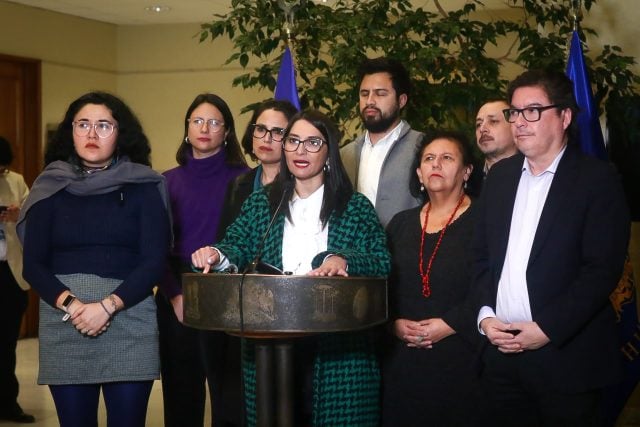
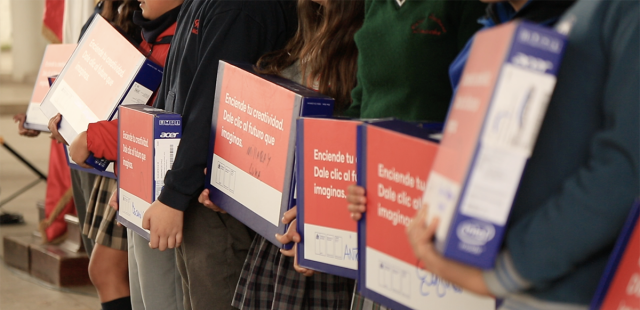
«This perverse decision blatantly contravenes the right to education established in the Constitution,» declared Deputy Luis Cuello, who announced he will appeal to the Constitutional Court to prevent the government’s removal of the historic ‘I Choose My PC’ program initiated under President José Antonio Kast. This initiative, which began in 2009, provided computers to 96,100 students this year alone through Junaeb’s Technology, Information, and Communications (TIC) Access Scholarships.
According to the Communist Party member, this measure also severely disregards the Child Guarantee Law, which prohibits regressivity, meaning the withdrawal of rights from children. «In light of this definition, we will not sit idly by and will seek recourse with the Constitutional Court against the program’s removal to safeguard the rights of children to an education,» he emphasized.
Responding on social media platform X, Cuello sharply countered Deputy José Antonio Kast Adriasola, who stated that «it is not within the TC’s powers to comment on this matter.»
«Junaeb left 5,000 computers in a storage facility, and they became obsolete. The ones that were distributed did not improve learning or attendance. Let’s invest the money in something that genuinely benefits the children,» said Kast’s son.
In response, Deputy Cuello invited him to read the Constitution and the Child Guarantee Law. «The TC can challenge any bill that violates fundamental rights, including the budgetary law,» he clarified.
«You believe a computer is unnecessary for a poor child because you see them as destined to remain poor,» the deputy remarked.
The controversy erupted after press leaks revealed adjustments to education in the 2027 Budget Bill, which Congress will review next Monday. The cuts include reductions for Bicentennial High Schools, a decrease in maximum teacher hours—potentially affecting SLEP teachers—and the termination of the ‘I Choose My PC’ program, which provides computers to 7th-grade students.
From La Moneda, Undersecretary of the Interior, Máximo Pavez, defended the decision to discontinue the TIC Scholarships, arguing that it has been under evaluation for a long time and has been poorly rated.
He stated, «It is a program that has been found to show no significant impact on learning and has encountered implementation issues,» referring to a report from the General Comptroller’s Office of 2024, which indicated that nearly 9,000 computers had not been distributed since 2015.
In this context, he affirmed that the government of José Antonio Kast is «committed to reviewing how resources are spent.»
«Programs that have not proven effective, which do not align with modern educational criteria, must be reevaluated,» he stated, according to statements from Diario U. de Chile.
Opposition to the Elimination of ‘I Choose My PC’
In response to the elimination of the ‘I Choose My PC’ program, opposition lawmakers criticized Kast’s administration. Deputy Juan Santana (PS), a member of the Education Commission, recalled that the initiative has a 17-year history and involved efforts from «all political colors.»
He criticized that «this government, without any explanation, particularly Minister (Jorge) Quiroz, is eliminating it, depriving nearly 100,000 students of this benefit,» and announced that the PS will reject the budget proposal.
«We will oppose the budget presented by the Minister of Finance regarding education and demand the reinstatement of this public policy that has been respected across administrations, aimed at providing technological tools to public education students, especially those from the most vulnerable sectors,» he emphasized.
Meanwhile, Deputy Daniel Manouchehri (PS) blamed Finance Minister Jorge Quiroz for the move and accused him of making decisions detrimental to the education of children.
From the People’s Party (PDG), Deputy Zandra Parisi stated that having a computer today is «not a luxury,» nor just «a common tool,» but rather essential for studying and keeping pace in a rapidly advancing world of technology and artificial intelligence.
«As a party, we are committed to protecting social benefits. We cannot close the educational gap by increasing the digital divide,» she asserted, as reported by the cited media.
Obtén tu Pasaporte y apoya a El Ciudadano
Elimina la publicidad, accede a contenido exclusivo y sé parte de la comunidad.
Cancela en cualquier momento · Sin permanencia