Original article: Muere Patricio Guzmán, la cámara que registró el Golpe y persiguió sus huellas durante medio siglo
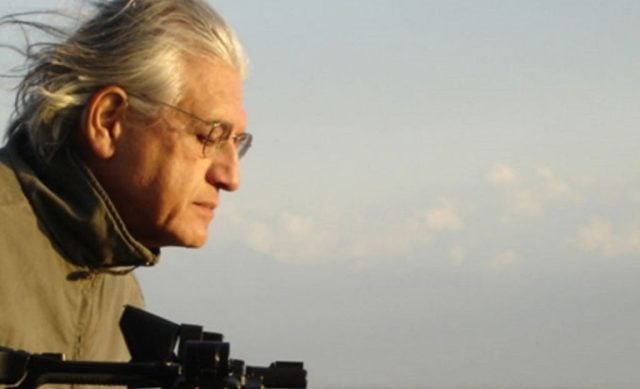
“A country without documentary film is like a family without a photo album.” With this phrase, Patricio Guzmán encapsulated his view of filmmaking and the essence of a career that spanned over six decades, dedicated to documenting, questioning, and reconstructing Chile’s political history. The filmmaker passed away in Paris at the age of 85, as confirmed by CinemaChile on their X account.
The news leaves a void for La batalla de Chile, the film based on recordings made during President Salvador Allende’s government leading up to the military coup on September 11, 1973. This work propelled Guzmán—who was a director, screenwriter, editor, producer, researcher, and film theorist—to chase the traces of that moment for half a century, encompassing the dictatorship of Augusto Pinochet, the disappeared detainees, and the historical memory.
Patricio Guzmán: The Man Who Filmed the Memory of Chile
Born in Santiago on August 11, 1941, Guzmán traversed the realms of theater, history, and philosophy before discovering his true passion: cinema. He studied at the Catholic University’s Film Institute and the Official School of Cinematography in Madrid, graduating as a director-producer.
His return to Chile in late 1970 coincided with the government of the Popular Unity, motivating him to create documentaries, starting with El primer año, which depicted the early days of Salvador Allende’s administration.
Amid escalating political turmoil, Guzmán assembled a small team in early 1973 to document the nation’s unfolding events. He filmed elections, factories, debates, mass gatherings, strikes, confrontations, the Tanquetazo, and the polarization preceding the coup in September.
From this effort emerged La insurrección de la burguesía (1975), El golpe de Estado (1976), and El poder popular (1979), which together formed La batalla de Chile: The Struggle of a Disarmed People. This became Guzmán’s seminal work, one he later admitted was impossible to detach from, as it encapsulated a vital episode in the history of our country.
“The theme of historical memory struck me powerfully during La batalla de Chile, during Allende’s era, because everything that was happening seemed profoundly significant and thus became a landmark. It was a sense of living through a pivotal moment in a nation’s culture, and it bound me to that period forever… Memory is activated when something very important occurs. The entire country was mobilizing; there was an atmosphere, a feeling, a kind of abstract conversation rooted in that political period. In other words, when Allende fell, Chile ended and another began,” he stated in an interview published by El Siglo in 2023.
However, the production of this documentary was also marked by tragedy. Following the military coup on September 11, 1973, Guzmán was imprisoned and taken to the National Stadium, where he spent approximately two weeks without communication and, as he later recounted, faced repeated execution threats. Upon regaining his freedom, he left Chile in November of that same year.
As noted by El Mostrador, it was crucial to safeguard the film material that the team had captured, and the negatives were successfully smuggled out of the country with the help of, among others, Swedish ambassador Harald Edelstam, ultimately ending up in Cuba. There, Guzmán and Pedro Chaskel began the extensive editing work on La batalla de Chile, transforming it into the most widely distributed Latin American documentary in history and a global reference work.
However, cameraman Jorge Müller, who had participated in the project, was detained and disappeared by the dictatorship in November 1974, and his whereabouts remain unknown.
The Camera That Never Stopped Watching Chile
After his exile, leading him through Cuba and Spain until he finally settled in France, Guzmán continued to maintain his gaze on the political and social events unfolding in Chile. In 1987, he returned to film En nombre de Dios, focusing on the roles played by sectors of the Catholic Church and organizations tied to human rights during the dictatorship.
A decade later, he released Chile: La memoria obstinada, where he traced the protagonists of La batalla de Chile.
He revisited Augusto Pinochet in El caso Pinochet (2001) and Salvador Allende in (2004). But during the following decade, his filmmaking underwent another transformation. With Nostalgia de la luz (2010), set in the Atacama Desert, the filmmaker established a connection between astronomers searching for answers in the universe and the women seeking the remains of their relatives who disappeared during the dictatorship. This film won the Best Documentary award from the European Film Academy and solidified Guzmán’s status as an international figure in essay filmmaking.
Next came El botón de nácar (2015), where water transforms into memory, linking the ocean, indigenous peoples, colonization, and the crimes of the dictatorship through this same medium, earning the Silver Bear for Best Screenplay at the Berlinale.
With La cordillera de los sueños, he won the Golden Eye at Cannes and later the Goya award in 2022 for Best Ibero-American Film.
The Filmmaker Who Captured the Uprising and the Soul of Chile
His last recorded film was Mi país imaginario (2022), capturing the sentiments of society and the protests that began with the October 2019 uprising through the experiences of new generations. The film was selected for the 2022 Cannes Film Festival and chaired the Santiago International Documentary Festival (FIDOCS), which he founded in 1997.
In 2023, he unanimously received the National Award for Arts of Representation and Audiovisual, just ahead of the 50th anniversary of the coup.
This recognition was added to accolades such as the Guggenheim Fellowship, the Pablo Neruda Medal for Artistic Merit, the European Film Academy Award, the Silver Bear from Berlin, the Golden Eye from Cannes, and the Goya.
“Documentarians generally have an external viewpoint; we are people who observe, and observation inevitably distances you from the group. The documentary is a very intimate genre, and many live in hiding, which is why I believe there are so few in Chile. There are many loners, navigators without an ocean,” Guzmán stated in an interview with El Siglo.
Obtén tu Pasaporte y apoya a El Ciudadano
Elimina la publicidad, accede a contenido exclusivo y sé parte de la comunidad.
Cancela en cualquier momento · Sin permanencia
Artículos Relacionados
Patricio Segura Ortiz, Respected Journalist and Environmental Advocate, Passes Away in Concepción
Hace 4 semanas