Original article: Estudio PUCV: 26% de los niños de la Región de Valparaíso vive en situación de pobreza
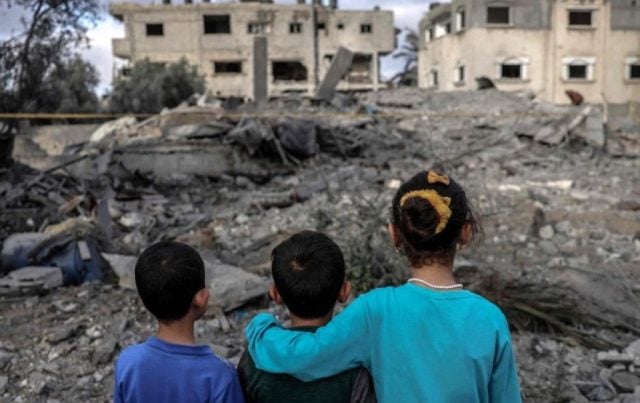
A striking 26% of children and adolescents in the Valparaíso region are living in poverty, with 56% residing in households led by women. Moreover, projections indicate a significant decline in this demographic over the next decade.
These findings are among the primary revelations from research conducted by the Demographic Studies Center at PUCV (Pontificia Universidad Católica de Valparaíso), which were presented to regional authorities, academics, and students.
Carlos Valdebenito, the center’s director and a full professor at PUCV’s School of Social Work, presented these results, derived from analyses of official statistics from the National Institute of Statistics (INE), the 2024 Casen Survey, and the 2023 Social Welfare Survey.
As highlighted by the recent Census, the birth rate in the country continues to decline. Currently, children and adolescents constitute about 20% of the Valparaíso region’s population, a figure projected to decrease to 18.4% by 2035 according to this study.
On another note, 37.2% of households in the Valparaíso region report having at least one child or adolescent among their members. This prevalence was 60.6% in 2003 and 64.3% in 1990.
Professor Valdebenito stated that the population of children and adolescents is expected to decline by 17% from 2002 to 2035. «When breaking down by major age groups, we observe that children aged 0 to 13 will see a 19% decrease in their numbers, while adolescents aged 14 to 17 will see a reduction of approximately 13%. All groups are decreasing, but at varying rates,» he noted.
Income and Multidimensional Poverty
The study emphasized concerns not only about the significant decline in fertility rates in both the country and the region but also regarding the socioeconomic realities faced by those under 18.
In the Valparaíso region, 25.6% of children and adolescents live in income poverty, slightly above the national average of 24.9%.
It was noted that the condition of this group is also precarious regarding multidimensional poverty, which encompasses education, health, employment, housing, and social support variables. “21% of children and adolescents residing in the region live in multidimensional poverty,” the academic emphasized.
Furthermore, 56% of children and adolescents are concentrated in the two lowest income quintiles nationwide, compared to a lower concentration of 54.3% across the country, with households led by women representing 56% of these instances.
The type of housing that children and adolescents inhabit is also relevant in this analysis. According to the research, 24% live in homes with ‘internal overcrowding’; while 28% occupy informal housing and 4% face inadequate access to basic services.
In the same vein, 9% live in overcrowded conditions; an identical percentage resides in homes constructed with unacceptable materials, and approximately 33% live in properties that are in fair or poor condition.
Public Policies
Finally, academic Carlos Valdebenito emphasized the dual foundation of such studies: a disciplinary aspect and a sociopolitical one.
“From a disciplinary perspective, the goal is to contribute to the sociodemographic knowledge of children and youth within their significant territorial contexts, which has been neglected by scientific disciplines as regards this population group and their territories,” he stated.
On the sociopolitical front, he highlighted that this data allows authorities to determine which initiatives are best to develop and where.
“The aim is to generate knowledge that can facilitate decision-making in the fields of strategic and regulatory planning, as well as in geo-sociodemographic intervention,” he concluded.
We will continue to provide updates.
Obtén tu Pasaporte y apoya a El Ciudadano
Elimina la publicidad, accede a contenido exclusivo y sé parte de la comunidad.
Cancela en cualquier momento · Sin permanencia