Original article: Temporal casi triplica el agua almacenada en los embalses de la Región de Coquimbo
The intense rainfall that has affected the Coquimbo Region for nearly five days has marked a turning point for an area that has faced one of the most severe water crises in its history for over a decade.
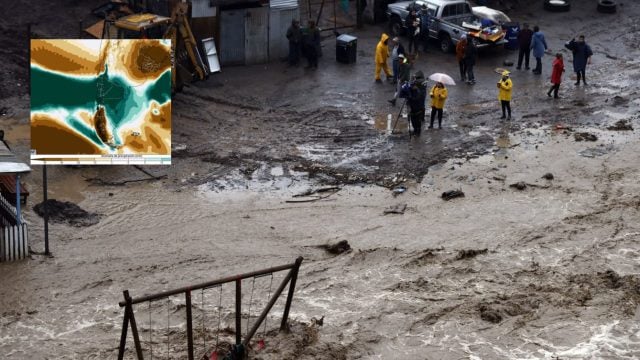
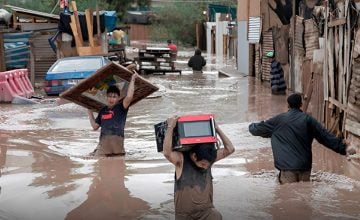
The frontal system, linked to a high-intensity atmospheric river, brought widespread rainfall, significant snowfall in the mountains, strong winds, and rising rivers and gullies, leading to flooding, road interruptions, service outages, and damage to homes and infrastructure, which prompted the declaration of a State of Catastrophe in the region.
However, amidst the emergency, the event also offers a crucial respite regarding water availability, as prior to the storm, regional reservoirs were storing, on average, just 10% of their capacity, reflecting over 15 years of rainfall deficits and over-exploitation of water resources.
The rains and increasing flow rates have begun to partially reverse this situation, allowing for a significant recovery of the water reserves that supply human consumption, agriculture, and other productive activities, although specialists warn that a single event is insufficient to overcome the accumulated deficit.
Regarding this, Pablo Álvarez, an academic from the University of La Serena and director of the Laboratory for Agricultural and Environmental Resource Monitoring and Modeling (PROMMRA) and the Quitai Anko Water Technology Center Consortium, highlighted the «significant increase» in the storage levels of the region’s reservoirs, especially considering that the rainy front has not yet concluded.
«Before the event, we were around 10.5% of the average capacity of the total reservoirs in the region, which is very low, and today the average is 29%, meaning the total volume stored in the region has nearly tripled,» specified Professor Pablo Álvarez, an agronomist and also a Doctor in Water Resource Management.
«In the Elqui Province, it rose to 15.9%, which is still a very low level but is on the rise. In the Limarí Province, it increased to 29%, and in Choapa, it’s around 69%,» he added.
For the researcher, notable elements include that «the La Paloma reservoir is close to holding around 130 million cubic meters; the Cogotí reservoir is nearing 85 million cubic meters; and the Recoleta reservoir is close to 80 million cubic meters.»
According to Dr. Álvarez, «as a whole, this indicates that the La Paloma, Recoleta, and Cogotí reservoir system holds about 300 million cubic meters in total, and it is expected that this volume will continue to increase as the event progresses, likely until Wednesday of this week, as further instability pulses may occur afterward.»
We will continue to provide updates.
Obtén tu Pasaporte y apoya a El Ciudadano
Elimina la publicidad, accede a contenido exclusivo y sé parte de la comunidad.
Cancela en cualquier momento · Sin permanencia