Original article: El veto ruso frustró el intento de Washington de sepultar la autodeterminación del Pueblo Sarahui
By Hafdala Chadad Brahim, Sahrawi Diplomat
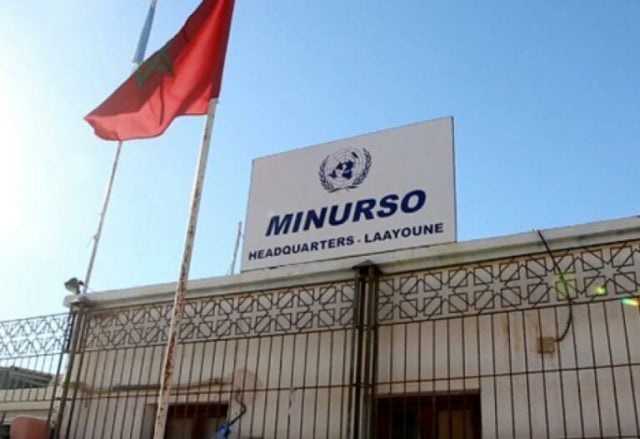
October 30, 2026, will not only be remembered as the day the mandate of the United Nations Mission for the Referendum in Western Sahara (MINURSO) expired.
It will be noted as the moment when the Security Council nearly established one of the most dangerous precedents for contemporary international law: allowing a military occupation to gain political legitimacy through a United Nations resolution.
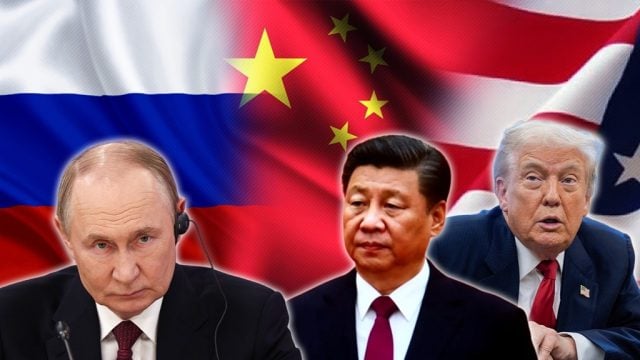
Fortunately, that outcome did not occur. The veto cast by the Russian Federation prevented the proposal pushed by the United States from advancing, an initiative that sought to shift the political process toward a framework where Morocco’s autonomy proposal under the sovereignty of Rabat overshadowed the original foundation of the peace process: the Sahrawi people’s right to freely determine their future.
The significance of that day cannot be measured merely by the number of votes each proposal garnered. This perspective has been strategically used by both Rabat and Washington to construct a favorable narrative for their positions.
What truly mattered was something else: the Security Council did not become the instrument that legitimized an occupation whose sovereignty is still unrecognized by international law.
The Battle Was Not for a Mission, but for a Universal Principle
For weeks, the U.S. Administration attempted to exploit the annual renewal of MINURSO to fundamentally alter the political framework of the conflict.
The most significant change was not administrative but conceptual.
The mission established in 1991 was created to prepare the conditions for the Sahrawi people to exercise their right to self-determination through a referendum. The U.S. proposal shifted this horizon toward negotiations centered around Moroccan autonomy, effectively turning one party’s proposal into the axis of the political process.
Such a change would have consequences extending beyond Western Sahara. If the Security Council had accepted this logic, it would have established a precedent where a prolonged occupation, backed by certain powers, could condition or diminish a people’s right to determine their own destiny.
This would not only have been a defeat for the Sahrawis but also a blow to one of the founding principles of the post-World War II international order: that force does not generate sovereignty and that peoples undergoing decolonization retain the right to freely determine their futures.
In other words, the United Nations would have risked gravitating dangerously toward a logic that modern international law was precisely created to transcend: the idea that military power can serve as a source of territorial legitimacy.
China and Algeria Deconstructed the Consensus Narrative
The international reaction demonstrates that the disagreement extended far beyond the confrontation between Washington and Moscow.
China explained that the U.S. project was unbalanced, pressuring one party to accept a predetermined outcome and having been put to a vote without sufficient consultations among Council members.
Algeria went even further. Its permanent representative to the United Nations, Amar Benjama, denounced that the proposal represented a deviation from the founding principles of the organization and warned that no one has the right to grant sovereignty to an occupying power that it does not legally possess.
His statement left a question that continues to resonate: Who really fears democracy when it comes to allowing the Sahrawi people to vote on their own future?
This question encapsulates the core of the conflict. Because the issue has never only been about autonomy. The real issue remains whether the Sahrawi people can exercise the right that the United Nations has recognized for decades.
Even Some Favorable Votes Maintained Distance
It is also revealing that Denmark and Latvia, despite voting in favor of the U.S. proposal, explicitly clarified that their vote did not imply recognition of Morocco’s sovereignty over Western Sahara.
This clarification dismantles one of the arguments subsequently used by Rabat to present that session as international validation of its position. It was not. Support for a specific diplomatic initiative can exist without altering the legal status of the territory or the principle of self-determination.
The distinction is important because it demonstrates that even among those who supported the proposal, there was an awareness that sovereignty over Western Sahara remains a legally open question.
MINURSO Withdraws, but the Right Remains
The immediate consequence of the deadlock was the expiration of MINURSO’s mandate. The following day, the spokesperson for the Secretary-General, Stéphane Dujarric, officially announced the commencement of the mission’s liquidation process.
However, the statement from António Guterres, Secretary-General of the UN, contains a message that will likely be remembered as one of the most significant documents of this crisis.
The Secretary-General reminded that MINURSO was established under Security Council Resolution 690, to protect and enable the people of Western Sahara to exercise their inalienable right to self-determination. He added a phrase that dismantles any attempt to present the end of the mission as the conclusion of the conflict: “The departure of MINURSO does not nullify those inalienable rights.”
These words carry immense legal and political weight. They mean that a mission can withdraw, a negotiation can fail, the Security Council can be blocked. Yet the Sahrawi people’s right to freely determine their future does not disappear.
The Response from the Polisario Front
Hours later, the representative of the Polisario Front at the United Nations, Ambassador Dr. Sidi Mohamed Omar, responded to the Secretary-General’s announcement. His statement recalls that the mission was created to implement the Settlement Plan agreed upon by the United Nations and the Organization of African Unity, whose objective was precisely to conclude decolonization through a referendum.
He also asserts that Morocco, with the backing of certain Council members, has progressively weakened the mission’s mandate since its inception, recalling the turning point of the expulsion of MINURSO’s civil component in 2016.
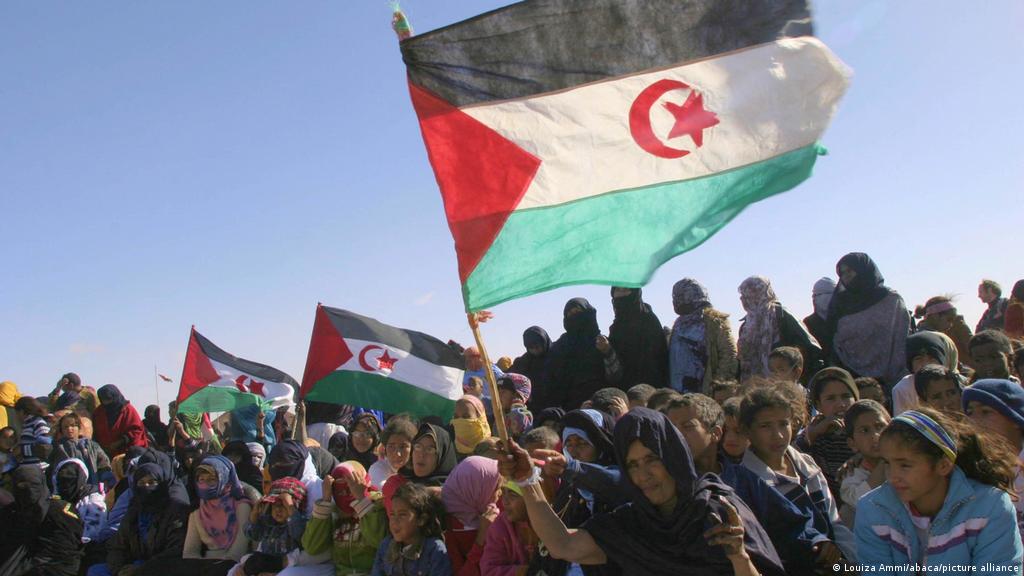
But the central message is different. The Polisario Front reaffirms that the Sahrawi people maintain their right to self-determination and independence and will continue to defend those rights through legitimate means recognized by the relevant UN resolutions.
Thus, the withdrawal of MINURSO does not equate to a Sahrawi renunciation. It marks the end of a mission, not the end of a national claim.
Morocco Cannot Unilaterally Close the File
The Moroccan Royal Palace presented the end of MINURSO’s mandate for domestic consumption as if the matter was practically resolved. However, that interpretation clashes with the very legal framework of the United Nations.
Western Sahara remains listed since 1963 as a non-self-governing territory pending decolonization. The General Assembly retains authority over its decolonization process. The Special Committee on Decolonization still exists. And the UN Secretary-General has reiterated that the organization will continue working through its personal envoy, Staffan de Mistura.
None of this disappears because a peacekeeping mission concludes.
The UN Reaches a Deciding Moment
The disappearance of MINURSO leaves an uncomfortable question for the United Nations. For 35 years, there was a mission created to facilitate the exercise of a right that never materialized. Now that the mission is withdrawing, the right remains in force.
The organization must explain how it plans to continue defending that principle without the main instrument that represented its presence on the ground for decades. This responsibility will fall to the next Secretary-General. It will also rest on a Security Council that has just witnessed how its own divisions can impact one of the last pending decolonization processes in the world.
A Right That No Power Can Erase
The lesson of October 30 goes far beyond Western Sahara.
When a great power attempts to make an occupation an accomplished fact through the weight of its diplomatic influence, it is testing the solidity of international law.
The Russian veto did not resolve the conflict. It did not return the Sahrawi people the referendum they have awaited for decades. But it did prevent the United Nations from taking a step that would have weakened one of its own founding principles.
Because the real protagonists in this story are not the Security Council, Washington, Moscow, or Rabat. They are a people whose rights continue to be recognized by the United Nations Charter and the entire decolonization process.
Missions can withdraw. Powers can change their strategies. But no state, no imposed resolution, and no occupation can erase the Sahrawi people’s right to self-determination and independence.
Hafdala Chadad Brahim, Sahrawi Diplomat
Obtén tu Pasaporte y apoya a El Ciudadano
Elimina la publicidad, accede a contenido exclusivo y sé parte de la comunidad.
Cancela en cualquier momento · Sin permanencia