Original article: Corte de Santiago ratificó condena a militares (r) por secuestro calificado de abogado boliviano Jorge Soto Quiroga en septiembre de 1973
Santiago Court Upholds Sentence Against Retired Military Officers for Kidnapping Bolivian Lawyer Jorge Soto Quiroga in September 1973
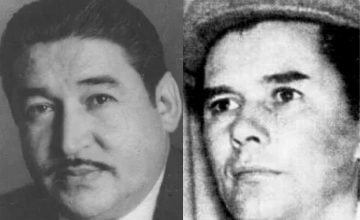
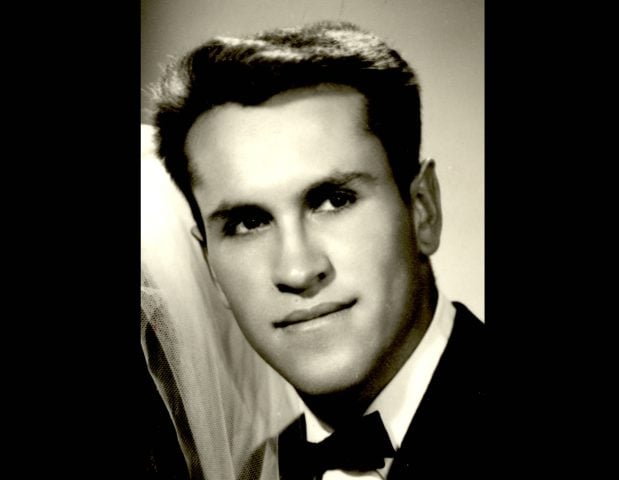
The Santiago Court of Appeals has confirmed the sentence that found two retired military officers guilty for their roles in the kidnapping of Bolivian lawyer Jorge Soto Quiroga (pictured).
The attorney, a member of the Revolutionary Left Movement (MIR), was detained on September 26, 1973, and died after falling from the fourth floor of the then-Army Engineering Command headquarters -currently known as the National Mobilization Directorate- in what was reported as a suicide, according to the Judiciary’s bulletin. He was 28 years old and married.
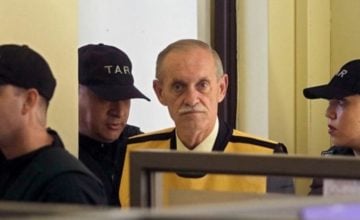
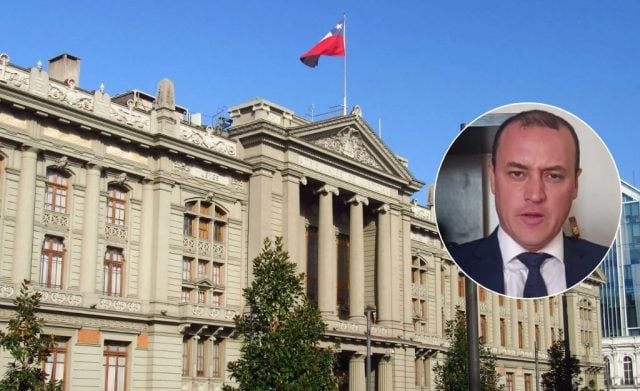
In the judgment (case number 4.182-2025), the Third Chamber of the appellate court – comprised of Judge Fernando Carreño, Judge Graciela Gómez, and attorney (i) Luis Hernández- upheld the sentence that sentenced Francisco Bórquez Navarro to 5 years and one day in prison, and Raúl del Canto Galdames to 4 years in prison for their roles as perpetrators of aggravated kidnapping.
The ruling rejected any errors in the decision made by investigating Judge Paola Plaza González regarding the classification of the crime and the involvement of the convicted individuals. Review the full ruling here.
The Facts
The investigation led by Judge Paola Plaza established that:
«a) On September 11, 1973, a State of Emergency was declared throughout Chile, introducing a military regime that from the outset implemented a policy of widespread persecution and repression against anyone deemed opposition to the new military authorities or simply counterproductive to their goals. This included arbitrary deprivations of liberty and rights, as well as extreme acts of violence, death, and disappearances, carried out by state agents and civilians in their service.
Both Chileans and foreigners fell victim to these violations of human and civil rights. Many thought that as legally residing individuals, they would be exempt from such abuses; however, they were still targeted due to their ideologies, being seen as opponents to the ruling regime, as declared in several judicial files.
b) Within this context, Jorge Ignacio Soto Quiroga, a Bolivian national, married, and a law student in the postgraduate program at the Latin American Faculty of Social Sciences located in Santiago -FLACSO-, a member of the Revolutionary Left Movement (MIR) of Bolivia, was arrested on September 26, 1973, at the age of 28, from his home at Sazié Street No. 2014 in Santiago, which he shared with his family, by military personnel from the Army Engineering Command, located at the intersection of Republic and Sazié Streets, without any order from a civil or military court for his citation or detention, nor with any record of a process instituted against him.
c) At his home, his wife, Ruth Miriam Canelas Lujan, Homero Bustos Quiroga, and his cousin Medardo Navia Quiroga, a sociology student, were also detained and taken to the facilities of the Army Engineering Command of Chile, now the National Mobilization Directorate, and then to the National Stadium, where they were eventually released.
d) Jorge Ignacio Soto Quiroga, while in custody at the Army Engineering Command building, was taken to the rooftop -approximately the height of a four-story building- where no protective measures or security measures existed to temporarily detain individuals.
e) From that location, Jorge Ignacio Soto Quiroga fell to the street at the entrance of the building, dying instantly from cranial and abdominal trauma.
f) The Army informed his family that Soto Quiroga had committed suicide by jumping while detained, circumstances which do not align with the conditions of surveillance he was under.
g) Jorge Ignacio Soto Quiroga not only was deprived of his liberty without judicial or other authority orders at the time, but was forced by Army personnel to go to the rooftop of a military facility lacking the proper installations to accommodate individuals deprived of freedom, without any safety measures such as barriers or fences, from where he fell to his death in the presence of military personnel, all while under custody of the Army and at a military facility to which he and parts of his family were forcibly taken, without any written record of the precise circumstances that led to his presence in that facility, the conditions he experienced, who interrogated him, or what his fate was.
Obtén tu Pasaporte y apoya a El Ciudadano
Elimina la publicidad, accede a contenido exclusivo y sé parte de la comunidad.
Cancela en cualquier momento · Sin permanencia
Artículos Relacionados

53 Years After the Coup, Justice Remains Out of Reach: 13 Convicted Human Rights Offenders Remain at Large
Hace 2 meses