Original article: A siete años del estallido: 68% considera que las demandas siguen pendientes y 63% ve motivos para manifestarse
Seven years after the social outbreak, 68% believe that the demands that sparked this movement are still unresolved, while 63% see reasons to continue protesting, according to the latest Agenda Criteria survey.
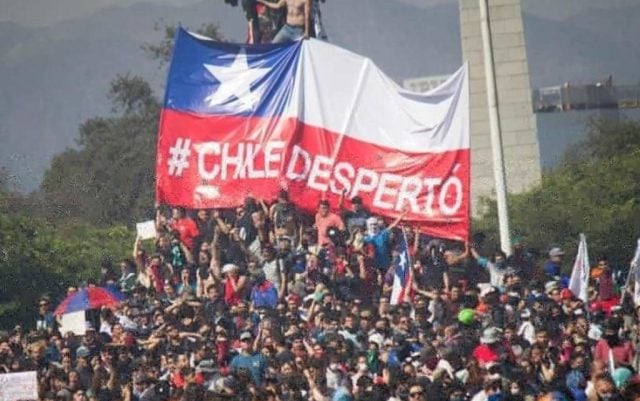
October 18, 2019, marked the beginning of one of the most profound uprisings in Chile’s republican history. What started as a protest by high school students against a 30-peso fare hike in Santiago’s Metro evolved into a popular outcry that drew millions to the streets with slogans encapsulating decades of discontent: «It’s not about 30 pesos, it’s about 30 years» and «Until dignity becomes customary».
Seven years later, the demands that fueled the social uprising remain largely unmet, according to an opinion survey conducted between October 15 and 16, 2026, through an online panel of 802 individuals aged 18 and older from various socioeconomic backgrounds across the nation.
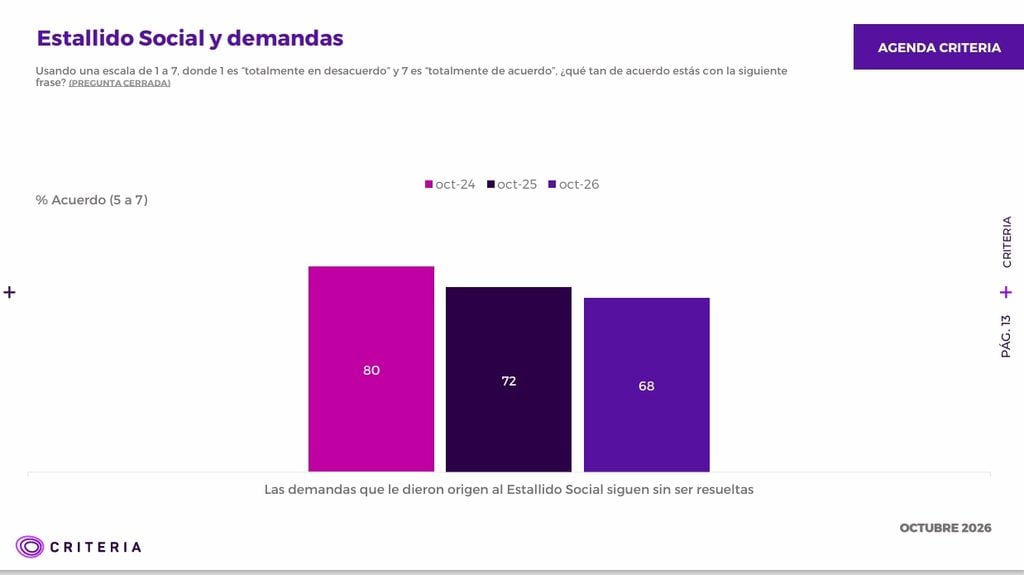
Agenda Criteria asked respondents whether they agreed with the statement: «The demands that gave rise to the Social Outbreak remain unresolved», and 68% said they believe they remain unmet.
63% Believe There Are Reasons to Protest in the Streets
Moreover, 63% expressed that they think there are reasons for people to continue protesting in the streets, similar to what happened seven years ago during the social uprising.
Considering the political inclinations of respondents, Agenda Criteria revealed that 99% of those identifying with the left believe there are reasons to protest, while 69% of those identifying as centrist support this notion.
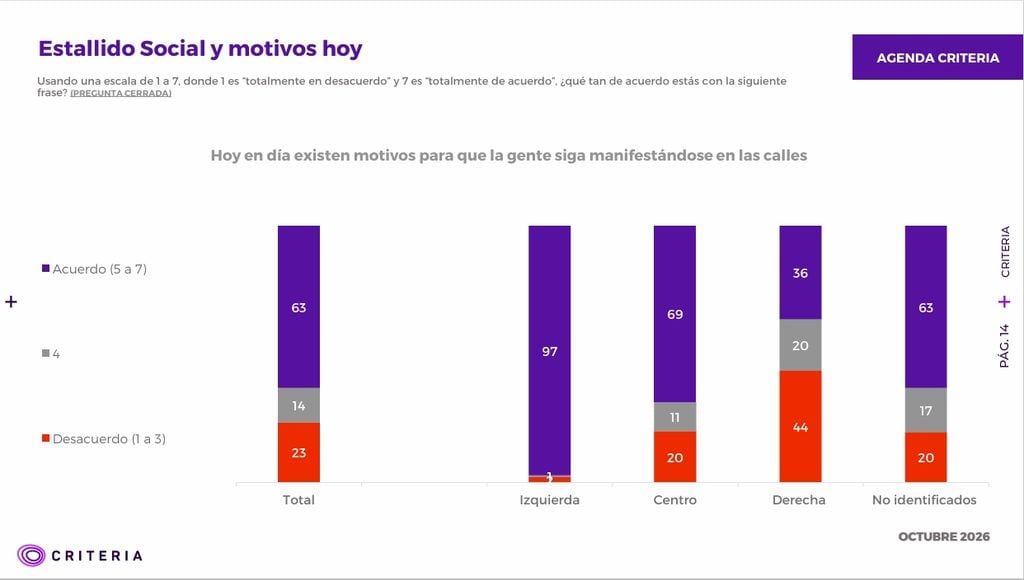
In contrast, only 36% of those identifying with the right believe there are reasons for people to protest in the streets today.
Among the main demands that led to the social outbreak of October 2019 are: the end of the AFP pension system and fair pensions; significant improvements in public health; the end of educational debt and an education free from market logic; living wages in light of the high cost of living; condemnation of corruption and elite abuses; and a constitutional change to replace the fundamental charter of 1980.
Obtén tu Pasaporte y apoya a El Ciudadano
Elimina la publicidad, accede a contenido exclusivo y sé parte de la comunidad.
Cancela en cualquier momento · Sin permanencia
Artículos Relacionados

Approval Ratings for President Kast Plummet to 35% as Disapproval Soars to 53%, Says Criteria Poll
Hace 4 meses