Original article: Cumbre de Shenzhen: el mundo unipolar ha muerto
By Níkolas Stolpkin

The unipolar world is over; we are witnessing its refusal to accept the new realities of a multipolar world.
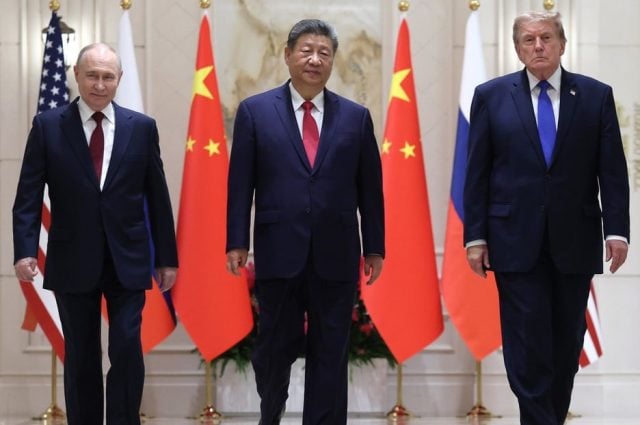
The Shenzhen, China summit, held on November 18 and 19, could signify the end of the unipolar order and the official emergence of a multipolar world.
Shenzhen has become a symbolic platform highlighting the rise of a new hegemonic reality that challenges the unipolar dominance previously held by the U.S. and Europe (Western Capitalist Block); a new hegemonic reality that has gradually formed from a peripheral stance, previously marginal to the selfish unipolar world that viewed Asia merely as a source of “cheap labor” or as an ideal site for product “assembly.”
What we observe today in Ukraine and Iran are the residual impacts of a dying unipolar world that refuses to acknowledge new realities while attempting to reassert its power.
It is likely that the U.S. could retreat from the Middle East and subsequently take similar steps in Europe, which could manifest as a gradual reduction of its military presence.
Russia and China, as the foremost representatives of the Eastern Capitalist Block, have faced— and continue to face—multiple “sanctions” and “economic warfare” from the Western Capitalist Block, in efforts to avoid being overshadowed.
The current situation has undergone substantial changes in economic, technological, political, and military realms.
It is both humorous and intriguing that the nation that once championed the “free market”—the U.S.—is now a banner carried by China and its allies.
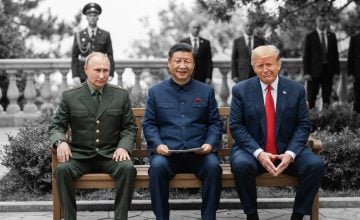
Importantly, at this summit, leaders from Russia, the United States, and China convened during a time when the unipolar representative (the U.S.) finds itself in a kind of “stalemate” with Iran.
In both Ukraine and Iran, the Western Capitalist Block sees no progress, only degradation. A clear example of this is the fatigue exhibited by the European Union (EU) concerning Ukraine.
The Clash of Old Realities Against New Realities
The current situation has undergone substantial changes in economic, technological, political, and military realms.
New realities are increasingly colliding with old realities, which some are eager to impose over the new.
In military terms, the emergence of drones and hypersonic missiles represents a significant breakthrough. Ukraine and Iran exemplify this shift.
The only place where the erosion of the unipolar world has not progressed significantly is in East Asia, namely Japan and South Korea, as there are currently no active red points like those in Ukraine and Iran.
A potential technological breakthrough in military applications could soon arise in the form of humanoid robots, already developed extensively in China and currently showcased as dancers, fighters, or servants, which could well become soldiers wielding rifles in the future.
The erosion of the unipolar world is becoming unsustainable. In Europe, the accumulation of various political and economic blunders by its leaders has led to old U.S. allies gradually losing trust, a trend also observed in the Middle East amongst Arab nations. This could result in a progressive replacement of leaders who can adapt to new realities.
The only place where the erosion of the unipolar world has not advanced much is in East Asia, specifically Japan and South Korea, as there are currently no active red points like those in Ukraine and Iran. Could Taiwan become a new active red point? If so, would the U.S. be in a position to assist its allies in the region? Is the U.S. capable of conducting large-scale wars, given its current deficits regarding certain defensive weapons?
What Is the Main Symbolism of the Shenzhen Summit?
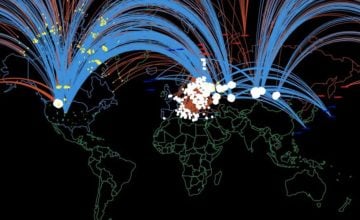
At Shenzhen, the three leading nuclear powers, as well as the three foremost economic, technological, political, and military powers, were represented. Two of these major powers share a common “enemy”: the U.S. Although no groundbreaking decisions were made—beyond vague commitments (to reform the UN, increase the production and supply of refined petroleum products, respect state officials’ immunities, and maintain dialogue to reduce nuclear risks)—the underlying message of Shenzhen indicates that these two powers (Russia and China) arrived with robust and healthy muscles, in stark contrast to the U.S., which now also has allies like North Korea and Iran.
Could no one recognize that a representative of a declining power, significantly weakened, was seated alongside representatives of the two most prominent powers in the multipolar world?
Both Xi Jinping and Putin were well aware that Donald Trump is not a leader from whom much could be expected. Nonetheless, the opportunity presented at Shenzhen within the APEC could not have been achieved in a BRICS meeting or at a summit of the Shanghai Cooperation Organization (SCO), as the U.S. is not a member of either of those groups. It was merely the opportunity for Russia and China to announce their stance about the now-exhausted behavior of the unipolar world and welcome the multipolar era.
Currently, the U.S. is not in a position to conduct prolonged wars to achieve its political objectives.
Decrease in U.S. Global Power Projection
A likely Ukrainian defeat and a potential withdrawal of the U.S. from the Middle East could result in a significant reduction of U.S. global power projection.
A potential Ukrainian defeat could lead to the disintegration of structures like NATO and the EU, which could undermine the rationale for U.S. military presence in Europe. A likely leadership change in Europe could accelerate this situation.
On the other hand, U.S. military withdrawal from the Middle East could either strengthen its presence in Israel or substantially diminish its involvement in the region.
Currently, the U.S. is not in a position to carry out prolonged wars to achieve its political goals. First, it needs to align its defense models with current realities.
Launching a new offensive against Iran could, at some point, culminate in a humiliating withdrawal from the region, with military conflicts potentially extending into Europe, further weakening its military presence on the continent.
Its exposed vulnerabilities in the Middle East could illustrate the current unprotection of its global military network. For instance, the U.S. must consider its own frailty regarding its military presence in East Asia, concerning the first island chain, and its military setup in Europe, especially if the capabilities of Iranian missiles have been updated.
By Níkolas Stolpkin
stolpkin.net, November 21, 2026.
The opinions expressed in this section are solely those of the author and do not necessarily reflect the views of El Ciudadano.
Continue Reading:
Obtén tu Pasaporte y apoya a El Ciudadano
Elimina la publicidad, accede a contenido exclusivo y sé parte de la comunidad.
Cancela en cualquier momento · Sin permanencia