Original article: Techos solares: El potencial desaprovechado en Chile
By Benjamín Carvajal, Executive Director of Uno Punto Cinco
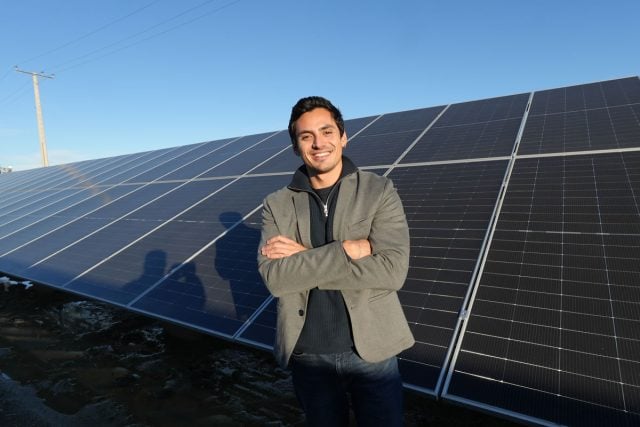
Does your home meet the conditions for installing solar roofing? Most likely, it does. Do you have one? Most likely, you do not. The reason is that less than 1% of homes in our country utilize this technology.
This was the primary finding of our latest report «Status of Distributed Generation for Residential Self-Consumption in Chile 2026,» which measured the progress of solar roofs across all regions. The data revealed that 62% of homes are suitable for panel installation, totaling approximately 4,760,000 houses, yet only 32,853 have a solar system.
Given the current context, these figures deserve more attention than ever.
Since electricity tariffs were deregulated, electricity bills have seen increases close to 80%, and in July, they rose again: an average of 4.9% with spikes of 16% in Valdivia and Puerto Montt, effectively imposing a new financial burden on many Chilean households.
An average residential solar system, rated at 3.2 kW, generates about 370 kWh per month, which is above the consumption needs of an average family (between 200 and 250 kWh, according to the National Energy Commission).
Thus, installing solar panels on rooftops comes closest to offering a solution that could shield them from the impending hike in electricity costs.
The findings of this report provide a unique opportunity for targeted action. They identified 37 municipalities with high potential that encompass 577,868 suitable homes, experiencing nearly no adoption of this technology. Notably, 17 of these municipalities account for 82% of the identified homes.
The Biobío region stands out as the area with the highest residential solar potential, contributing 15 of the 37 municipalities. In Lota, there are 12,424 suitable homes, yet the installation rate is only 0.02%. Furthermore, Alto Biobío and Lonquimay have not recorded a single solar roof installation. These communities, which historically provided coal for the country, now have abundant sunlight, rooftops, and homeowners, yet very few panels.
Experience shows us that this gap can be bridged. In Tocopilla, the Social Solar House program of the Regional Government of Antofagasta installed small systems in vulnerable households, leading to 13.8% of homes having solar panels—more than triple the rate in Colina.
The program aimed to reach 1,500 households across four municipalities, and records indicate 1,510 installations. Colina’s expansion occurred through private avenues, with larger systems for those who can afford them. Tocopilla demonstrates that the state can open this same door for those who can’t.
There is no need to invent new instruments: the Casa Solar program and the DS 27 subsidy from Minvu can be directed toward priority municipalities; financing options can be established to spread costs over time, such as soft loans or payments tied to electricity bills, and municipalities can assist by providing information and technical support.
The time for implementation is now, with fuel prices at record highs and the 2027 budget under discussion in Congress.
A subsidy for electricity bills provides relief for one month; a solar roof offers relief for 20 years, increases energy resilience, reduces emissions, and most importantly, provides families with economic savings and autonomy during power outages.
Above all, Chile cannot continue to miss the opportunity to harness an abundant resource: the sun.
We will present the complete report at the meeting “Chile Solar Nation: Advances and Future of Solar Roofs in Chile”, organized by the NGO Uno Punto Cinco, ACESOL, and the Energy Center of the University of Chile, on Thursday, November 12 at 6:00 PM at the Heinrich Böll Foundation (Av. Los Leones 877, Providencia).
Invitations have been extended to congress members, regional governments, municipalities, and anyone who believes that Chile’s abundant sunshine should also reflect in their electricity bills.
Benjamín Carvajal
Obtén tu Pasaporte y apoya a El Ciudadano
Elimina la publicidad, accede a contenido exclusivo y sé parte de la comunidad.
Cancela en cualquier momento · Sin permanencia