Original article: Temporales en el sur: humedales o cemento, la decisión que puede salvar o hundir a las ciudades
By Jaime Moreno Burgos *
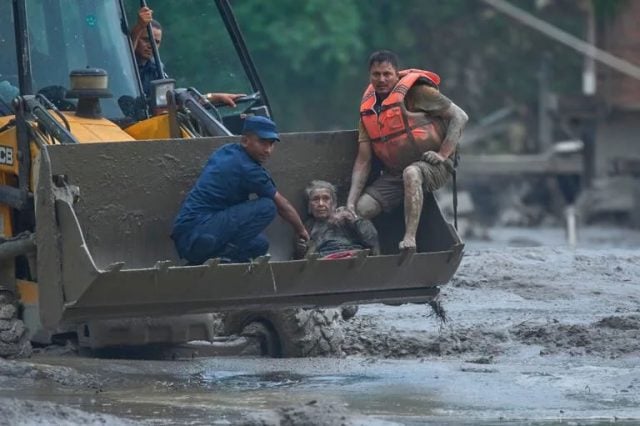
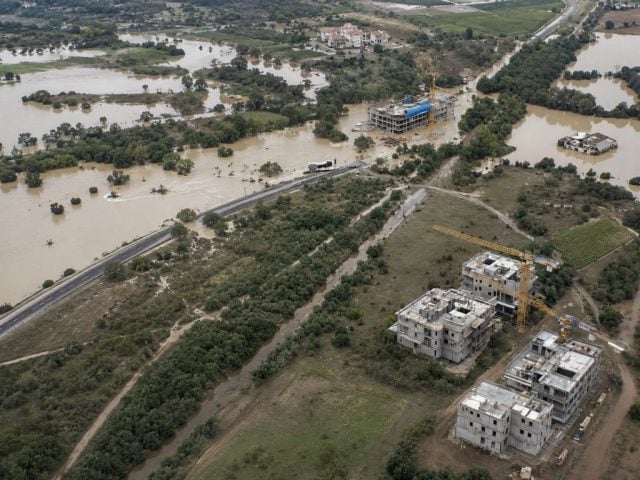
The intense rains battering various cities in southern Chile have highlighted the vulnerability of our urban areas to frontal systems. The collapse of drainage systems, flooded streets, and the looming threat of overflowing rivers prompt us to ask a crucial question: Should we continue to stake the future of our communities solely on concrete and traditional civil engineering, or is it time to turn our attention to the natural infrastructure we already possess?
The answer extends beyond environmental concerns; it is also deeply economic and social. In southern Chile, particularly in Valdivia, we have an invaluable strategic ally: the Carlos Anwandter Nature Sanctuary, a prime example of territorial resilience.
The Natural «Sponge» vs. the Rigidity of Concrete
During storm seasons and frontal systems, wetlands provide a hydrological regulation service that no human-made structure can mimic with the same efficiency. The wetland acts as a sponge or dynamic buffer, capable of dissipating tidal energy and storing up to 15,000 cubic meters of water per hectare.
Most importantly, it accomplishes this task naturally and adaptively, without requiring costly structural repairs after storms.
In contrast, so-called “grey infrastructure” (retaining walls, drainage channels, and artificial collectors) represents a rigid and expensive response to urban stormwater issues in cities where urban expansion has not always been planned with water resilience in mind.
This approach not only necessitates an initial investment estimated at over 5 million dollars for equivalent urban protection in cities like Valdivia, but it also incurs medium-to-high operational maintenance costs. Worse, grey infrastructure does not always address the root of the problem. Often, it simply relocates flooding to communities situated downstream, carrying the risk of collapse in the face of climatic events that exceed its static design.
Wetlands Against Storms in the South: Climate Shields and Carbon Sinks
The importance of conserving these ecosystems extends far beyond preventing water from flooding our homes. Wetlands are also central to global climate security.
In the case of Valdivia, the Carlos Anwandter Nature Sanctuary serves as a gigantic CO2 sink. According to estimates, it actively captures over 10,640 tons of carbon dioxide equivalent annually.
However, pressure to change land use for the development of real estate projects on filled wetland areas constantly threatens to destroy this capacity. Urbanizing on wetland not only drastically increases runoff and the risk of water disasters for future residents, but it also triggers a true “carbon bomb”.
As the soil is drained or filled, the ecosystem ceases to capture emissions and begins to release them massively: around 113,000 tons of CO2 equivalent annually due to the oxidation of its organic matter.
In a scenario where the official Social Cost of Carbon set by the Ministry of Social Development and Family is on the rise, reaching US$71.1 per equivalent ton —$71,801 according to the 2026 Annual Report on Social Prices— allowing the degradation of this sanctuary for real estate purposes would result in a patrimonial loss and a climate liability exceeding 69 million dollars for the country.
Investing in Nature is Cheaper Than Paving Over the Problem
As decision-makers, planners, and citizens, we must be guided by technical evidence. The conservation of wetlands, technically classified as a Nature-Based Solution, requires an initial investment that is extremely low: around 125,000 dollars for active protection programs, with contained annual operating costs of about 55,000 dollars.
When we weigh these flows on a social balance over 10 years, the projections are revealing. While the conservation option would yield a Positive Net Present Value of 6.48 million dollars, the option of real estate development over the wetland would generate a Negative Net Present Value of 69.2 million dollars due to the loss of ecosystem services and associated climate costs.
Wetland conservation presents a Social Benefit-Cost Ratio of 10.8. This means that for every peso spent to protect and restore our wetland, society receives nearly eleven times its value in water security, disaster prevention, biodiversity conservation, and climate mitigation.
International experience also provides valuable lessons. In Newcastle upon Tyne, England, the Denton Flood Alleviation Project was developed as a technical response following severe flooding that affected the city in 2012. Such initiatives demonstrate that sustainable urban development is not just about erecting more hard structures, but integrating nature-based solutions to reduce risks and protect communities.
The lesson from these storms is clear: nature is not an obstacle to urban development; it is part of its safety. In the face of advancing concrete, protecting wetlands is not merely an environmentalist gesture or a nostalgic view of the landscape; it is an economic, climate, and social decision. In the south, every hectare preserved could be the difference between saving a city or letting it sink beneath the water.
By Jaime Moreno Burgos, specialist in Ecosystem Solutions and Real Estate Innovation. Master’s in Regional Economics and Management. Doctoral candidate in Public Policies and Territorial Development, Austral University of Chile.
Obtén tu Pasaporte y apoya a El Ciudadano
Elimina la publicidad, accede a contenido exclusivo y sé parte de la comunidad.
Cancela en cualquier momento · Sin permanencia
Artículos Relacionados
Study Examines Increase in Migration from Cities to Rural Areas in La Araucanía, Los Ríos, and Los Lagos Regions
Hace 3 meses