Original article: Chile Sustentable: «Proyecto de reconstrucción nacional aprobado por el Congreso debilita Ley SBAP y amenaza las áreas protegidas del país»
Sustainable Chile: National Reconstruction Bill Approved by Congress Weakens SBAP Law and Threatens Protected Areas
Law 21,600, which establishes the Biodiversity and Protected Areas Service and the National Protected Areas System, commonly referred to as the SBAP Law, was published in September 2023 and is currently in the implementation phase.
This legislation marks a significant milestone in the protection of national biodiversity. Consequently, efforts have been made from various fronts to undermine it.
The most recent attempt is the “National Reconstruction and Economic and Social Development” bill, which was submitted for discussion in Congress on April 22, 2026.
The original text of this proposal aimed to amend Law 21,600 with two provisions related to extending the deadline for implementing its regulations and establishing new requirements for creating priority sites.
However, during its processing, a third provision was introduced that allows for the relocation of aquaculture activities from a National Park to a National Reserve or a Multiple-Use Conservation Area, even if these areas do not have a management plan. This text was included in the version approved by Congress on August 4, 2026, via official document No. 21,440.
According to Dr. María Isabel Manzur, a biodiversity researcher at Chile Sustentable, this addition represents a significant change concerning the conditions established by the SBAP Law.
“The inclusion of this provision signifies a serious weakening of Law 21,600, as it allows aquaculture activities to occur in protected areas without a prior management plan. This could lead to impacts on biodiversity that the SBAP Law aims to protect,” warns the specialist.
This modification is particularly significant considering that, during the legislative process of Law 21,600, conditions were established for conducting productive activities within protected areas.
Articles 80 and 92 state that these activities must have a management plan; they must be compatible with the objectives of the category, the object of protection, and the management plan of the area; and they must also have a favorable report from the Biodiversity and Protected Areas Service (SBAP).
Designed for Aquaculture Companies
The new text incorporated into the project undermines the spirit of Law 21,600 by allowing aquaculture activities in National Reserves and Multiple-Use Conservation Areas, categories that, by definition, only permit sustainable use activities within them, as stipulated in Articles 60 and 61 of the SBAP Law.
“Law 21,600 establishes clear conditions for the development of productive activities within a protected area. It’s not enough to have a concession: there must be a management plan, and it must be ensured that the activity is compatible with the conservation objectives of the area. This amendment introduces an exception that weakens those guarantees,” explains Manzur.
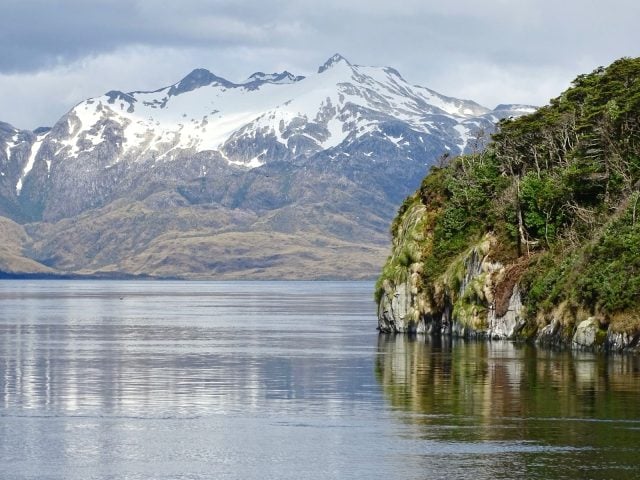
From Chile Sustentable, they point out that the insertion of this provision is tailored to the aquaculture companies’ desire to expand their activities within protected areas, particularly in the Las Guaitecas National Reserve in Aysén and the Kawésqar National Reserve in the Magallanes Region. Both lack a management plan, which has hindered salmon farming companies’ expansion in these territories.
Law 21,600 ensures the continuity of concessions granted before its enactment but does not allow new concessions in protected areas without a valid management plan.
The Situation at Canal Muñoz
Chile Sustentable addressed the case of a salmon farming company that holds concessions granted before the enactment of Law 21,600 in the Kawésqar National Reserve and has been unable to expand its activities for several years into other sectors of the reserve, such as Canal Muñoz, due to the absence of a management plan.
On March 23, 2026, the company filed a complaint with the 2nd Environmental Court of Santiago to challenge the legality of Law 21,600 and, specifically, the requirement for a management plan.
“What is at stake is the standard of protection for protected areas. If the relocation of aquaculture activities to reserves without a management plan is permitted, there is a risk that production activities will overshadow the conservation objectives that justify the existence of these areas,” asserts Dr. María Isabel Manzur.
“The loosening of Law 21,600 to allow industrial activities within protected areas is extremely concerning. Chile Sustentable urges legislators and the government to eliminate this article and to stop weakening the SBAP Law,” emphasized representatives from the environmental organization.
And What About the Regulations?
To add to these concerns, on March 12, 2026, 12 regulations related to the SBAP Law that were ready for approval were withdrawn from consideration by the Comptroller’s Office, without indicating any timelines for their resubmission.
This clearly delays the implementation of the regulation by leaving pending the necessary regulations for its application. Moreover, the transfer of protected areas from Conaf to the SBAP, which was expected to occur on August 1 of this year, has been postponed until March 2027.
“The idea that there is a conflict between economic development and environmental protection is not accurate. Economic development requires the protection of biodiversity and natural resources to sustain healthy growth that does not destroy the foundation of a country’s wealth,” concluded representatives from Chile Sustentable.
We will continue to provide updates.
Obtén tu Pasaporte y apoya a El Ciudadano
Elimina la publicidad, accede a contenido exclusivo y sé parte de la comunidad.
Cancela en cualquier momento · Sin permanencia