Original article: Teherán toma la iniciativa: responde a EE.UU. con condiciones y denuncia una maniobra para ganar tiempo
Iran has taken the initiative in response to a proposal from the United States (U.S.) aimed at ending the war, making it clear that hostilities will only cease if its stipulated terms and conditions are met. Nonetheless, the Islamic Republic perceives this proposal as a strategy to control rising oil prices, buy time for rearmament, and orchestrate further attacks.
Donald Trump presented the Islamic nation with a 15-point plan, highlighting the U.S. president’s interest in concluding a conflict that began in conjunction with Israel, now entering its fourth week and significantly straining his administration, which has struggled to find a solution.
A source confirmed to the Iranian news agency Tasnim that Tehran’s response to the proposal from the White House was officially conveyed through intermediaries late Wednesday night. The source indicated that high-ranking officials of the Persian nation are awaiting Washington’s stance on their demands.
According to the source, Iran made it clear in its response that U.S. aggression must cease and that concrete conditions must be established to ensure that the war does not recur.
This isn’t just about halting current hostilities; it involves securing a safety framework that limits Washington’s or Tel Aviv’s ability to resume military operations.
At the same time, Iran demands that war compensations and reparations be clearly defined and established.
«The end of the war must be implemented across all fronts and for all resistance groups involved in this battle throughout the region,» stated the agency, referring to actors such as Hezbollah in Lebanon and the Houthis in Yemen.
The source revealed that another condition posited is that Iran’s sovereignty over the Strait of Hormuz is a natural and legal right that will continue.
Maintaining control over the maritime route through which about 20% of the world’s traded oil and gas passes, essential for exports from nations like Saudi Arabia, the United Arab Emirates, Kuwait, and Iraq, represents for Tehran a guarantee that Washington will uphold the agreements reached.
According to the agency Tasnim, these conditions add to the demands presented by the Islamic nation during the second round of nuclear negotiations in Geneva, which took place just days before the war initiated by the U.S. and Israel on February 28.
A New ‘Deception’ by the U.S. to Buy Time
The source indicated that Iranian officials are clear that Washington’s proposal constitutes a ‘third deception,’ as the Trump administration pursues multiple objectives under the guise of negotiation. Firstly, it aims to deceive the world by presenting a seemingly peaceful image that seeks to end the war. Secondly, the far-right agenda seeks to keep global oil prices low; while the third goal is to buy time to prepare for a new aggression in southern Iran through a ground invasion.
The source explained that while Iran had doubts regarding the outcomes of negotiations and the U.S.’s adherence to agreements prior to the 12-day war in June 2025, it now harbors strong doubts about the U.S.’s willingness to negotiate at any time, as noted by Tasnim.
The source also recalled that during the so-called 12-day war, as well as the ongoing armed conflict, the U.S. government decided to initiate military operations while negotiations were ongoing, leading Tehran to believe that Trump aims to pave the way for committing new crimes under the false pretext of dialogue and negotiations.
Iran’s rejection of the U.S. plan arrives at a moment when the White House is exploring a negotiated exit, relying on regional mediators and indirect contacts with Tehran. However, the conditions set forth by the Islamic Republic not only raise the stakes
«Iran Will End the War When Its Conditions Are Met»
The revelations published by the Tasnim agency coincide with statements made by a senior Iranian political official to Press TV, asserting that Tehran will not allow Trump to dictate the timing for ending the war.
«Iran will end the war when it decides to do so and when its own conditions are met,» reaffirming the Persian nation’s determination to continue its defense and inflict «severe blows» on both Israel and the U.S. until its demands are satisfied.
HispanTV indicated that the official reminded that the administration of the Republican magnate has been conducting negotiations through various diplomatic channels, presenting proposals that, in Iran’s view, are «excessive» and disconnected from the failures experienced by U.S. forces on the battlefield.
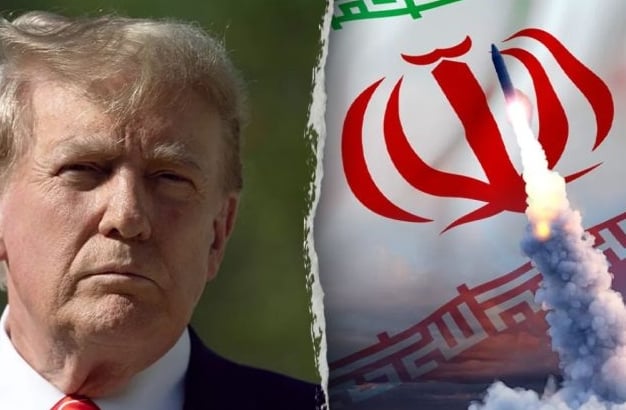
Trump Cornered and Seeking an Exit from the War
The current crisis is a result of a joint aggression launched by Israel and the United States on the morning of Saturday, February 28. With the declared aim of «eliminating threats» from the Islamic Republic, the bombings resulted in the death of Iran’s Supreme Leader, Ayatollah Ali Khamenei, and several high-ranking military officials, including the Secretary of the Supreme National Security Council, Ali Larijani; the commander of the Basij militia, Gholamreza Soleimani; and the Minister of Intelligence, Esmaeil Khatib. Mojtabá Khamenei, son of the late Supreme Leader, was chosen as his successor.
Since the onset of hostilities, over 1,400 civilians have reportedly died in Iran and more than 18,000 people have been injured, according to authorities in the Persian nation. Simultaneously, thousands of civilian infrastructures, homes, medical centers, and schools have been destroyed or severely damaged.
In retaliation, Tehran has launched numerous waves of ballistic missiles and drones against Israel and U.S. bases in the Middle East.
The conflict has severely impacted Donald Trump’s administration. A Pew Research Center survey published Wednesday revealed that the majority of Americans, specifically 59%, believe that attacking Iran was a wrong decision and disapprove of the handling of the conflict by the Republican magnate.
According to the opinion study, 61% of Americans are against Trump’s handling of the crisis, while 37% approve. Furthermore, 59% state that the White House made the wrong decision in resorting to military force, while 38% believe it did the right thing.
Moreover, an analysis by The Economist pointed out that Trump is cornered and suggested that the four options available for the U.S. president to exit the conflict are, at best, paths fraught with risks, high costs, and unpredictable consequences.
Far from the triumphalist rhetoric that characterizes the far-right, the reality on the battlefield and at negotiation tables depicts a complex scenario. According to the British outlet, although Trump claims that Washington is «crushing» Iran, he essentially has four options on the table—negotiate, declare victory and withdraw, continue as is, or escalate the conflict—and has chosen none because, simply put, «none are good».
Iran’s rejection of the U.S. plan and the imposition of conditions to reach an agreement and end the war arrives at a time when Donald Trump is desperately trying to negotiate a settlement, relying on regional mediators. However, the Islamic Republic’s firm stance clarifies who holds the upper hand in a conflict with repercussions extending beyond the Middle East, threatening to trigger a global economic, energy, and political crisis.
Artículos Relacionados
Ceasefire Today: Global Campaign Demands Ceasefire in Gaza and Iran, Calls Out US Complicity
Hace 3 semanas