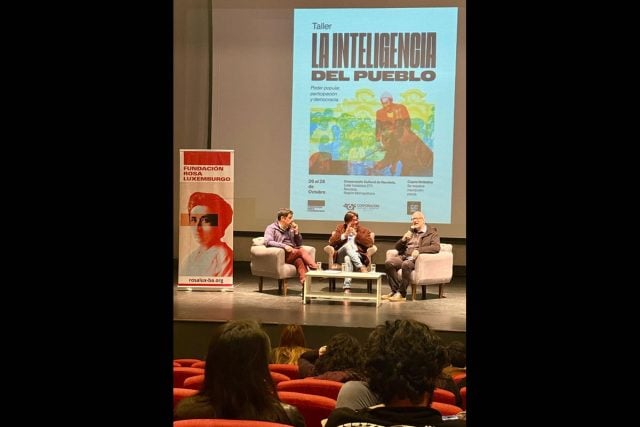
Original article: «La inteligencia del pueblo»: Encuentro en Recoleta debate sobre organización popular, democracia y poder territorial
Kicking off on October 26, at the Cultural Corporation of Recoleta, the workshop titled «The Intelligence of the People» aims to revitalize grassroots organization experiences and enhance community involvement in public decision-making. This event will continue until October 28 and unites participants from various political and territorial backgrounds.
The initiative is jointly driven by the Recoleta municipality, the Diploma in Latin American Critical Thinking from the University of Chile, and the Rosa Luxemburg Foundation.
Its goal is to share tools and experiences related to grassroots planning, community organization, territorial power, and the relationship between the state and social organizations.
The opening remarks were made by Daniel Jadue and Torge Loeding, the director of the Rosa Luxemburg Foundation, who emphasized the need for discussions on how communities can shift from being passive recipients of public policies to active participants in their design, implementation, and evaluation.
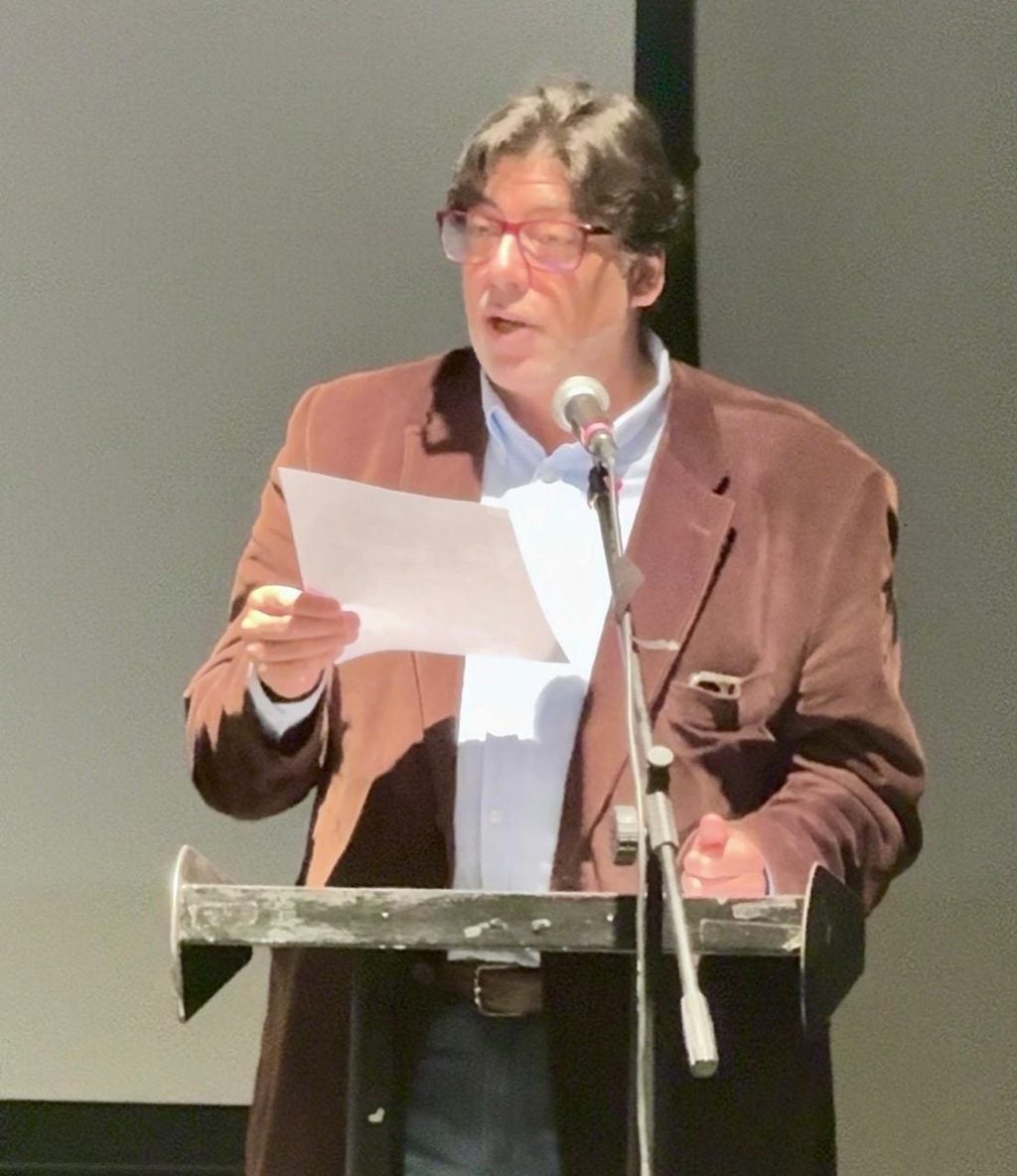
Jadue: «Chile Was the Most Radical Laboratory of Neoliberal Cities in the World»
During his speech, Daniel Jadue focused on the urban transformations during the dictatorship and their impact on social organization.
«Chile was the most radical laboratory of neoliberal cities in the world,» he stated, referring to the urban and housing development model established over recent decades.
Jadue noted that between 1979 and 1985, over 170,000 families were displaced from communities and camps in relatively central neighborhoods to peripheral areas in southern and western Santiago. According to him, these displacements contributed to the dismantling of community networks and the dispersal of grassroots organization.
The leader also criticized the fact that the return to democracy did not fully reverse this segregation logic. He argued that housing policies provided access to homes but did not necessarily facilitate access to the city, its services, and spaces for participation.
In line with this, he recalled the concept of «the roofed ones,» developed by researchers Alfredo Rodríguez and Ana Sugranyes, describing the situation of families who got houses but were left cut off from the opportunities and networks provided by urban life.
Jadue linked this transformation to the financialization of housing and the rise of indebtedness, asserting that a house has ceased to be merely a living space and also operates as a financial asset. He believes these conditions hinder the autonomy of lower-income sectors and their organizational capabilities.
His address included critiques of cuts in sectors such as school food, scholarships, health, culture, and universities, contrasting these measures with tax breaks for large corporations.
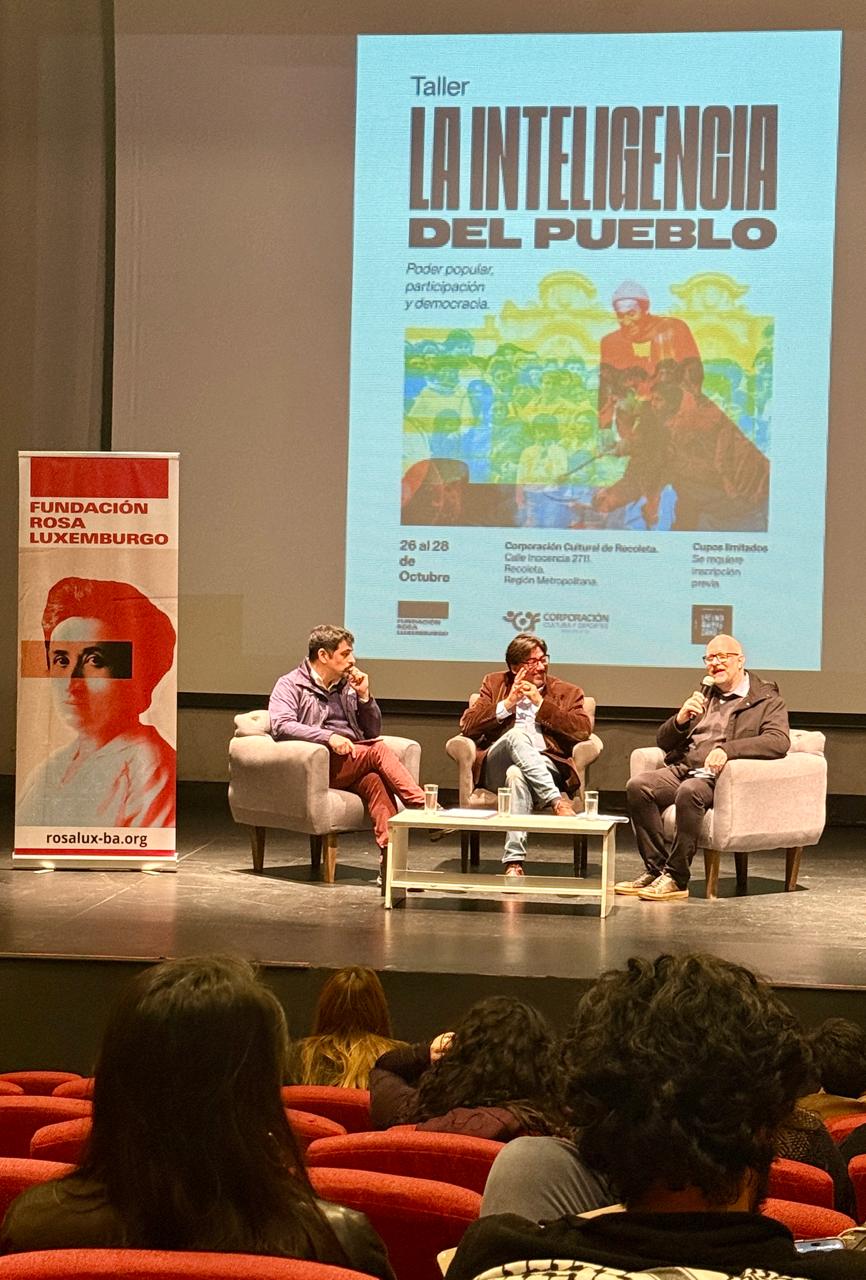
Popular Participation as a Governance Practice
Torge Loeding highlighted Latin American experiences where social movements and progressive governments have aimed to establish permanent mechanisms for citizen participation.
The representative from the Rosa Luxemburg Foundation argued that popular participation should not be limited to occasional consultations but can involve communities in setting priorities, implementing policies, and overseeing public management.
In this regard, he asserted that the territorialization of public policies does not merely entail bringing the state closer to neighborhoods but also developing collective capacities to engage in decision-making and manage common goods.
Experiences from Mexico, Brazil, and other regional countries, as well as initiatives in New York, are among the cases the workshop aims to analyze. The goal is to identify learnings, methodologies, and tools that may contribute to community organizing processes in Recoleta.
The Social Outburst and the Struggle for the Meaning of Rebellion
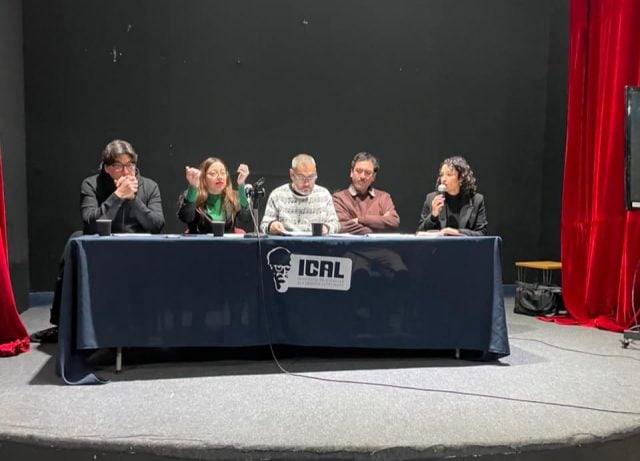
One of the discussion spaces was the panel «Chile at a Crossroads: Threats to Democracy,» held from 11:00 to 12:30, featuring Arnaldo Delgado González, writer and columnist; Catalina Luffin, president of the Communist Youth; and Elisa Franco from the Diploma in Latin American Critical Thinking.
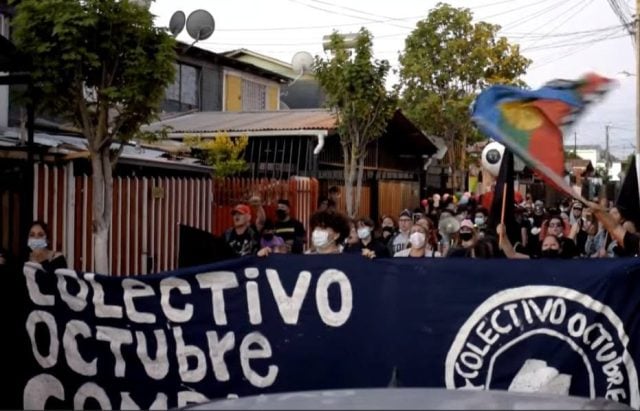
In his remarks, Delgado González discussed the social uprising of October 2019 and the emergence of solidarity and organizational forms that, according to his analysis, exceeded individual identities and traditional political structures.
The writer mentioned various territorial and social conflicts as expressions of a discontent that may resurface if the underlying conditions persist.
«If the citizenry and the productive model remain the same, a new Aysén, a new Chiloé, a new Magallanes can be expected,» he warned.
For Delgado, the challenge lies not only in anticipating new protests but in understanding how to politically channel that social energy. He expressed concern over the left’s ability to present a compelling alternative.
«That potential that could explode is uncertain if it can be controlled or hegemonized unless the lefts can propose a credible vision of the future,» he stated.
His reflection situated the debate within the relationship between social mobilization, institutional crises, and the construction of political projects capable of responding to citizens’ demands.
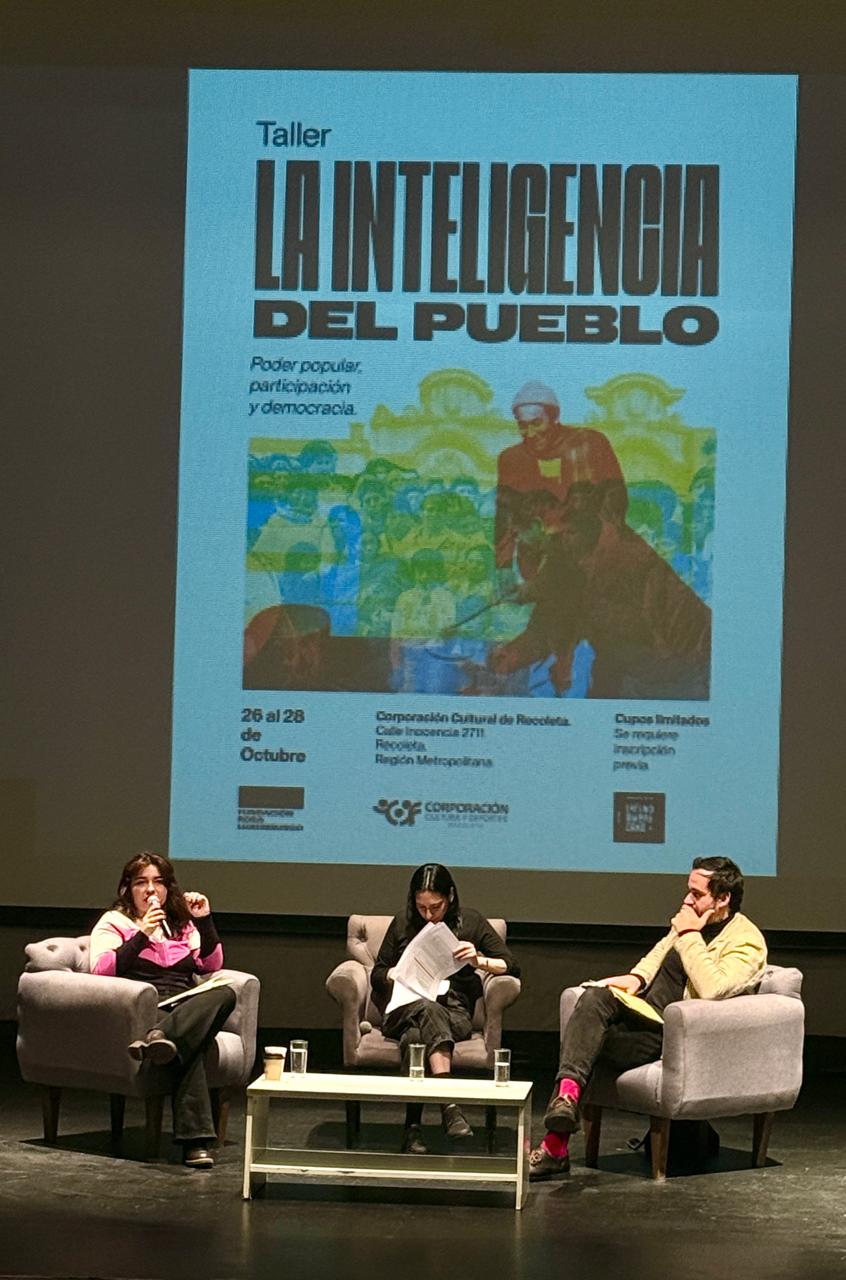
Catalina Luffin: «Politics as the Struggle for Hopes»
Catalina Luffin proposed distinguishing between rebellion and revolution, in light of the rise of the right and phenomena such as Javier Milei in Argentina, whose system-challenging speech has garnered support among young people.
During her presentation, she recommended the booklet Politics as the Struggle for Hopes by Álvaro García Linera, published by CLACSO. From that perspective, she discussed the cycle of progressive governments in Latin America, their successes and failures, and the limitations of an initial reform phase that, as she argued, help explain the rise of the far-right.
«There can be right-wing rebellion, yes, rebellion in terms of disorder, in terms of challenge. But revolution involves, as Fidel Castro said, changing everything that must be changed,» she asserted.
For Luffin, the fundamental difference lies in the ability to direct social discontent toward an organized transformation project. In this framework, she linked the discussion with the mobilizations that occurred in Chile and similar protests in other countries like Spain and France.
The leader emphasized that social organizations, political parties, and local governments face the challenge of constructing an alternative in response to the crisis of institutions and the advancements of the far-right.
«What we need to win, and the victory we must build, is that this collapse of institutionalism has a political direction, not a dispersed rebellion, but one that aims for an organized revolution,» she proposed. She expressed her vision for a socialist alternative as the horizon for this process.
Organization from the Territories
The panel discussions connected the dialogue on the social outburst with the overall objective of the workshop: to reflect on how communities can build political capacity, influence institutions, and contest decisions that impact their daily lives.
The initiative will continue until Wednesday, October 28, with the exchange of experiences regarding territorial organization and popular participation.
In a context marked by debates on democracy, inequality, and the advance of the right, the meeting seeks to share tools to consider the relationship between social organizations, local governments, and the construction of political alternatives from the territories.
We will continue to provide updates.
Obtén tu Pasaporte y apoya a El Ciudadano
Elimina la publicidad, accede a contenido exclusivo y sé parte de la comunidad.
Cancela en cualquier momento · Sin permanencia