Original article: La tarea pendiente: NO + AFP
By Myriam Barahona Torres, President of Fenafuch, University Senator at U. de Chile
In recent weeks, thousands have downloaded their statements to join the collective demand initiated by social organizations, in partnership with the NO + AFP Coordinating Committee, against pension fund administrators after they lost over $7.7 billion of workers’ savings in Chile.
Meanwhile, the seven AFPs, to whom we are compelled to hand over a portion of our salaries, gained $449.88 million between January and September. Even after accounting for reserves, their profits increased by 5.4%.
From both the left and right, a fundamental issue seems overlooked: the problem isn’t merely the reckless behavior of a few executives. The real issue is the AFPs and the pension system we have in Chile.
It is encouraging that the «Return the Money» project has been declared admissible with votes from the Communist Party to the UDI. However, it is disheartening that this comfortable consensus is the only sound from the political elite, allowing yet another resolution without addressing the model itself.
First, this is not an isolated incident. In 2008, Fund A dropped by more than 40%. In 2021, Fund E lost 13.11%. These are not accidents; they are systemic flaws.
The Superintendence of Pensions has acknowledged that this system has never provided a guarantee of profitability. The risk has always fallen on contributors, while commissions are charged regardless.
Second, where is the State? The Constitution mandates it to oversee the proper exercise of the right to social security. The Superintendence was aware of the risks: in April, it limited these operations but granted the AFPs 210 days to comply, and the losses occurred precisely within that timeframe.
Minister Quiroz admitted that these issues had been monitored for years without significant interventions. If oversight is insufficient, isn’t it time for the State to guarantee this right directly?
Third, one might assume that it’s difficult to propose reforming a system backed by the public; however, data shows that 51% wanted to eliminate AFPs in 2022 (Chile Dice) and 56% in 2024 (Pulso Ciudadano).
That same year, Cadem indicated that 63% supported the creation of a state administrator and 77% wanted the option to choose between the State and an AFP. Yet, that option does not exist today.
Anyone who believes that the 2025 reform solidified a consensus on the continuation of AFPs is mistaken. It may have been feasible given the balance of power at the time, but this does not exempt the change advocates from continuing to advocate for the end of a model that has caused so much abuse for workers.
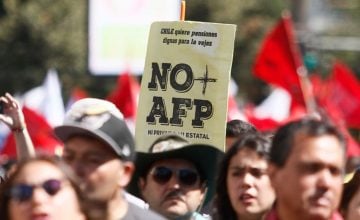
We are taking legal action to hold them accountable for our losses. However, we will continue to protest on the streets, marching this November 28, in unions, in professional associations, and in public discourse for what we deserve: a pension system that does not gamble with the retirement of those who work.
NO + AFP was not just a slogan of an era. It remains an ongoing challenge.
Myriam Barahona Torres
Obtén tu Pasaporte y apoya a El Ciudadano
Elimina la publicidad, accede a contenido exclusivo y sé parte de la comunidad.
Cancela en cualquier momento · Sin permanencia