Original article: El Estallido y la urgencia de abandonar la culpa
By Belén Carvajal, Popular Party Activist
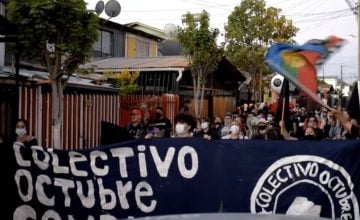
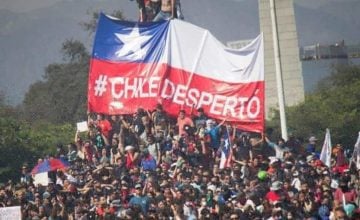
Seven years after the Social Outbreak, we face a bitter contradiction: the accumulated rage against decades of abuse and inequality has ultimately been exploited by the very sectors responsible for that discontent.
This outcome is not a mistake made by the people in the streets, but rather a result of the profound political orphanhood we carry as the left, which has impeded us from offering a hopeful and transformative horizon that could mobilize the popular sectors.
In 2019, those of us in the institutional left occupied a comfortable position, integrated into the establishment and disconnected from the people — viewing them from the outside, as if we were not part of them — rendering us incapable of channeling the popular energy into a transformative project, a product of our own self-legitimization. Today, the underlying danger is stumbling upon the same stone once again.
Marx warned that history repeats itself twice: the first time as a tragedy, the second as a farce.
If the political response of the left to the ongoing discontent continues to be limited to press conferences in halls, electoral unity without social and political cohesion, renouncing an honest language that names things for what they are, blindly adopting the punitive agenda of the right, and criminalizing protest, we are fully falling into that farce. There is no way to lead popular discontent while wielding the club that represses it.
If we, as the left, continue to treat those who mobilize to gain elite approval as criminals and insist that we respect institutionalism while being the best guarantors of neoliberal stability, the people, sooner or later, will once again run over us.
The real defeat does not occur when we lose a vote or a plebiscite, but when we adopt the analytical framework of the enemy. It happens when we accept the common sense of the reactionary and fascist far-right, walking with our heads down, apologizing for who we are, for what we think, and for what we defend, swearing never again to dispute the common sense under the pretext that our only duty is to manage liberal institutionalism.
In the face of this trap, we must be emphatic: a political defeat — and especially an electoral defeat — is very different from a failure. It is true that we have suffered electoral defeats, but we have not failed. Failure would imply accepting that our convictions were wrong, that the structural diagnosis of the model was false, that a new Political Constitution is unnecessary, and that challenging abuse lacked legitimacy.
Accepting the narrative of «failure» is an ideological capitulation and a direct renunciation of the true purpose of politics as leftist militants: to transform reality.
This renunciation has given ground to the reaction to dispute our memory and symbols. They have stolen September 4 — which historically belonged to the triumph of Salvador Allende and the Popular Unity in 1970 — and have fixed it in common sense as the emblem of constitutional defeat.
In the same way, they attempt to tame October 18, September 11, or National Dignity Day: they seek to drain them of their struggle potency, convert them into lessons of guilt and punishment, and impose the narrative that the coup, the dictatorship, and human rights violations were inevitable. Disputing common sense requires reclaiming these dates and recharging them with meaning.
Overcoming this paralysis in action requires stopping lamenting, apologizing, and outlining a concrete path for political action; not because it is electorally functional, but to genuinely dispute power and the meaning of our society.
Rage without organization is sterile or reactionary. Thus, the primary task of the left is not in bureaucratic management or ingratiating with the historical administrators of the model to ensure empty alternation — abandoning our duty to transform the balance of forces just to install comfortable officials within the state’s institutionality — but in reconstructing the social and popular field with political leadership and grassroots work, capable of becoming a real alternative.
Emancipatory politics unfolds in a constant war of positions occurring in unions, social coordinators, communities, student organizations, churches, and soccer fields. It is there that social power is built and a new historic block is articulated, not in the improvisation of a march or the speculation of electoral polls.
In Chile, while a new evangelical church opens in the popular sectors almost daily — today transformed, through U.S. funding and geopolitical influence, into true mass fronts of the far-right to inject individualism, resignation, and submission — the left has simply abandoned the territory.
We have forgotten that, despite many of us being atheists, the spiritual and communal dimension of the people must be an emancipatory and liberating force, not a stifling doctrine that conforms to earthly misery or is condescending to power.
It is precisely here that we must be disputing today: building a vibrant territorial politics that recovers neighborhoods, a spirituality that liberates our youth from the claws of drug trafficking and drugs (also tools injected by Power), and that restores collective faith in the capacity, and above all, the need to transform our reality.
At the same time, we must subordinate our role within the institution to the process of power accumulation. Occupying spaces within it cannot be an end in itself or a refuge for political professionals, but a tactical trench to enhance popular struggles, highlight their demands, and dismantle the model’s architecture.
This institutional trench is useless without an open dispute over common sense and a frontal battle against defenders of the model and enemies of human dignity, which demands defending without hesitation the inalienable right to social protest and ensuring it as a tool for self-defense.
Protest is not a crime to be managed with a police logic, but the historical engine with which peoples push the boundaries of the possible.
One cannot pretend to build an alternative to neoliberalism while apologizing for our ideas or acting as kind administrators of the existing order. The reconstruction of a popular project demands coherence, territorial organization, and the ideological courage to break the mirror of the adversary.
History is far from being closed, Fukuyama’s thesis was not real, and the only way to not keep managing our own defeats is to take on the responsibility of organizing discontent and leading the transformation. Seven years after the Social Outbreak, the struggle continues.
Belén Carvajal
Obtén tu Pasaporte y apoya a El Ciudadano
Elimina la publicidad, accede a contenido exclusivo y sé parte de la comunidad.
Cancela en cualquier momento · Sin permanencia
Artículos Relacionados

Clara Bünger: "If We Lacked the Power to Change Things, They Wouldn't Fight Against Us"
Hace 1 semana