Original article: Lo que la Encuesta Brecha Pública calla: La corrupción del poder está en Chile y la ciudadanía debe movilizarse
By Leopoldo Lavín Mujica
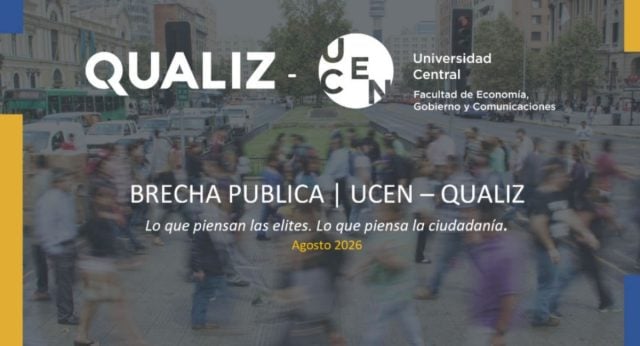
The Public Gap Survey conducted by UCEN-Qualiz reveals a troubling divide between citizens and the political sphere: both groups seem to exist in separate realities, assigning different priorities to the nation’s issues.
However, one specific finding should raise particular concern: amid the recurrent scandals involving public institutions, integrity and corruption are not prioritized on the national agenda.
Chile appears to have grown accustomed to living with corruption, as if it were an inevitable succession of isolated cases. Investigations, influence peddling, conflicts of interest, irregularities in tenders, and improper connections between money and power emerge periodically in the news but quickly fade from political discourse.
Corruption is present; what is lacking is a sustained political will to address it.
The irony becomes even more severe when the survey itself documents a significant gap between citizens and those in political positions. If politics fails to address the genuine concerns of society, it also appears incapable of making integrity a national priority.
The issue is not only about how much is stolen or who commits crimes; it is the erosion of trust in the institutions responsible for representing, administering, and enforcing justice on behalf of everyone.
On January 8, 2026, national media released the findings of an Ipsos study that should have sounded alarm bells: 57% of respondents view corruption as the main problem within the Judiciary, far outweighing concerns about the slow pace of processes (39%) and the lack of oversight or audits of judges and rulings (32%).
Even more alarming: 78% believe judicial decisions are influenced by powerful individuals and money, while 66% perceive pressure from political parties.
Recent events further emphasize why integrity cannot remain a secondary issue.
CIPER reported on August 27 that 5 Supreme Court ministers approved a direct deal worth $26.889 million with a construction firm whose bid had been rejected on the same day during a tender. This case again puts the contracting mechanisms of the Administrative Corporation of the Judiciary and the internal controls of the highest court under scrutiny. While it is inappropriate to anticipate criminal responsibilities, public explanations and strict oversight must be demanded.
This incident adds to a crisis of confidence that has severely impacted the Judiciary. Cases involving Supreme Court ministers and investigations into influence peddling and judicial appointments have demonstrated that corruption and conflicts of interest cannot be seen as problems exclusive to partisan politics.
When suspicions involve those responsible for administering justice, the demand for transparency must be even greater: no one should be above public scrutiny.
Therefore, it is insufficient to wait for political parties to voluntarily prioritize corruption. Experience shows that outrage arises when a scandal erupts but dissipates when the cameras turn off.
Integrity needs to become a permanent civic demand that transcends party lines: transparency, accountability, effective conflict of interest controls, and real penalties for those who abuse power.
Citizens, therefore, have a responsibility that cannot be delegated. It is essential to build a civic movement for integrity, capable of placing this issue in public conversation and demanding concrete answers from those in power.
This demands democratic mobilization: social organizations, unions, universities, professional associations, and citizens must exert sustained public pressure to ensure that corruption is not silenced again.
The Public Gap Survey should serve as an alarm signal. If there is a disconnect between the citizenry and those in power, bridging that gap requires confronting what those in power seem reluctant to discuss: corruption and the lack of integrity.
Chile does not need more fleeting outrage after each scandal. It requires legislators who unite against corruption, but most importantly, it urgently needs an organized citizenry that makes integrity a permanent democratic demand and compels those in power to finally be accountable.
Leopoldo Lavín Mujica
Obtén tu Pasaporte y apoya a El Ciudadano
Elimina la publicidad, accede a contenido exclusivo y sé parte de la comunidad.
Cancela en cualquier momento · Sin permanencia
Artículos Relacionados
Codelco's Privatization Faces Heavy Opposition: 74% of Citizens Reject Selling State Assets
Hace 1 mes