Original article: El drama de los deudores del CAE
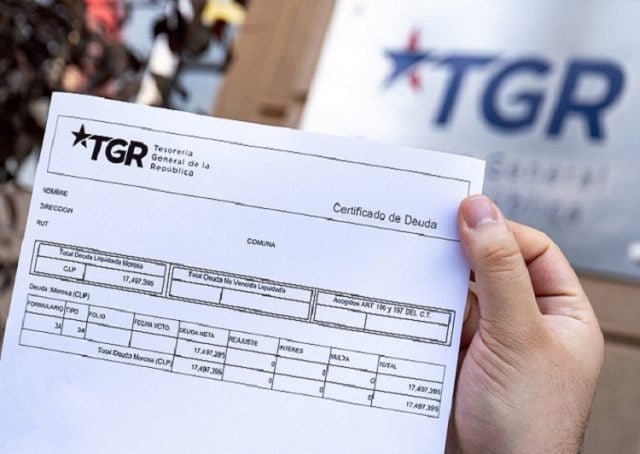
Currently, thousands of individuals burdened by the State Guaranteed Credit (CAE) have been notified of collections, garnishments, and many have indeed faced property seizures as a result of actions taken by the General Treasury of the Republic (TGR), pushing them into a profound economic crisis.
Measures such as garnishing bank accounts, automatically emptying checking accounts, seizing entire salaries, freezing financial assets, investment funds, time deposits, mutual funds, as well as real estate and even vehicles, are among the numerous actions undertaken by the TGR this year.
According to the CAE Debtors Movement’s Analysis and Data Commission, by December 2025, Chile had 539,613 delinquent individuals with a default rate of 63.8%. Today, more than 1,500 of these debtors nationwide have been garnished, and only about 5% of the total have entered repayment agreements.
The following testimonials are just a few from debtors caught by surprise: the first is a 39-year-old nurse, who preferred to remain anonymous for safety reasons. At that time, she trusted the state to help her get an education, and now she has received a notification of garnishment.
«I was the first generation in my family to attend university. We couldn’t afford higher education, but there was a dream of studying and getting ahead, which is why I opted for the CAE. However, when I signed this document, I requested 10 million pesos, which ballooned into an endless debt of 28 million pesos. It is unacceptable that the state allowed this outrageous increase. Higher education should be a right,» she stated.
Similarly, Cristóbal, 37, recounts that he was notified by the TGR to regularize his debt, which has been growing since 2009 when he took out a student loan to study Public Administration. He has been unable to pay due to other urgent matters: he is currently waiting for knee surgery due to a serious meniscus tear, which has left him reliant on crutches and unable to work.
«I have a 2.5-year-old daughter and I’m currently caring for her without the ability to work. There are far more pressing urgencies for me than paying for university; settling this debt means my daughter might go without food while I can’t even walk,» he expressed.
His operation costs around 6 million pesos, which is not covered by the FONASA PAD grant, as he needs to pay upfront without installments.
Abusive Collections
Like Cristóbal, Francisca, a journalist who graduated in 2015, requested the CAE in 2010 to pursue her career and has now received a notice from the TGR to address her debt. This notice ignored her current context and financial situation, as she is currently unemployed.
The sole recommendation provided by the TGR was to enter into a payment agreement in UTM and access up to 24 monthly installments of nearly the same amount, which she finds impossible to pay given her current situation and other priorities.
Francisca initially requested around 7 million pesos, but over the years her debt doubled to 14 million pesos, and today with bank interest it has tripled to 21 million pesos.
The communicator stated, «The CAE’s interest rates are exceedingly abusive; it is absurd to end up paying triple what you requested. Personally, I find it immoral to collect from someone who is unemployed and out of work in their field. These measures violate our rights and offer no exceptions.»
Even more serious is the case of a healthcare professional who had to transfer her vehicle to a family member’s name and request her employer to pay her with pay orders to prevent her salary from being garnished, in addition to taking out a consumer loan and hiring a lawyer for her defense.
«Young individuals who dreamed of becoming professionals, many of whom are now heads of households, are facing eternal debt that will follow them for the rest of their lives if this doesn’t stop. With this garnishment order, we are being stripped of our meager possessions; it’s dramatic,» she said.
This nurse’s situation is very complex, similar to many debtors in the same predicament; to qualify for this agreement, she must pay 1.5 million pesos and about 325,000 pesos per month for the first 23 installments, an amount she considers unpayable and endless, as she would need to take a loan from the bank to secure this agreement, indebting herself further.
«I believe the CAE is a scam by the state that exploited the dreams of young people wanting to attend university. Today, our rights are being violated through the garnishment of salaries and belongings,» the professional questioned.
Illustrated Unemployment
According to a report on Employment Quality -IMCE conducted by the Work Studies team of Fundación Sol, the unemployment rate in Chile for January-March 2026 reached 8.9%, with female unemployment at 9.9%, reflecting the current precarious labor situation.
More than 2.5 million people today are facing total, partial unemployment (underemployment), or potential unemployment, with the underutilization of the workforce reaching 22.7%, the highest in the last five years.
«The government should ensure that with the degree you are studying, you can cover your basic life needs: housing, food, and transportation to work, as well as paying for your children’s schooling. Today, you graduate from a technical or university program with no job. I used to pay 10% of my net monthly salary to the CAE installment, then became unemployed and had to submit documents for a payment cessation due to unemployment; I was in that situation for four years,» the nurse expressed.
We will continue to provide updates.
Obtén tu Pasaporte y apoya a El Ciudadano
Elimina la publicidad, accede a contenido exclusivo y sé parte de la comunidad.
Cancela en cualquier momento · Sin permanencia