Original article: “Esto no es cierto, ministro”: Gajardo deja pagando a Quiroz por defensa del secreto bancario
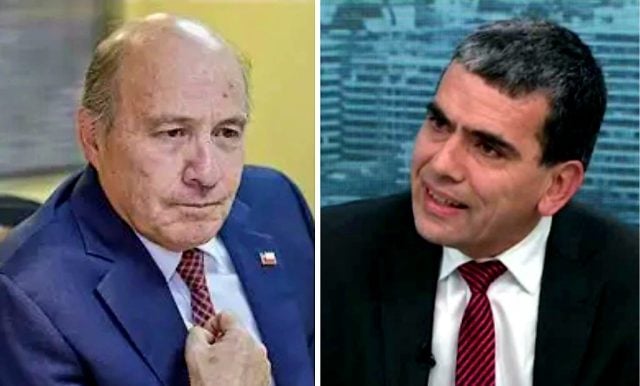
«This Isn’t True, Minister«, stated former prosecutor Carlos Gajardo while refuting the claims made by the Finance Minister, Jorge Quiroz, who suggested that «the lifting of bank secrecy always requires a judicial order«.
Gajardo explained in a message shared on his social media that «there are various cases where the law allows the lifting of bank secrecy without a judge’s order».
He pointed out that suspicious transactions must be reported by banks to the Financial Analysis Unit (UAF), as well as balances that exceed 1,500 Unidades de Fomento (UF) —approximately $60,000,000— as established by Law 21.453. Meanwhile, Law 21.713 mandates financial institutions to inform the Internal Revenue Service (SII) if a bank account receives more than 50 transfers in a month.
«Operation Tokyo» and the Need for Chile to Move Towards Bank Secrecy Flexibility
It is important to note that lifting bank secrecy has been a key topic in public opinion and gained momentum after a money laundering network linked to the Tren de Aragua was dismantled involving an executive from Banco Santander.
The so-called «Operation Tokyo» conducted last Tuesday by the Organized Crime Brigade of the Investigations Police took place within the context of an investigation that originated in 2024 during proceedings regarding a quintuple homicide in Lampa.
During this incident, PDI agents discovered the cell phone of one of the individuals involved—a member of the Tren de Aragua—containing contacts of the banking executive, along with significant evidence of illicit transactions.
According to current reports, massive money transfers to other countries were detected, exceeding 78 billion pesos, which are believed to be sourced from criminal activities by the Tren de Aragua in Chile, including trafficking in persons for sexual exploitation, extortion of business owners in the Bellavista neighborhood, vehicle smuggling, and drug trafficking.
In light of this situation, former prosecutor Gajardo reiterated the urgent need for Chile to move towards flexibility in bank secrecy.
«If we truly want to combat organized crime, we must relax bank secrecy, especially in the preparatory phase conducted by the UAF (Financial Analysis Unit),» he stated on his social media account.
Legislative Process in the Senate
The former prosecutor’s proposal gained relevance as there is currently a bill being processed in the Senate that creates the Economic Intelligence Subsystem and establishes measures for the prevention and alerting of activities related to organized crime.
This initiative includes a provision that would allow the lifting of bank secrecy when investigating criminal and delinquent associations.
Specifically, this rule would enable the Financial Analysis Unit (UAF) to request information subject to bank secrecy directly from a financial institution without prior judicial approval, in the aforementioned investigative context.
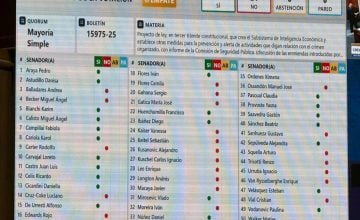
During Wednesday’s session, the right-wing bloc voted against this provision. Senator Diego Ibáñez from the Broad Front indicated that President José Antonio Kast, via Deputy Finance Secretary Juan Pablo Rodríguez Oyarzún, requested a separate vote on the article, resulting in a tie with 23 votes, which will need to be resolved in the next session scheduled for Tuesday.
However, Minister Quiroz revealed this Thursday that La Moneda is considering the possibility of presenting, in parallel, a bill concerning the lifting of bank secrecy.
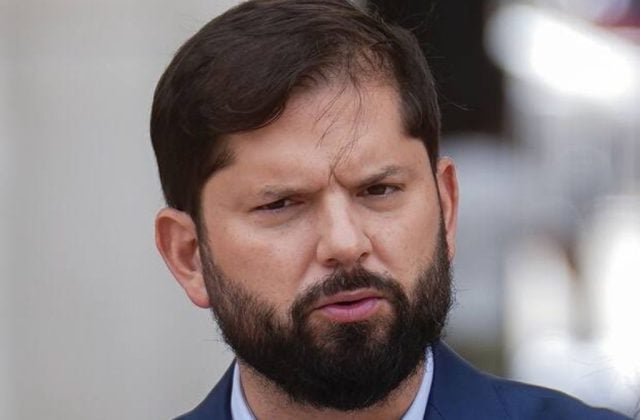
In statements to the press following the Senate Health Commission meeting, the Secretary of State indicated that for Kast’s administration, «the lifting of bank secrecy always requires a judicial order and remains within the scope of the Judiciary«, dismissing any possibility of it being implemented administratively.
«We have been emphatic that we believe that the investigation or opening of accounts always depends on the Judiciary and not on an administrative decision. However,» he stated in comments reported by Bio Bío Chile.
«The ultimate authority for knowledge of bank secrecy always rests with the Judiciary«, he emphasized, prompting Gajardo’s rebuttal and criticism from opposition lawmakers questioning the need to create another initiative when one is already under discussion in the Senate.
Obtén tu Pasaporte y apoya a El Ciudadano
Elimina la publicidad, accede a contenido exclusivo y sé parte de la comunidad.
Cancela en cualquier momento · Sin permanencia
Artículos Relacionados

Former Prosecutor Gajardo Calls for Bank Secrecy Reform After Aragua Train's Banking Cell Bust in Chile
Hace 3 meses