Original article: Camioneros desafían a las cúpulas del gremio: Coquimbo se suma al paro nacional y las protestas arrancan en el sur
Transport operators in the Coquimbo Region have confirmed their participation in the indefinite national strike set to begin at 00:00 on Tuesday, November 10. This decision reflects a challenge and fracture with union leadership that remains detached from the call.
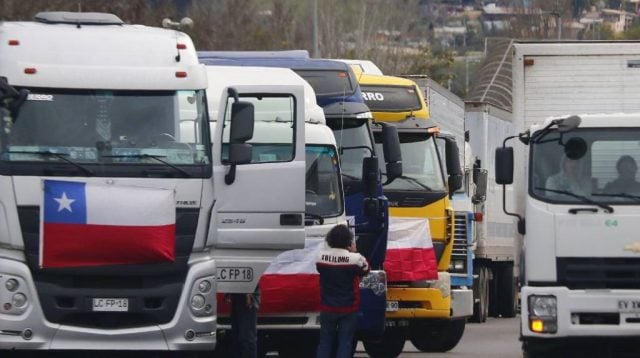
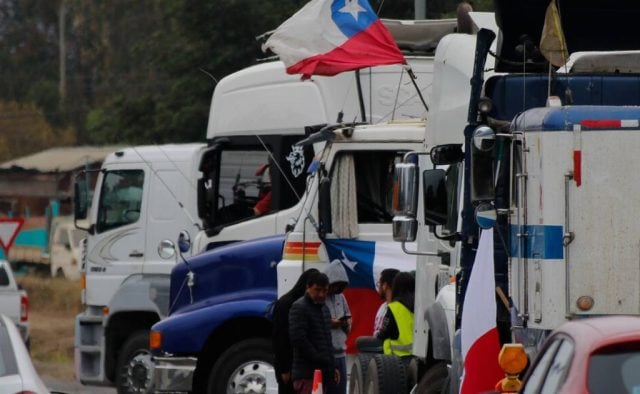
The rising tensions have already begun to impact the central-southern region of the country, where transporters initiated pressure actions on Monday morning.
Protests have focused on strategic locations like Los Ángeles in the Bío Bío Region—specifically near the Salto del Laja—as well as Osorno in Los Lagos and Curicó in the Maule Region.
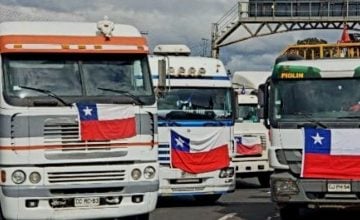
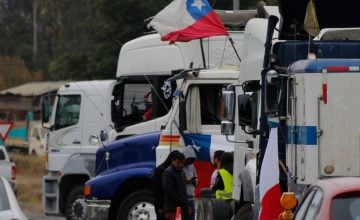
In these areas, local small and medium enterprises have opted to position themselves along major roadways, expressing their dissatisfaction through continuous honking while maintaining vehicle traffic.
Freddy Martínez, president of the Confederation of Truck Owners in the Central-Southern region, stated that the mobilization will span from San Fernando to Magallanes. He emphasized the urgent social nature of the conflict, noting that «there’s no possibility to continue surviving.»
He reminded that «behind every truck is a family, it represents their livelihood and their children’s education; many truckers are selling their units.»
In his view, «solvency for this activity has been lost, and unfortunately, people can no longer wait.»
He also made a call to José Antonio Kast’s government to consider the situation of transporters and take action.
«We hope they react and we can discuss these points to reach an agreement,” he told Bio Bío Chile.
Coquimbo Truck Drivers Join National Strike
Yerko Díaz, president of the Coquimbo Transportation Association (ASOTRAC), stated that the decision to join the strike is based on the uncontrolled rise in fuel prices, the operational limitations of the Fuel Price Stabilization Mechanism (MEPCO), increased TAG fees, and the lack of security on national routes, where drivers are at risk of theft and cargo robbery.
“Historically, diesel was nearly 50% cheaper than gasoline, but with the ongoing increases it will become more expensive,” Díaz warned in statements to Diario El Día. He noted that this situation directly impacts operational stability, distorting standard market rates and affecting the quality of life for thousands of families in the industry.
“There’s significant economic loss. Transporters who were paying off their trucks a year or a year and a half ago are now returning the vehicles because they were leased and simply cannot afford them. This situation is destroying small businesses,” he stressed.
The protests also highlight a split between regional and independent groups and historical union leaders, represented by Sergio Pérez of the National Confederation of Cargo Transport of Chile (CNTC) and Juan Araya of the National Confederation of Truck Owners. The grassroots accuse the leaders of engaging in direct and exclusive dialogue with the government, disregarding the demands of the grassroots and small transporters.
“They are large transporters who always have over 50 or 100 trucks and have openly supported the government. Many regional associations have distanced themselves from them because they do not truly represent us,” Díaz affirmed.
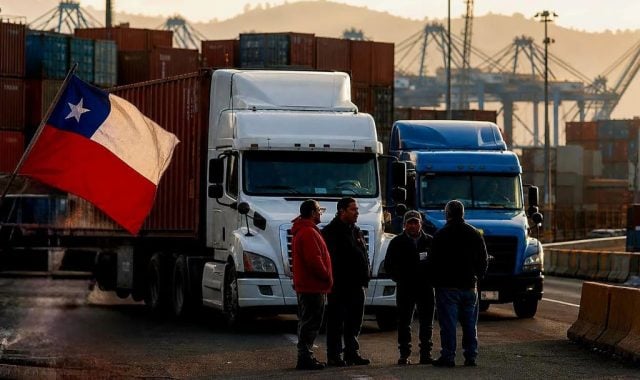
According to ASOTRAC’s president, they will join the national strike starting at midnight on Tuesday, meaning no medium or heavy trucks will be on the roads.
“The forces of Coquimbo, La Serena, and Ovalle are uniting to concentrate at one point in the region. While we had previously established various locations, we will now centralize our efforts in a single area,” he indicated.
However, he assured that the mobilization will not impact emergency services, public transportation, or intercity passenger buses.
These protests will unfold alongside street actions announced by Fuerza del Norte, which has called for a national march this Tuesday.
To resolve the conflict and evaluate the lifting of the pressure measures, small and medium truck drivers demand concrete and immediate responses from the government.
The protesters condition any return to normal operations on the implementation of effective policies that relax the MEPCO, provide real discounts on diesel prices, and ensure worktables where small transporters have direct representation.
Obtén tu Pasaporte y apoya a El Ciudadano
Elimina la publicidad, accede a contenido exclusivo y sé parte de la comunidad.
Cancela en cualquier momento · Sin permanencia