Original article: Aplicación de aranceles de Trump a Chile habría usado de manera indebida el concepto de trabajo forzoso, según demanda de 25 estados de EE.UU.
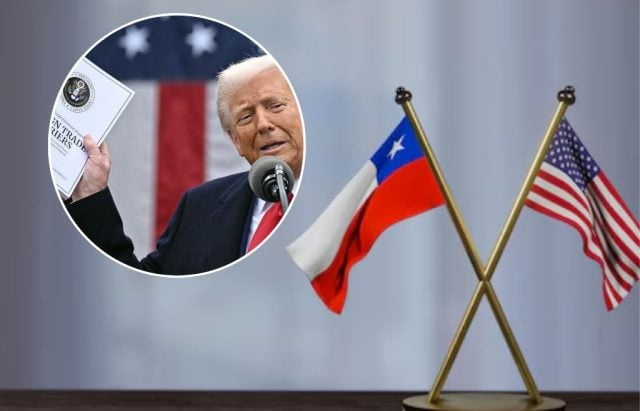
A coalition of Democratic state attorneys general has brought the case to the U.S. International Trade Court, accusing the Trump administration of illegally utilizing Section 301 to impose tariffs on 60 economies, including Chile, under the pretext of combating forced labor. The lawsuit asserts that Trump’s tariff application against Chile improperly employed the concept of forced labor, according to the claims of 25 U.S. states.
By Bruno Sommer
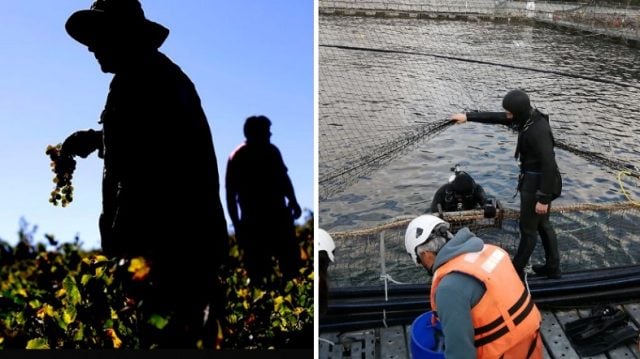
The trade policy championed by U.S. President Donald Trump is facing one of its most significant legal challenges since the beginning of his second term. A lawsuit filed by 25 states governed by the Democratic Party in the International Trade Court argues that the White House has misused the concept of forced labor to justify imposing tariffs on imports from 60 economies, including Chile. Nearly 40% of Chile’s shipments to the U.S. have been affected by these tariffs.
This legal action, initiated by a broad coalition of state attorneys general, requests that the court declare the measures taken by the Republican administration illegal, immediately suspend their implementation while the case proceeds, and eventually revoke the levied tariffs.
Chile Among Affected Countries
Chile is listed among the economies targeted by the new round of tariffs announced by Washington, despite having maintained a Free Trade Agreement with the United States for two decades and fostering a strategic trade relationship between the two nations.
The Trump administration based these measures on investigations initiated under the Section 301 of the Trade Act of 1974, claiming that many governments had failed to take adequate steps to prevent products made with forced labor from entering global supply chains.
However, the lawsuit filed by the states challenges the validity of this legal foundation.
“What is being done to Chile is an arbitrary act by the U.S. government, as it violates the Free Trade Agreement we have already signed,” stated Chile’s Minister of Agriculture, Jaime Campos, just days before this news broke.
“Mr. Judd, the ministers of Chile speak on behalf of the government elected by the Chileans. It is not the ambassador of another country who decides what we can or cannot say. The explanations are due from the United States: we have a Free Trade Agreement, and yet your government decided to impose a 12.5% tariff on Chile,” expressed FA deputy Gonzalo Winter on X.
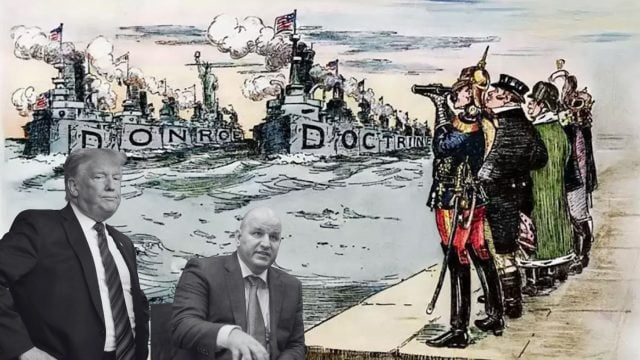
The reactions relate to comments made by the U.S. ambassador to Chile, Brandon Judd, who has escalated his tone in response to critiques from Chilean government officials regarding Washington’s decision to apply a 12.5% tariff on part of Chilean exports, indicating he may need to reconsider his negotiating stance following significant developments in U.S. courts.
Accusation Against the White House
The plaintiffs argue that the federal government cannot broadly use Section 301 as a mechanism to impose new tariffs, asserting that the legislation was designed to address specific trade practices and not to establish a nearly global system of levies.
According to the court filing, the Trump administration allegedly relied on the concept of forced labor as a legal justification to reinstate a massive tariff policy after previous similar initiatives faced legal challenges.
The lawsuit does not claim that forced labor is a non-existent problem in international trade. Rather, it questions whether this argument has been utilized to impose trade sanctions on such a broad group of countries without demonstrating, on a case-by-case basis, that practices justifying the application of Section 301 exist.
What Do the States Seek?
The coalition led by Democratic attorneys general requests the International Trade Court to:
- declare the tariffs imposed by the Trump administration illegal;
- suspend their application immediately while the legal process continues;
- determine that the Executive exceeded the powers granted by Congress;
- and order the refund of levies collected if it is concluded that they were applied illegally.
The states contend that these measures effectively represent a widespread increase in taxes on imports, which ultimately burdens American businesses and consumers.
A Constitutional Conflict
Beyond the trade impact, this case opens a debate regarding the limits of presidential power in foreign trade.
The U.S. Constitution grants Congress the authority to regulate international trade. While various laws delegate specific responsibilities to the Executive Branch, the plaintiffs argue that the Trump administration exceeded what is currently permitted by existing legislation.
According to the attorneys general, the White House appears to be using a tool designed to resolve specific trade disputes as a permanent mechanism to redesign U.S. tariff policy.
Implications for Chile
For Chile, this controversy is especially significant due to the volume of its trade with the United States and the ongoing Free Trade Agreement between both countries.
If the court accepts the lawsuit, the tariffs imposed on Chilean exports could be suspended while the core of the litigation is resolved, reducing uncertainty for national exporters.
Conversely, if the U.S. justice system validates the Trump administration’s interpretation, the ruling could establish a precedent allowing future U.S. governments to utilize Section 301 with a much broader scope to impose unilateral trade measures.
The lawsuit from the 25 states not only questions an economic policy but also raises the issue of using concepts related to human rights as a basis for far-reaching trade decisions.
The litigation poses a fundamental question: can the Executive invoke the fight against forced labor broadly to impose tariffs on dozens of countries, or must it demonstrate specifically that each of them engages in practices warranting a trade sanction?
The response from the International Trade Court could redefine not only U.S. trade policy but also the balance between presidential powers and Congressional authority in one of the most sensitive areas of the international economy.
Key Affected Economies Include:
Americas
- Chile
- Canada
- Mexico
- Brazil
- Argentina
- Ecuador
- Guatemala
- Honduras
- El Salvador
- Trinidad and Tobago
Europe
- European Union (treated as a single economy)
- United Kingdom
- Switzerland
- Norway
Asia
- China
- Japan
- South Korea
- Taiwan
- India
- Indonesia
- Malaysia
- Bangladesh
- Cambodia
- Pakistan
- Sri Lanka
- Vietnam
- Jordan
Oceania
- Australia
Two Levels of Tariffs
The U.S. administration divided the investigated economies into two categories:
10% Tariff
- Countries that have laws prohibiting imports made with forced labor but which Washington claims do not enforce them effectively. This group includes, among others, Canada, Mexico, the United Kingdom, India, Indonesia, Malaysia, Pakistan, Bangladesh, Argentina, and Ecuador.
12.5% Tariff
- Economies that, according to U.S. investigations, lack sufficient mechanisms or do not meet the standards required by the United States to prevent the entry of products related to forced labor. This group includes Chile, China, Australia, Brazil, Vietnam, and most of the other investigated economies.
Obtén tu Pasaporte y apoya a El Ciudadano
Elimina la publicidad, accede a contenido exclusivo y sé parte de la comunidad.
Cancela en cualquier momento · Sin permanencia