Original article: Académico UACh participa en investigación sobre los grupos canoeros del archipiélago de Los Chonos
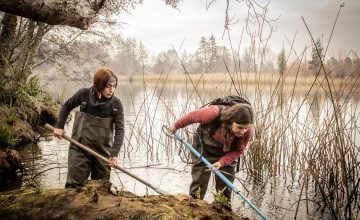
The director of the Archaeology School at Universidad Austral de Chile (UACh), Puerto Montt branch, Ricardo Álvarez, is involved in an archaeological study aiming to provide new insights into the cultural and environmental history of the canoeing groups that inhabited the archipelago of Los Chonos, a territory located between 43° and 47° south latitude.
This research is part of the ANID-Fondecyt Regular 1260247 project, titled «Trends and Particularities in the Subsistence and Mobility of Canoeing Groups: The Role of the Pacific Strip in the Los Chonos Archipelago (43°-47°S) during the Late Holocene,» led by archaeologist Omar Reyes from the Cabo de Hornos International Center (CHIC). The project aims to analyze the mobility strategies, spatial usage, and dietary differences of these ancient societies while also considering the influence of the Pacific strip on their subsistence practices. Reyes is recognized as a leading figure in austral archaeology and has authored numerous articles and books related to northern canoeing populations.


The project is spearheaded by the Cabo de Hornos International Center (CHIC) and involves researchers from the University of Chile, Universidad Católica, the Patagonia Ecosystems Research Center (CIEP), the University of Magallanes, and the Institute of Geochronology and Isotopic Geology (INGEIS, CONICET-UBA) from Argentina. Álvarez’s involvement is due to his extensive experience in anthropological research projects in the islands of Patagonia, which have examined both past and present populations.
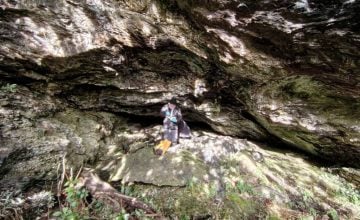
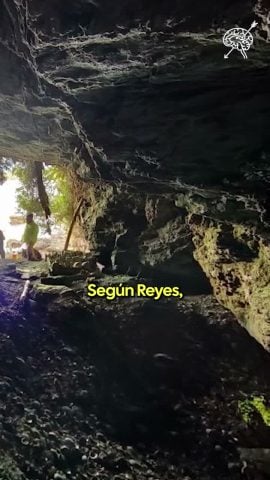
The archaeological campaign, which is part of a broader plan, required navigating over 300 km of coastline while surveying coastal caves located on islands along the Pacific coast and inland. Argentine archaeologist Augusto Tessone from INGEIS, CONICET-UBA also participated in this endeavor.
Through the analysis of human remains, isotopic studies, radiocarbon dating, and the collection of archaeological materials such as faunal remains and lithic tools, the research aims to uncover aspects related to diet, antiquity, mobility, and territorial occupation of the canoeing populations that lived in this region of Patagonia.


For the Archaeology School at UACh, Puerto Montt, participation in such research represents a valuable training opportunity for students, especially considering that many of them come from archipelagic environments where there are ossuaries and sites associated with canoe origins. Engaging in these southern research initiatives could offer them hands-on experience and methodologies pertinent to archaeology conducted in areas with high geographic and climatic complexity.
“Our School is the southernmost in the world. We have students from archipelagic environments with ossuaries and canoe-origin sites, making it highly relevant for us as a School to be involved. It would be fantastic for our students to participate as thesis students or researchers in these southern projects, which entails training in highly challenging and demanding work conditions,” explained Ricardo Álvarez.
The academic emphasized that investigations of this nature also help connect the knowledge gained to local communities, contributing to the appreciation of the territory’s history and the various forms of human occupation that have occurred in these areas.
Omar Reyes, the project’s lead archaeologist, highlighted the significance of the evidence that reconstructs human presence in this territory and the challenges posed by conducting research under extreme climatic conditions.
“Beyond the archaeological record, these investigations reveal that for over 6,000 years other human groups navigated the channels and inhabited the coasts of the Los Chonos archipelago, forming part of a diverse human history that continues to be studied. Our research also represents a challenge, as there are few studies in our country that are conducted under extreme climatic conditions,” he noted.


Drawing from his experience in research in southern territories, Álvarez emphasized that one of the primary challenges of such studies is the logistical complexity of working in the Patagonian archipelagos, where climatic conditions, navigation, and vast distances require continuous planning.
“With Omar and other Patagonian researchers, we have forged decades of friendship and collaboration in these channels, working through archaeological projects as well as ethnographic studies on my end. In both cases, we have had to adapt to climatic conditions and the unique challenges of these archipelagos: Cape Horn, the Gulf of Penas, Los Chonos, Guaitecas, and even the Chiloé archipelago present significant difficulties. This time the weather cooperated, and thanks to the logistical support available in Melinka, we managed to traverse several hundred kilometers of the archipelago and identify sites in very hard-to-reach areas, like islands along the Pacific coast,” concluded the academic.
The research includes plans for new field campaigns and laboratory analyses that will continue to add evidence regarding the lifestyles of the canoeing populations of the Los Chonos archipelago. Through collaborative efforts among specialists from various institutions, the project aims to deepen the understanding of the human history of the southern archipelagos, a territory that still holds many sites and evidence to be explored.
*Article written by María José Acuña, journalist at UACh Puerto Montt branch.
*Photographs: UACh.
Obtén tu Pasaporte y apoya a El Ciudadano
Elimina la publicidad, accede a contenido exclusivo y sé parte de la comunidad.
Cancela en cualquier momento · Sin permanencia
Artículos Relacionados
Académico UACh participa en investigación sobre los grupos canoeros del archipiélago de Los Chonos
Hace 3 meses