Original article: UFRO desarrolla primer estudio en Chile sobre educación intercultural para pueblos Selk’nam, Chango y Tribales Afrodescendientes
Interculturality remains one of the most challenging issues in Chile. Despite over 30 years of public policy development in this area, implementation difficulties and questions of legitimacy continue to prevail.
The education sector faces similar challenges. While there are ongoing efforts, significant structural issues persist within intercultural education policies and programs, primarily due to the lack of involvement from the communities themselves in the designing process, the absence of flexible educational resources, and the discontinuity of programs at the secondary education level.
In this context, the University of La Frontera (UFRO), commissioned by the Undersecretariat of Education, conducted a study aimed at providing insights from the communities and territories to guide the country’s bilingual cultural education policy.
Specifically, there was a need to gather information on the Selk’nam, Chango, and Afrodescendant peoples, who were legally recognized as indigenous groups in 2023, 2020, and 2019, respectively.
The study’s director, Dr. Carlos del Valle, explained that the project consists of three phases: «The first involved gathering information and conducting a bibliographic and sociodemographic diagnosis to understand the context, scope, and limitations of public educational policies in these three regions, contributing knowledge to address the crisis of the intercultural model.»
«The second phase consisted of engaging in dialogue with local stakeholders to understand their perspectives and willingness. The third phase, currently underway, involves designing and implementing educational resources to work within the educational communities,» added Dr. del Valle from UFRO.
For this project, six educational institutions were selected that serve populations from the three indigenous groups: two schools in Arica for the Afrodescendant community, three in Coquimbo for the Chango people, and one in Magallanes for the Selk’nam.
«Our initial findings indicate that while a lot of information is available, it is scattered. Some data comes from the census, while the majority is comprised of academic research, including scientific articles and primarily postgraduate theses. Thus, our work has focused on systematizing this information,» detailed Dr. del Valle.
Different Realities
The interviews and dialogues with relevant stakeholders proved to be an enriching phase for the research team.
«We found many interesting local projects, particularly within the Afrodescendant Tribal group, which is well-organized and involved in various initiatives in northern Chile. They have integrated the concept of ‘Afro’ across disciplines and place considerable emphasis on visual representation,» noted the UFRO academic.
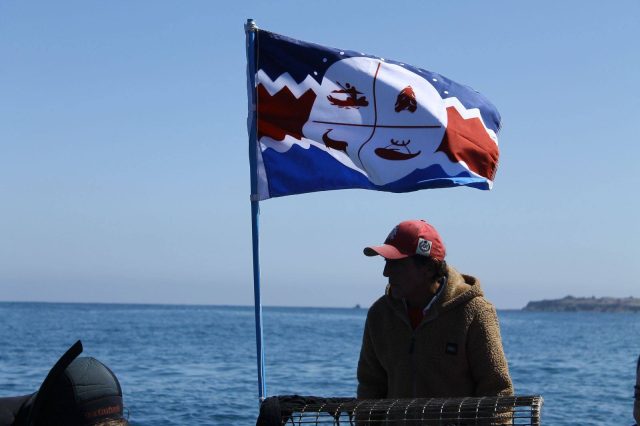
The Chango people, as the study points out, «anchor their identity in the ‘maritory,’ and their cultural revitalization is tied to territorial defense. They have developed a grassroots curricular sovereignty model through ‘Conversation Circles’ for co-creating content.»
The primary barrier here is the systemic devaluation of the Traditional Educator, whose precarious job conditions and lack of training in planning discourage community participation. Additionally, collective organization is more complex due to the territorial dispersion they currently face, Dr. del Valle added.
For the Selk’nam, the situation is even more intricate according to the researcher: «There are internal issues to resolve regarding their identity as a people. At the political level, tensions exist, creating a complex landscape. The most significant systemic obstacle is the paradox of recognition: despite Law N° 21.606 (2023), Conadi has recorded ‘zero’ accredited Selk’nam in its databases, which constitutes a ‘violation of rights’ by preventing the exercise of their collective rights.»
However, the findings suggest a focus on reparative education and transitional justice post-genocide. The Selk’nam community leads an Autonomous Culture School, whose curriculum incorporates the management of transgenerational trauma.
The report, which involved researchers Dr. Bosco González from the University of Tarapacá; Dr. Alejandra Muñoz from the University Alberto Hurtado; Dr. Mario Carvajal, an expert consultant in intercultural relations; and Dr. Mauro Salazar, a graduate researcher from the UFRO Doctorate in Communication, concludes that the most effective role for the Ministry of Education should be that of a Strategic Enabler, financing, validating, and supporting local autonomy rather than prescribing centralized solutions.
Teaching Manual Development
The project is currently in the stage of developing a manual that will contain educational proposals for working with children and adolescents in educational contexts, based on elements drawn from the interviews with local stakeholders.
At this point, the strategic recommendations for the Ministry of Education focus on developing relevant curricula, strengthening teacher training in interculturality, supporting traditional educators, and fostering genuine collaboration with communities for the design and implementation of transformative programs.
El Ciudadano
Photo Credit: Rodrigo Díaz, Chango People’s Flag (archive)